
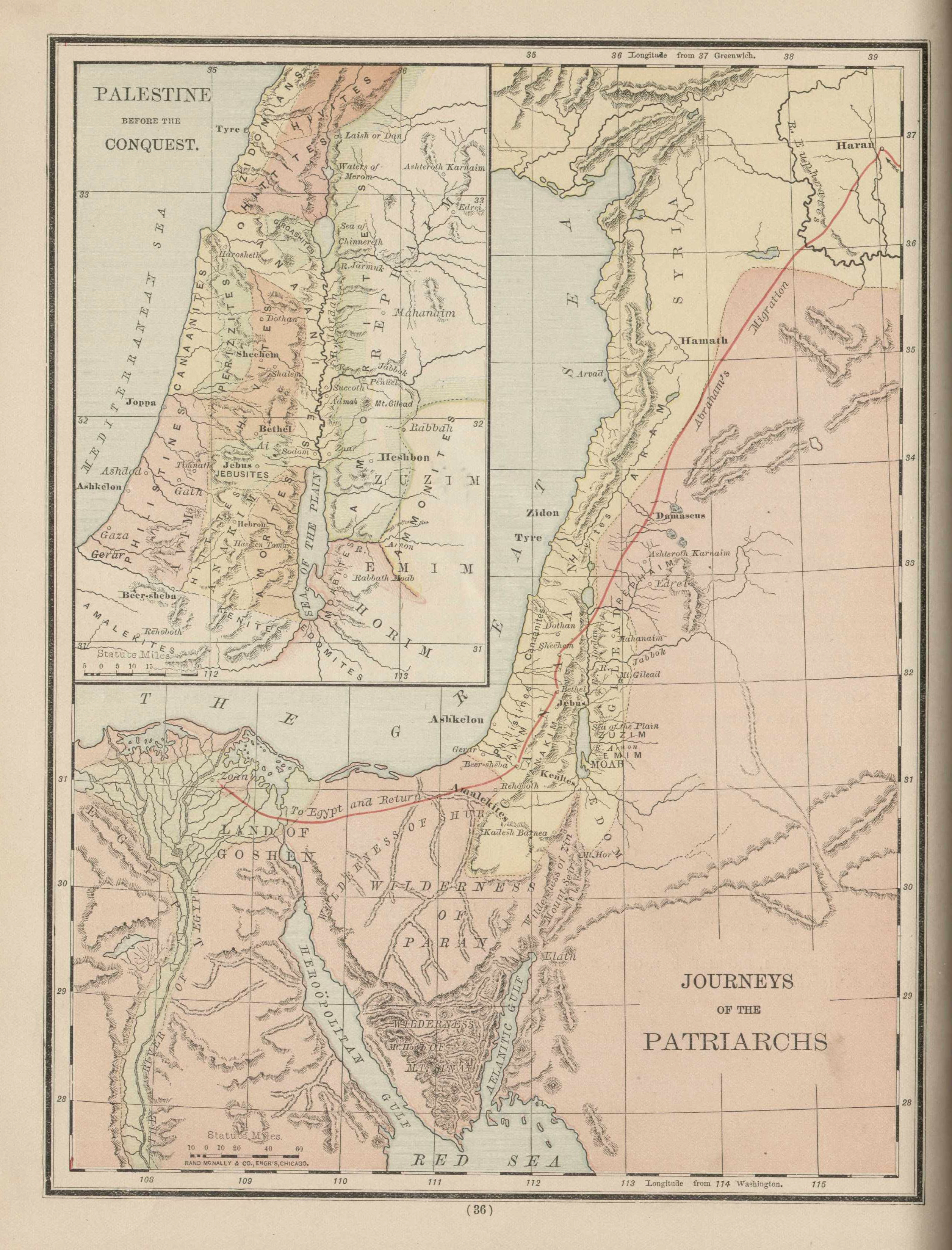
Look at the main map and find Haran in the upper-right corner. From Beer-sheba in the south to Haran in the north is over 400 miles — a journey of weeks on foot. Jacob arrived alone, with nothing, and immediately encountered a young woman at a well: Rachel, the daughter of his uncle Laban. He kissed her and wept. He had found family in a foreign country. He had no idea that the next twenty years would be among the most painful and productive of any patriarch's life.
Jacob's years in Haran are the crucible in which the nation of Israel was formed. He worked seven years for Rachel — "and they seemed unto him but a few days, for the love he had to her" (Genesis 29:20). Then Laban deceived him on the wedding night, substituting Leah, the elder daughter. Jacob had to work another seven years for Rachel. And then six more years to build his own flocks, during which Laban changed his wages ten times. The man who had fled Canaan as a deceiver was himself deceived thoroughly and repeatedly by a master of manipulation.
But look at what came out of those twenty years. Jacob's twelve sons — who became the twelve tribes of Israel — were all born in Haran or on the return journey. Reuben, Simeon, Levi, Judah, Dan, Naphtali, Gad, Asher, Issachar, Zebulun, Joseph, and Benjamin (born later in Canaan). The family of seventy people who descended into Egypt in Genesis 46, and the nation of millions who came out at the Exodus, trace directly to these twenty years of labor in the household of Laban. God's covenant with Abraham was not a fairy tale — it was working itself out through tent negotiations, flock management, and family conflict in a distant corner of Mesopotamia.
Jacob finally fled from Laban after God told him plainly: "Return unto the land of thy fathers, and to thy kindred; and I will be with thee" (Genesis 31:3). Laban pursued him, caught up with him at Gilead, and the two men made a covenant of separation — the Mizpah covenant: "The LORD watch between me and thee, when we are absent one from another" (Genesis 31:49). Then Jacob turned south — follow the route on the main map from Haran southward through Damascus — toward Canaan, his brother Esau, and a wrestling match with God that would give him a new name.