
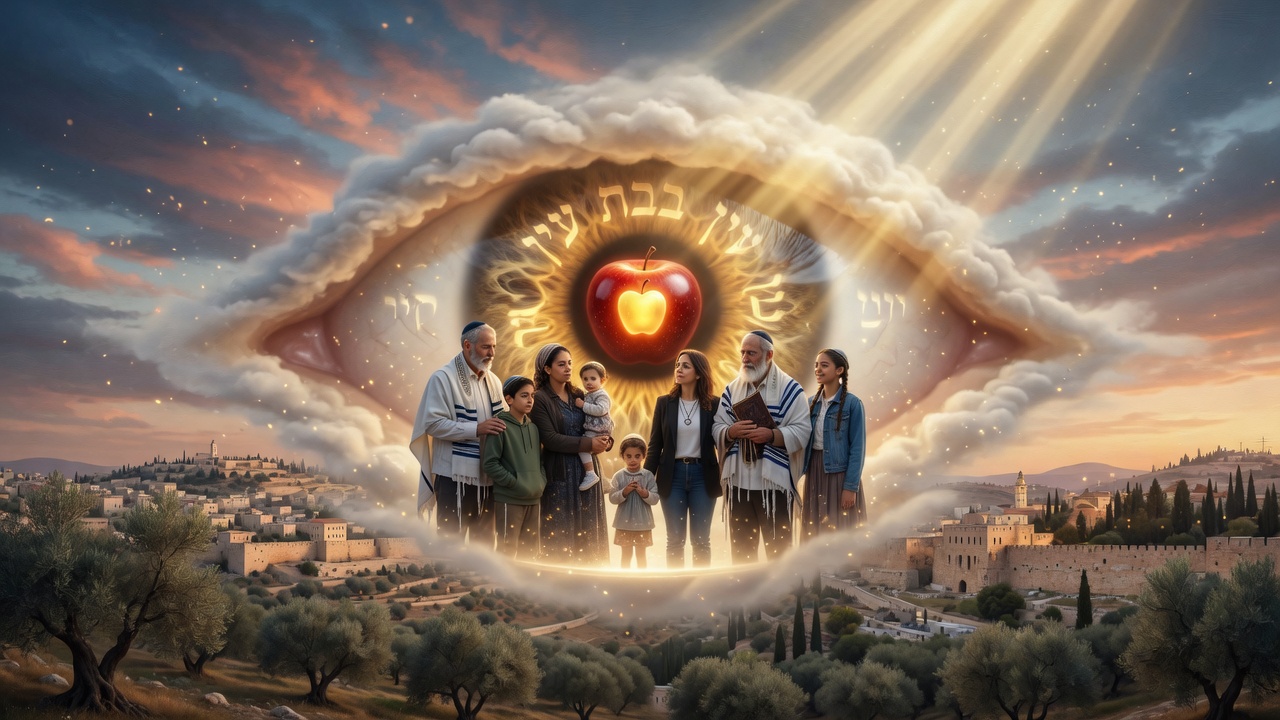
“For he that toucheth you toucheth the apple of His eye.”
“For you are a people set apart as holy for ADONAI your God. ADONAI your God has chosen you out of all the peoples on the face of the earth to be his own unique treasure. ADONAI didn’t set his heart on you or choose you because you numbered more than any other people — on the contrary, you were the fewest of all peoples. Rather, it was because ADONAI loved you, and because he wanted to keep the oath which he had sworn to your ancestors, that ADONAI brought you out with a strong hand and redeemed you from a life of slavery under the hand of Pharaoh king of Egypt.”
A People Like No Other
Over the millennia, there has never been a people who have experienced adversity, persecution, and hatred to the degree to which the Jews have. Indeed, not even a biblical scholar is needed to accurately discern this factual, albeit unfortunate truth: the annals of history have been none too kind to the Jewish people.
The story of Jewish persecution stretches across every era of recorded history, leaving a trail of exiles, pogroms, inquisitions, and genocides that no other people on earth can parallel. From the slavery of Egypt to the Babylonian captivity, from the Roman destruction of Jerusalem in 70 AD to the expulsion from Spain in 1492, from the Russian pogroms of the nineteenth century to the systematic extermination of six million souls in the Holocaust — the Jewish people have been targeted, hunted, displaced, and murdered with a consistency and ferocity that defies any purely historical or sociological explanation. If ever a people had reason to disappear from the face of the earth, it is the Jewish people. And yet they have not disappeared. They have endured.
Yet, albeit forced to live a maligned and battered existence — past and present — these are a people that have persevered like no other. Not only have they persevered, they have thrived. These are a people who have experienced and relished in the fruits of God’s unshakeable, unbreakable promises, and these fruits remain bountiful. The Jewish people are precious in the eyes of the Father. Indeed, they are “the apple of His eye.”
The word translated “apple” in the phrase “apple of the eye” carries extraordinary depth in its original Hebrew. The primary Hebrew term used in the Old Testament passages is isha’on (אִשׁוֹן), which literally means “little man” — a reference to the tiny reflection of oneself that appears in another person’s pupil when you look directly into their eyes. The pupil is the most sensitive, most vulnerable, most carefully protected part of the entire body. Even the faintest breath of dust or the lightest touch of a foreign object triggers an involuntary, instantaneous protective response. To call Israel “the apple of God’s eye” is not poetic hyperbole. It is a declaration of God’s most intimate, most reflexive, most instinctive protectiveness toward His people. To touch them is to provoke Him. To harm them is to assault the most sensitive point of the Most High God.
Scripture lends support for the Jewish people donning the title of “the apple of God’s eye” on no less than five separate occasions. Each passage illuminates a different dimension of this divine declaration — from the wilderness wanderings of the Exodus to the prophetic visions of a restored Jerusalem. Together, they form one of the most consistent and powerful threads in all of biblical revelation: God’s unbreakable bond with His covenant people.
1. The Song of Moses — Deuteronomy 32
Consider the 32nd chapter of Deuteronomy, commonly referred to as “The Song of Moses.” In this chapter, Moses speaks to a rebellious Israel so that they may reacquaint their memories with “days of old” — days in which their obedience walked hand-in-hand with God’s kindness:
“Remember the days of old,
Consider the years of many generations.
Ask your father, and he will show you;
Your elders, and they will tell you:
When the Most High divided their inheritance to the nations,
When He separated the sons of Adam,
He set the boundaries of the peoples
According to the number of the children of Israel.
For the LORD’s portion is His people;
Jacob is the place of His inheritance.
He found him in a desert land
And in the wasteland, a howling wilderness;
He encircled him, He instructed him,
He kept him as the apple of His eye.”
The Song of Moses is one of the oldest poems in all of human literature, and it is a poem about memory. Moses calls Israel to remember what God has done. He calls them to look back at the landscape of their history and see, unmistakably, the hand of their God working on their behalf in ways that no natural explanation can account for. The passage begins with a cosmic declaration: that when the Most High apportioned the nations of the earth, He set the very boundaries of human civilizations with Israel in mind. The nations were not arranged at random. The geography of the ancient world was not the product of blind historical forces. The boundaries of the peoples were established “according to the number of the children of Israel.” Israel was the organizing principle of God’s arrangement of the nations.
And then comes the pivotal declaration: “For the LORD’s portion is His people; Jacob is the place of His inheritance.” Other nations have their gods, their territories, their inheritances. The LORD’s inheritance is Israel. His treasure is not gold or silver, not land or sea. His treasure is a people. And in the howling wilderness — in the very place of desolation and helplessness where no people could be expected to survive, let alone flourish — He found them, encircled them, instructed them, and kept them as the apple of His eye.
This image of the wilderness is not incidental. The desert is the proving ground of the covenant. It is the place where human resources run dry and where the faithfulness of God becomes the only possible source of life. That God chose to manifest His most intimate protectiveness — “the apple of His eye” — in the context of the wilderness is a declaration that His love for Israel is most visible precisely when Israel is most vulnerable. He does not love them because they are strong. He loves them because they are His.
2. The Prayer of David — Psalm 17
In Psalms 17, we observe as David, being pursued by his enemy Saul, appeals to the Lord to examine his righteous heart and deliver him from the throes of his enemy:
“I have called upon You, for You will hear me, O God;
Incline Your ear to me, and hear my speech.
Show Your marvelous loving kindness by Your right hand,
O You who save those who trust in You
From those who rise up against them.
Keep me as the apple of Your eye;”
Psalm 17 is among the most personal and urgent of all the Psalms. It is a prayer composed in extremity — from a man whose life is under active threat, whose enemies are circling, whose options have narrowed to a single desperate appeal to God. And in that extremity, David reaches for the most intimate language available to him. He does not pray to be spared, or merely to be protected. He prays to be kept “as the apple of Your eye.”
This is a prayer of astonishing intimacy. David, the shepherd-king, the man after God’s own heart, understands something about his relationship with the Lord that goes far beyond legal covenant or formal obligation. He understands that he is precious to God. That God’s eye is upon him with the same reflexive, protective tenderness with which a man guards his own sight. And so he does not appeal to his own merit or his own righteousness as the ground of his deliverance — he appeals to God’s love. He plants himself in the center of that love and says: Keep me here. Keep me as the apple of Your eye.
For those who stand with Israel today, this psalm carries a profound implication. When we pray for the peace of Jerusalem, when we intercede for the Jewish people, when we stand against those who would harm them — we are aligning ourselves with the prayer of David. We are appealing to the same God who heard David’s cry in the wilderness, who turned the hearts of kings, who scattered the enemies of His people. We are calling upon the God who keeps Israel as the apple of His eye.
3. The Wisdom of Solomon — Proverbs 7
In Proverbs 7, Solomon, speaking in the name of the Lord, stresses the importance of wearing as armor, against all lustful temptations, the Word and commandments of God:
“My son, keep my words,
And treasure my commands within you.
Keep my commands and live,
And my law as the apple of your eye.”
The appearance of “the apple of the eye” in Proverbs 7 shifts the metaphor in a revealing direction. Here, God does not merely declare Israel to be the apple of His eye. He instructs His people to treat His Word, His commands, His law, as the apple of their eye. The protectiveness is to be mutual. As God guards Israel with the reflexive tenderness one gives to one’s own sight, so Israel is called to guard the Word of God with the same reflexive, instinctive devotion.
Solomon frames this commandment in the context of a warning against moral compromise — specifically, against the seductions of the world that would draw the heart away from God. The “strange woman” of Proverbs 7 is not merely a literal adulteress; she is the embodiment of every force that would lead a person away from covenant faithfulness. And Solomon’s prescription against her is breathtakingly simple: keep the law as the apple of your eye. Make the Word of God the most sensitive, most protected, most carefully guarded thing in your life. When compromise comes knocking — and it will — let the instinctive, reflexive response of your heart be to shield the Word of God from harm.
This passage also reveals the relational nature of the covenant between God and Israel. It is not one-directional. God treasures Israel as the apple of His eye; He calls Israel to treasure His Word as the apple of theirs. This is the language of intimate, mutual covenant love — the language of a Father who cherishes His children and calls them to cherish what He has given them.
4. The Lamentation of Jeremiah — Lamentations 2
Perhaps the two most “direct” Scriptural examples lending support to the Jewish people as “the apple of His eye” can be found in the books of Lamentations and Zechariah.
In the second chapter of Lamentations, Jeremiah mourns the destruction of Jerusalem, as well as the kingdoms of Israel and Judah by the Wrath of God. This is another example of the type of adversity that has become synonymous with Jewish existence. Although it was at the hands of Nebuchadnezzar that Jerusalem was destroyed and many of its inhabitants killed, Jeremiah sees the catastrophe entirely as God’s wrath poured out on His people for their disobedience, and thus it is to Him that he laments. Even in His wrath, they remained precious and cherished in His eyes, and history has shown time and time again that if it takes Him breaking His people to get them to turn to Him, He will do just that:
“Their heart cried unto the Lord,
O wall of the daughter of Zion,
let tears run down like a river day and night:
give thyself no rest;
let not the apple of thine eye cease.”
The book of Lamentations is one of the most raw and unsparing documents in all of Scripture. It is a sustained cry of grief over the most devastating event in Israel’s ancient history — the destruction of Solomon’s Temple, the razing of Jerusalem, the death of thousands, and the deportation of the survivors to Babylon. Jeremiah, the weeping prophet, had warned of this catastrophe for decades. He had pleaded with kings and priests and people to turn back to God. He had been mocked, beaten, imprisoned, and thrown into a cistern. And when the catastrophe finally came, as he had prophesied it would, he did not say “I told you so.” He wept.
What is theologically staggering about the phrase “the apple of thine eye” in this context is precisely the moment in which it appears. Jeremiah is not describing Israel in a season of blessing and favor. He is describing Israel in the aftermath of devastating divine judgment. The city is in ruins. The Temple is ash and rubble. The people are in chains. And yet the call goes out: do not let the apple of thine eye cease its mourning. Even in judgment, Israel is precious. Even in discipline, they are the apple of God’s eye. The breaking is not abandonment. The wrath is not rejection. It is the sorrow of a Father who loves His children too much to leave them in their rebellion, and who will do whatever is necessary to bring them home.
This truth has profound implications for how we understand the entire sweep of Jewish history. The centuries of exile and suffering are not evidence that God has abandoned His people. They are evidence that He has not. The same God who allowed Jerusalem to be destroyed by Nebuchadnezzar is the God who brought His people back from Babylon. The same God who allowed the Second Temple to be destroyed by Rome is the God who brought His people back to the Land in 1948. The suffering does not disprove the covenant. The survival proves it.
5. The Vision of Zechariah — Zechariah 2
Finally, consider the second chapter of Zechariah, which brings this examination of Scriptures to a close on a very good note. It is here that Zechariah envisions the physical restoration of Jerusalem — one that far surpasses its original boundaries. It is here the prophetic declaration is made that Jerusalem would become “a city without walls”, and one that would grow exponentially. If you’ve ever been to Jerusalem, you will see a city whose suburbs and settlements are beginning to approach Ramallah to the north, Jericho to the east, and Bethlehem to the south. Furthermore, in Zechariah’s vision the Lord makes it clear that He, and not walls, will serve as Jerusalem’s protection:
“Deliver thyself, O Zion,
that dwellest with the daughter of Babylon.
For thus saith the LORD of hosts;
After the glory hath he sent me unto the nations which spoiled you:
for he that toucheth you toucheth the apple of his eye.”
Zechariah chapter 2 is, in many respects, the most explosive of the five passages. It is addressed not primarily to Israel but to the nations. It is not a comfort offered to a wounded people; it is a warning issued to a watching world. And the warning could not be more direct: whoever touches Israel touches the apple of God’s eye.
The Hebrew verb translated “toucheth” here is naga (נָגַע), which in this context carries the specific connotation of assault — of reaching out to strike, to harm, to destroy. This is not the gentle touch of a hand in greeting. This is the touch of a weapon. And God’s response to it is the same as the eye’s response to any foreign object that threatens it: immediate, total, overwhelming protective reflex.
The nations that have raised their hand against the Jewish people have not merely opposed a small Middle Eastern ethnic group. They have pressed their finger against the most sensitive point of the Almighty God. Egypt fell. Babylon fell. Persia rose and then was humbled. Greece scattered and dissolved. Rome, which destroyed the Temple and expelled the Jews from their land, itself crumbled into dust. The Ottoman Empire that ruled over the desolate Land for four centuries is gone. Nazi Germany, which set itself to the systematic extermination of European Jewry, lasted twelve years and ended in total ruin. This is not coincidence. This is the pattern of a God who keeps His word.
Zechariah’s vision also carries a stunning prophetic component that every visitor to modern Jerusalem cannot miss. The prophet saw a city that would burst beyond its walls — a city so full of life, so densely populated, so explosively growing that no wall could contain it. “Jerusalem shall be inhabited as towns without walls for the multitude of men and cattle therein.” (Zechariah 2:4). In the sixth century BC, when Jerusalem lay in ruins and its people were in Babylonian captivity, this prophecy was not merely unlikely. It was humanly inconceivable. And yet it is unfolding before our eyes. The modern city of Jerusalem extends far beyond the ancient walls, growing in every direction — north toward Ramallah, east toward Jericho, south toward Bethlehem — exactly as the prophet said it would.
The Apple of His Eye — A Call to Christians
These five passages, taken together, constitute one of the most consistent and urgent themes in all of Scripture: Israel is precious to God. Not historically precious. Not formerly precious. Presently, actively, eternally precious. The covenant God made with Abraham has not expired. The promises He swore to Isaac and Jacob have not been transferred to another people. The eye of God is still fixed on His people with that same reflexive, instinctive, indestructible protectiveness that the phrase “apple of His eye” was always meant to convey.
For the Church — for every Gentile believer who has been grafted into the olive tree of God’s redemptive plan — this truth carries an unmistakable implication. If Israel is the apple of God’s eye, then how we treat Israel matters eternally. The nations that have blessed Israel have been blessed. The nations that have cursed Israel have been cursed. This is not superstition. It is the plain, repeated, historically verified word of God (Genesis 12:3). And it applies today with the same force it has always applied.
To stand with Israel is not a political position. It is not nationalism, or ethnic preference, or the endorsement of every policy of any particular Israeli government. It is the recognition that God has not finished with His people — that the God who kept them as the apple of His eye through every desert, every exile, every pogrom, and every attempted genocide is the same God who will one day graft all of Israel back into their own olive tree (Romans 11:24), and who has called His Church to stand alongside them in faith until that glorious day.
“Pray for the peace of Jerusalem: they shall prosper that love thee.”