

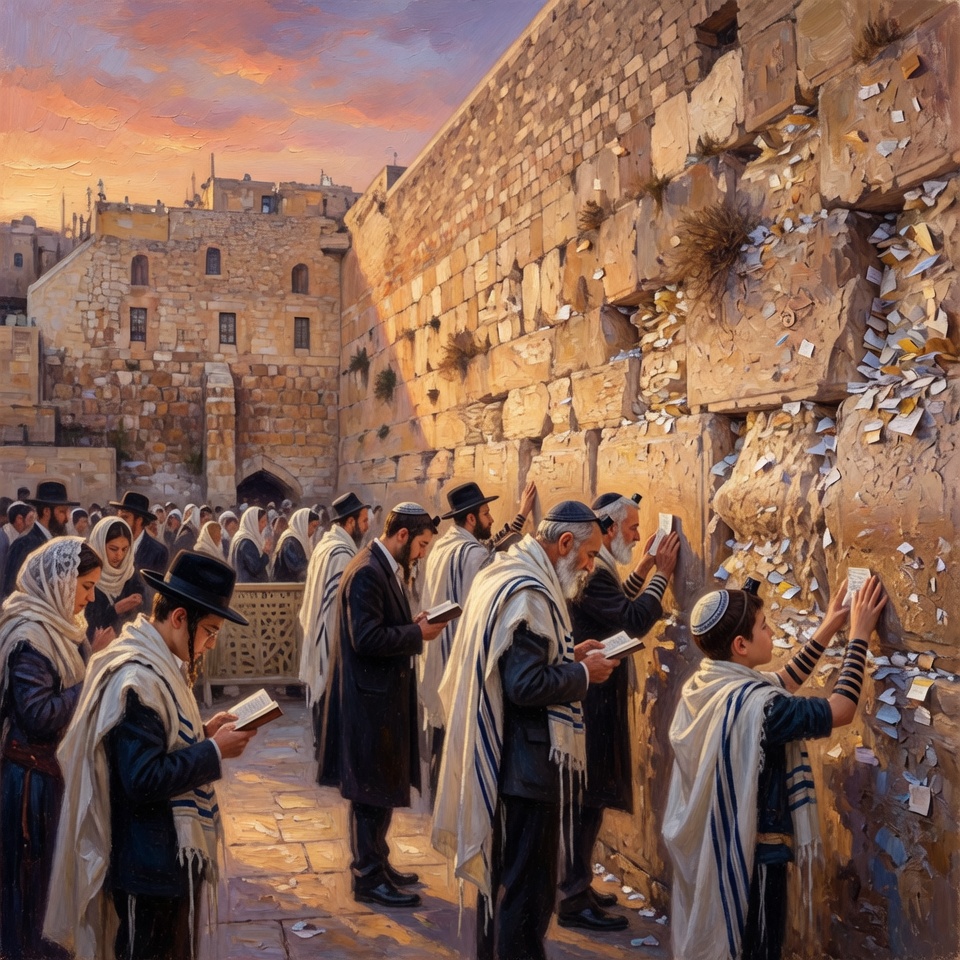
Of fundamental importance to all Christian Zionists is the belief that the Jews are God's "Chosen People" — the "Apple of His Eye". This belief, widely supported throughout both the Hebrew Tanakh and the New Testament, is centered on the biblical description of the Jews as a people who have been "set apart as holy":
Moreover, several biblical passages describe the Jewish people as being the "Apple of God's Eye", and Christian Zionist dogma reflects accordingly. Scripture lends support for the Jewish people donning such a title on no less than five separate occasions (Deut. 32; Psa. 17; Prov. 7; Lament. 2; Zech. 2):
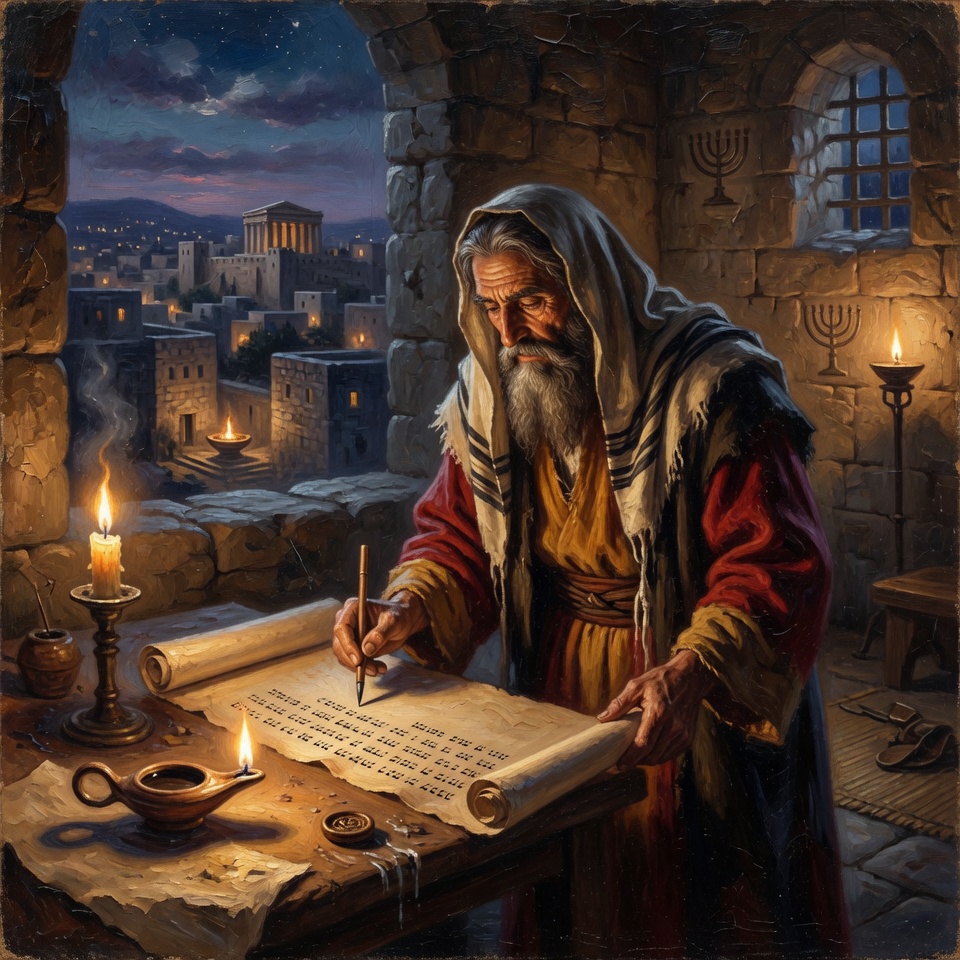
A cornerstone of Christian Zionist dogma is biblical prophecy. In both the Hebrew Tanakh and New Testament can be found a plethora of writings — many of which were written thousands of years ago by Hebrew prophets such as Isaiah, Jeremiah, Ezekiel and Daniel — which foretold of an ingathering, in the latter days, of the Jewish people in their biblical homeland; a restoration of the Jews to Eretz Israel.
The Hebrew prophets served as "custodians" of the covenant between God and Abraham, each tasked with communicating an essential message to the House of Israel. Exegeses of the books of Isaiah, Jeremiah, Daniel, and Ezekiel reveal a common, divine pattern in their warnings: each foretold of God's impending divine punishment for continued disobedience, idolatry, and unwillingness to repent. Yet these prophetic warnings were routinely followed by prophecies through which God promised deliverance and redemption — such can only be the nature of a God who remains faithful to His promises.
The importance of God's faithfulness cannot be overstated. Simply put, the answer to many of today's essential questions pertaining to Israel and the Jewish people may be effectively linked to the faithfulness of God — the One who is called "Faithful and True" (Rev. 19:11, 22:6) to His promises. Biblical prophecy is accurate when it is viewed and interpreted through the "prism" of God's faithfulness.
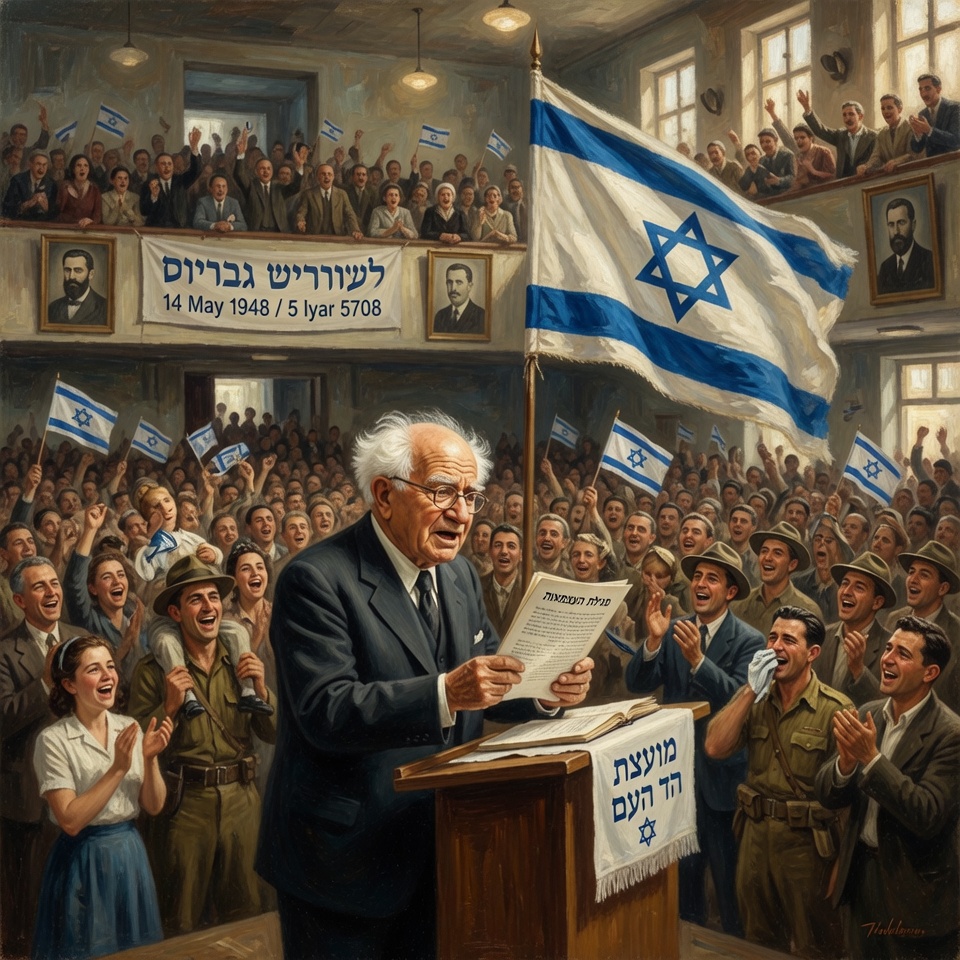
While opponents of Christian Zionist dogma see little value in the biblical parallels that exist between Israel and prophecy, few can deny the clear and present significance of what the prophet Isaiah foretold thousands of years ago. Isaiah 66:8 represents prophecy that unfolded before the very eyes of this generation — a foreshadowing of a time when Israel, as a nation, shall be reborn. The circumstances and reality of what happened on May 14, 1948 simply cannot be overlooked. For thousands of years — a time in which the Jewish people were scattered and dispersed across "the four winds" (Isaiah 43:5–6) and left without a homeland — no other historical event can come even remotely close to resembling what the prophet Isaiah foretold nearly 2,700 years ago:
Biblical scholars far and wide — some of whom are opponents of Christian Zionist belief — cohesively recognize the declaration of Israel as a sovereign nation on May 14, 1948 as the single most definitive fulfillment of prophecy in the modern era. As Dr. David Reagan, founder of Lamb and Lion Ministries, so eloquently states:

Christian Zionists also consider the Jewish reunification of Jerusalem in 1967, as a result of the Six-Day War, as another example of modern prophecy fulfillment. This surrounds the prophecy spoken by Christ in the Gospel of Luke:
Christian Zionists maintain that for the first time since their dispersion — a period encompassing over 2,000 years of non-Jewish dominion — Jerusalem's sovereignty was once again returned to the Jewish people in 1967.
In addition to biblical prophecies already fulfilled, the doctrine of Christian Zionism looks to several prophecies yet to be fulfilled — and Christian Zionists assert that a portion of said prophecies are unfolding in the present. One such prophecy can be found in the book of Zechariah:
Considering the nature of and circumstances surrounding the current Middle East peace talks — specifically, the "final status" issues concerning Jerusalem, as well as the overwhelmingly biased international pressure on Israel to divide her Jewish capital — a justifiable argument may be made surmising that there may be no better time to defend the legitimacy of this prophecy's imminence than now. Pursuant with Zechariah's prophecy, Christian Zionists emphatically believe that God will render judgment upon those nations who align themselves against Jerusalem.
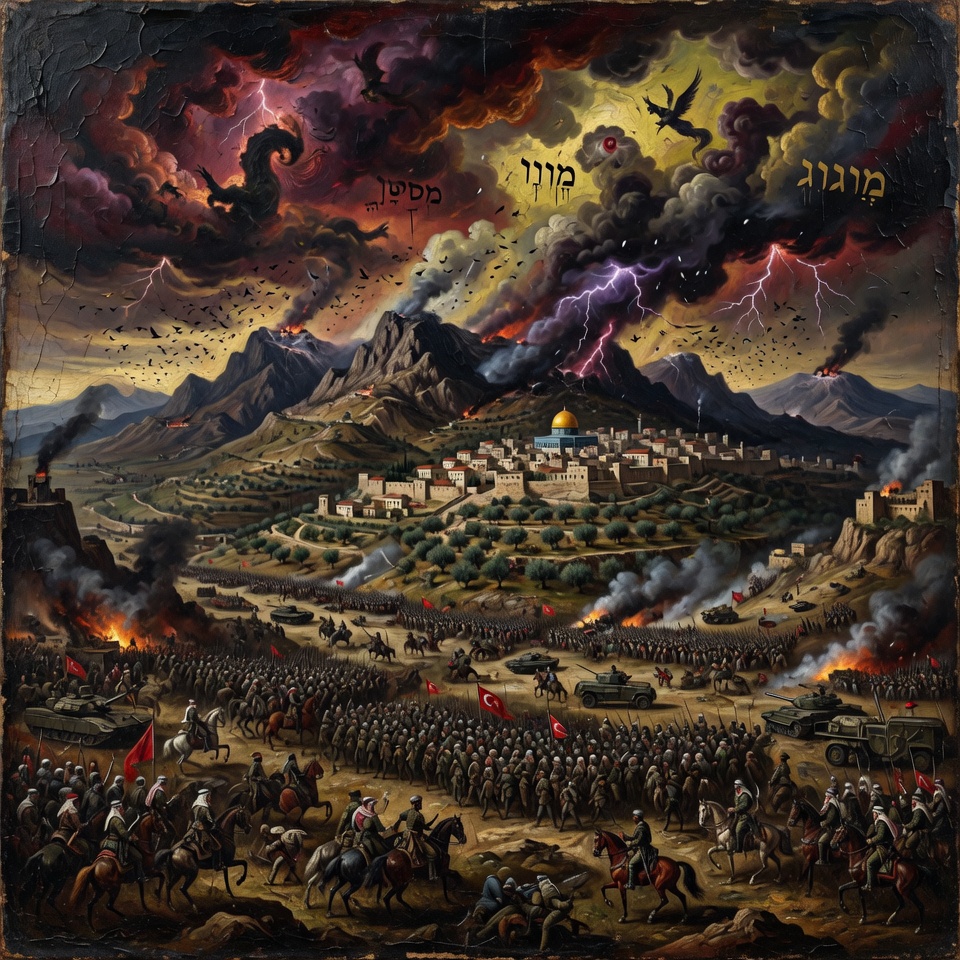
Another prophecy yet to be fulfilled — on which Christian Zionists keep a watchful eye — can be found in the book of Ezekiel. This is an event commonly known as the "War of Gog and Magog". Written approximately 500 years before the time of Yeshua, Ezekiel's 38th chapter foretells of the emergence of an Iranian-Russian alliance that will bring war "against the mountains of Israel". Christian Zionists also believe, pursuant with Ezekiel's prophecy, that the aforementioned alliance will garner the support of a host of smaller nations including Turkey, Libya, and Sudan. Ezekiel states that the enemies of Israel will cover the Holy Land "as a cloud" — and the world will see that Israel is seemingly on the verge of annihilation. However, the prophecy confirms that the enemies of Israel will be eradicated on a level that is unfamiliar with recorded history:
Finally, Christian Zionists hold sacred the prophetic foretelling of Israel's redemption, examples of which can be found in both the Hebrew Tanakh and the New Testament:
It is with this prophecy that Christian Zionist dogma is aligned in its belief that the salvation of Israel follows God's divine timetable. Furthermore, Christian Zionists maintain that it is a prophecy indicative of not only God's mercy and love, but of His faithfulness to His promises as well.
As previously stated, Christian Zionism rises and falls on the "irrevocable" (Rom. 11:29) and "everlasting" (Gen. 17:7) nature of the Abrahamic Covenant, found in the book of Genesis. God's unconditional covenant with Abraham can be effectively broken down into three essential components.
First, God promised Abraham personal blessings:
Second, God promised Abraham and his descendants a great land — to make him a "great nation":
Third, the final component consists of God's promise to bless others through Abraham:
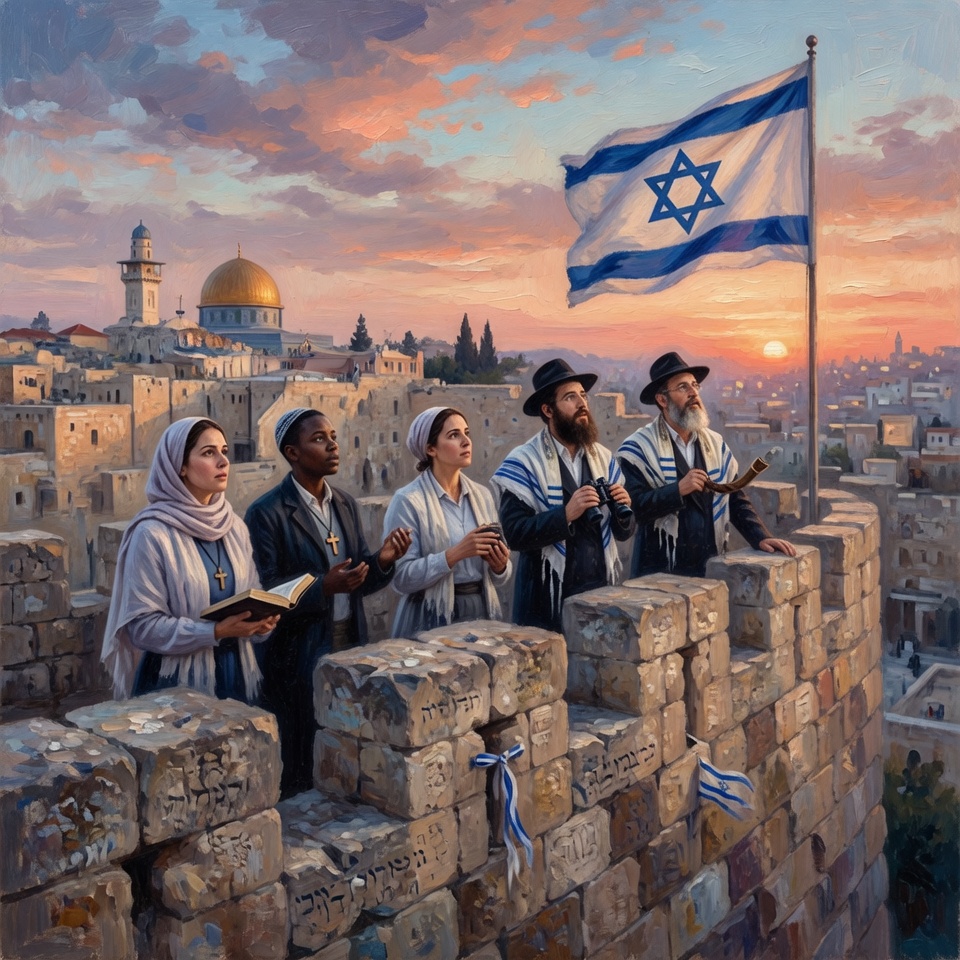
The backbone of Christian Zionism consists of a Biblical "mandate" under which Christians are directed, by the Lord, to bless His people. Christian Zionists know that God blesses those who seek to bless His people, and curses those who would curse them. The mandate of Christian Zionism consists of numerous Scriptural passages found in both the Hebrew Tanakh and the New Testament:
Christian Zionists willfully and joyfully act as the "watchmen" appointed by God to never keep silent "for Zion's sake". They seek to honor this by "educating the nations" in the cultivation of a sound, Biblical doctrine that recognizes not only the Biblical significance of the Jewish people, but God's command to serve, support and love them as well. Christian Zionists also fulfill their roles as "watchmen" when they become intercessors through unceasing prayer on Israel's behalf. Today, several Christian Zionist organizations in Israel — such as CFI (Christian Friends of Israel) and Bridges for Peace — serve and love the Jewish people unconditionally.
To grasp the full weight of this mandate, one must understand that it is not a suggestion offered to the especially devout, nor a calling reserved for a particular denomination or ministry. It is a standing order issued to the whole Church, rooted in the unchanging character of God and binding upon every believer who claims the name of Christ. The Scriptures cited above do not read as gentle encouragements; they read as commands. To “comfort” the people of Israel, to “speak tenderly” to Jerusalem, to serve as “watchmen” who “never hold their peace” — these are imperatives, and the God who issued them has not rescinded a single one. The believer who ignores them is not exercising a permissible liberty; he is neglecting a duty as real as any other the Scriptures impose.
The genius of the mandate lies in its breadth. It does not demand of every Christian the same expression of obedience, but rather calls each according to his gifts and his circumstances. For some, the mandate is fulfilled through intercession — the quiet, unceasing labor of prayer on Israel’s behalf, offered in obedience to the command to give God “no rest” until He establishes Jerusalem as a praise in the earth. For others, it is fulfilled through education — the patient work of teaching the nations a sound biblical doctrine that recognizes the enduring significance of the Jewish people. For still others, it takes the form of material support, of physical presence in the land, of advocacy in the public square, or of friendship offered without condition. No believer is exempt on account of his limitations, and none is excused on account of his abundance. The mandate meets each Christian where he stands and asks only that he obey with what he has been given.
It is essential to recognize what the mandate is not. It is not a license for arrogance, nor a charter for the kind of triumphalism that has so often disfigured the Church’s dealings with the Jewish people. The watchman does not stand upon the wall to lord his position over the city he guards; he stands there to serve it, to warn it, to intercede for its safety through the long hours of the night. So too the Christian Zionist. His support for Israel is not the support of a benefactor who expects gratitude, nor of a strategist who anticipates reward. It is the support of a servant who has understood, at last, the proper order of things: that the Gentile believer is the branch and not the root, the grafted-in and not the cultivated, the debtor and not the creditor. The mandate, rightly understood, produces humility, not pride.
Nor is the mandate contingent upon the conduct of those it commands the believer to bless. This is perhaps its most difficult and most liberating feature. The Christian is not instructed to bless Israel only when Israel is righteous, to comfort the Jewish people only when they are grateful, or to pray for Jerusalem only when its leaders act wisely. The command is unconditional precisely because it is grounded not in the worthiness of its object but in the faithfulness of its Author. God did not promise to bless those who bless a perfect people; He promised to bless those who bless Abraham’s descendants, full stop. The believer who waits for Israel to earn his support has fundamentally misunderstood the nature of the covenant and the character of the God who made it.
There is, moreover, a sobering corollary embedded within the mandate — one that the modern Church ignores at its peril. The same God who promised to bless those who bless His people promised, with equal solemnity, to curse those who curse them. The mandate is therefore not merely an invitation to blessing but a warning against its opposite. The long and sorrowful history traced throughout this series is, in one sense, the chronicle of what befalls a Church that inverts the mandate — that curses where it was commanded to bless, that despises where it was commanded to serve, that persecutes where it was commanded to comfort. The nations and kingdoms that “will not serve” Israel, the prophet Isaiah warned, “shall perish.” History has not been kind to those who tested that warning.
To stand as a watchman, then, is to accept a charge of the highest consequence. It is to position oneself upon the wall not as a spectator of prophecy but as a participant in obedience — to lift one’s voice for Zion’s sake in an age when the voices raised against her grow louder by the day. The Christian Zionist does not claim to know the hour of every prophetic fulfillment, nor to hold the key to every mystery of the end. He claims only to know what the Lord has commanded, and to be found doing it. In a world that increasingly treats the Jewish people as a problem to be managed rather than a people to be blessed, the watchman’s task has lost none of its urgency. If anything, the hour has made it more urgent still.
It bears emphasizing that the watchman’s vigilance is, by the prophet’s own design, a labor without intermission. “They shall never hold their peace day or night,” Isaiah declares — a phrase that forecloses the possibility of a part-time mandate, a seasonal solidarity, or a friendship that withdraws when the cost of it rises. The believer who stands with Israel only when the standing is easy, who blesses only when the world applauds and falls silent when it sneers, has not yet understood the watch to which he was appointed. The wall is most in need of its watchmen precisely when the night is darkest, and it is in those hours — not the bright and comfortable ones — that the authenticity of the mandate is proven.
And so the biblical mandate, far from being a relic of an ancient text, presses upon the conscience of the Church with undiminished force. It calls the believer out of the comfortable neutrality that has too often passed for Christian virtue, and summons him to a love that is active, costly, and unconditional. It asks not for sentiment but for obedience; not for admiration of the Jewish people from a safe distance, but for the watchman’s nearness to the wall. To answer that call is to take one’s place in a line of faithful witnesses stretching back through the centuries — the Puritans, the Shaftesburys, the Blackstones — who heard the same command and obeyed it. To ignore it is to repeat the gravest error of the Church’s past. The mandate remains. The only question is whether this generation of believers will rise to meet it.
The theological foundation of Christian Zionism is predicated upon the faithfulness of God to His promises — specifically, those found in the Abrahamic Covenant. This represents a formidable obstacle for Replacement Theologians — those who would maintain that God is "finished" with the Jewish people — who, as a result of their disobedience and rejection, can no longer be called the "Apple of His Eye". God's faithfulness not only discredits Replacement Theology, it completely renders it as a position that is as unbiblical as it is untenable.
In response, the Christian Zionist would ask: what if God is a Faithful God? What if the Holy One of Israel is an omniscient God — knowing beforehand the transgressions and backslidings of His people? What if God is a God of forgiveness and mercy? Are these not the fundamental character attributes of our Divine Creator? If we truly know God as such, then how is it we've failed to acknowledge His promises accordingly? Is our God a God who would intentionally facilitate a Covenant with a people He chose [Deut. 7:6–8], label it as "everlasting" [Gen. 17:7–8] and "irrevocable" [Romans 11:29], with the full knowledge that He would nullify said Covenant at a later time when His people failed to live up to it — a failure of which He knew beforehand?
If God is truly "faithful", and He is [1 Cor. 1:9; Lament. 3:23; Psa. 86:15], then He is faithful to His promises. To accept this biblical truth is to acknowledge that God's covenantal promises to the Jewish people remain alive. In so doing, one can see that the doctrine of Christian Zionism is not indicative of "extremism", but of a manifestation and implementation of a sound, theological doctrine predicated upon Scriptural truth.
Fallacious misconceptions aside, both skeptics and opponents of Christian Zionism would be hard-pressed to deny one basic truth: the roots of Christianity are entirely Jewish. To deny, disregard, or even downplay the Hebraic roots of the Christian faith would be to compromise its very identity. The Word of God — in which can be found the very reason for the hope shared by all Christians — was written by Jewish hands, originally spoken with Jewish tongues, and delivered to the nations on the heels of Jewish feet.
To acknowledge and accept this as fact is to acknowledge the infallible nature of God's Word. To accept this as truth is to acknowledge that Gentiles, even in this day, owe the Jewish people a debt of gratitude that is as colossal as it is just. Indeed, it is time that Christians everywhere acknowledge that our 2,000 year history has done a most grievous injustice to the Jewish people. It is time to recognize and obey our Savior's commandment to be known by our love — a love on which it is neither our place to attach condition nor assign longevity. In so doing, we can see Christian Zionism not as a "fundamentalist movement", but as an unflinching and passionate desire — in both word and deed — to share our hope with the very people who gave it to us:
Strip away the centuries of controversy, the academic jargon, and the political noise, and the entire case for Christian Zionism reduces to a single, inescapable question: Is God faithful? Everything hangs on the answer. If God is not faithful — if His covenants expire, if His promises lapse, if His “everlasting” means “until further notice” — then the Christian Zionist has built his house upon sand, and Replacement Theology stands vindicated. But if God is faithful — truly, unalterably, eternally faithful — then every objection raised against Christian Zionism collapses at once, and the believer who stands with Israel is revealed not as an extremist but as a simple man who took God at His word. There is no middle ground here. One either trusts the faithfulness of God or one does not.
And here is the part the critics never seem to reckon with: the faithfulness of God is not a doctrine Christians can quarantine to the Jewish people alone. It is the very ground beneath their own feet. The Gentile believer who argues that God abandoned His covenant with Israel has, perhaps without realizing it, signed the death warrant of his own assurance. For the New Covenant on which he stakes his eternity rests upon the identical divine faithfulness he has just denied. If God could revoke His everlasting promise to Abraham because Abraham’s children stumbled, then God can revoke His promise of salvation when His children stumble — and they do, daily. The believer who saws off the branch of Israel’s covenant discovers, too late, that he was sitting on it. To impugn God’s faithfulness to the Jew is to dissolve the believer’s own hope. The two stand or fall together.
This is why the question of Israel can never be a peripheral one for the thinking Christian. It is not a niche interest, a hobby for prophecy enthusiasts, or a political posture to be adopted or discarded as the winds of the age dictate. It is a litmus test of one’s entire theology — a single thread which, when pulled, unravels or secures the whole garment. Tell me what a man believes about God’s covenant with Israel, and I will tell you what he believes about the reliability of God Himself. The doctrine is that fundamental. It reaches down to the bedrock on which every other Christian conviction is built.
There remains the matter of the debt — and it is a debt that no honest Christian can deny. Every word of Scripture the believer cherishes was written by Jewish hands. Every prophet who foretold the Messiah was a son of Israel. The patriarchs, the apostles, the Savior Himself — all came through the Jewish people, the lineage God chose and preserved across four thousand years of history precisely so that, in the fullness of time, the light of the world might shine forth from Zion. The Gentile Church did not invent the faith; it inherited it. It did not cultivate the olive tree; it was grafted into one already standing. To forget this is not merely ungrateful — it is to forget who we are and from whence our hope has come. The Christian who despises the Jew despises his own origin.
And so we arrive, at the end of this long examination, not at a political conclusion but at a spiritual one. Christian Zionism, properly understood, is neither a movement nor an ideology nor a voting bloc. It is something far older and far simpler: it is gratitude. It is the believer turning to the people through whom he received every blessing he holds dear and saying, at long last, thank you — and meaning it, not with words alone but with the unconditional love to which Christ Himself called His followers. After two thousand years of contempt, of crusade and inquisition and pogrom, the Church is being given an opportunity to write a different ending. The question that closes this series is the same one that opened it, now sharpened to a point: Will the branches, at last, honor the root?
Consider what is at stake in that question, for it is not rhetorical. The reconciliation chronicled in this series is not guaranteed; it is offered. The door that has opened between Christian and Jew after two millennia of estrangement can be walked through or it can be allowed to close again, and the choice belongs to this generation of believers. Never before in the long and often shameful history of the Church has the opportunity been so clear or the obstacles so few. The State of Israel stands reborn, against every prophecy of the cynics. The Jewish people have returned to the land their God promised them. And a growing multitude of Christians, awakening from centuries of theological slumber, have begun to recognize in these events the unmistakable fingerprints of a faithful God. The convergence is extraordinary. The only thing it awaits is a Church willing to respond.
Let the skeptic object, then, and let the Replacement Theologian marshal his arguments. The Christian Zionist need not answer every charge or untangle every objection to rest secure in his position, for his position does not finally depend upon the cleverness of his apologetics. It depends upon a Person — upon the character of the God who swore by Himself because He could swear by no one greater, who bound Himself to Abraham in an everlasting covenant, and who has kept that covenant through every catastrophe the centuries could throw against it. The Jewish people are still here. Israel is still here. After exile and dispersion, after inquisition and Holocaust, after every human effort to erase them from history, they remain — living, breathing, irrefutable evidence that the God of Abraham, Isaac, and Jacob keeps His word. That is the foundation on which Christian Zionism stands. It is a foundation that cannot be shaken, because the One who laid it cannot fail.
"For if the Gentiles have been partakers of their spiritual things, their duty is also to minister to them in material things." — Romans 15:27
1 Reagan, D. (2006). The Jews in Prophecy: Cast Aside or Destined for Glory? Lamb and Lion Ministries. Retrieved from http://www.lamblion.com/articles/prophecy/Jews-Israel/Jews-01.php