
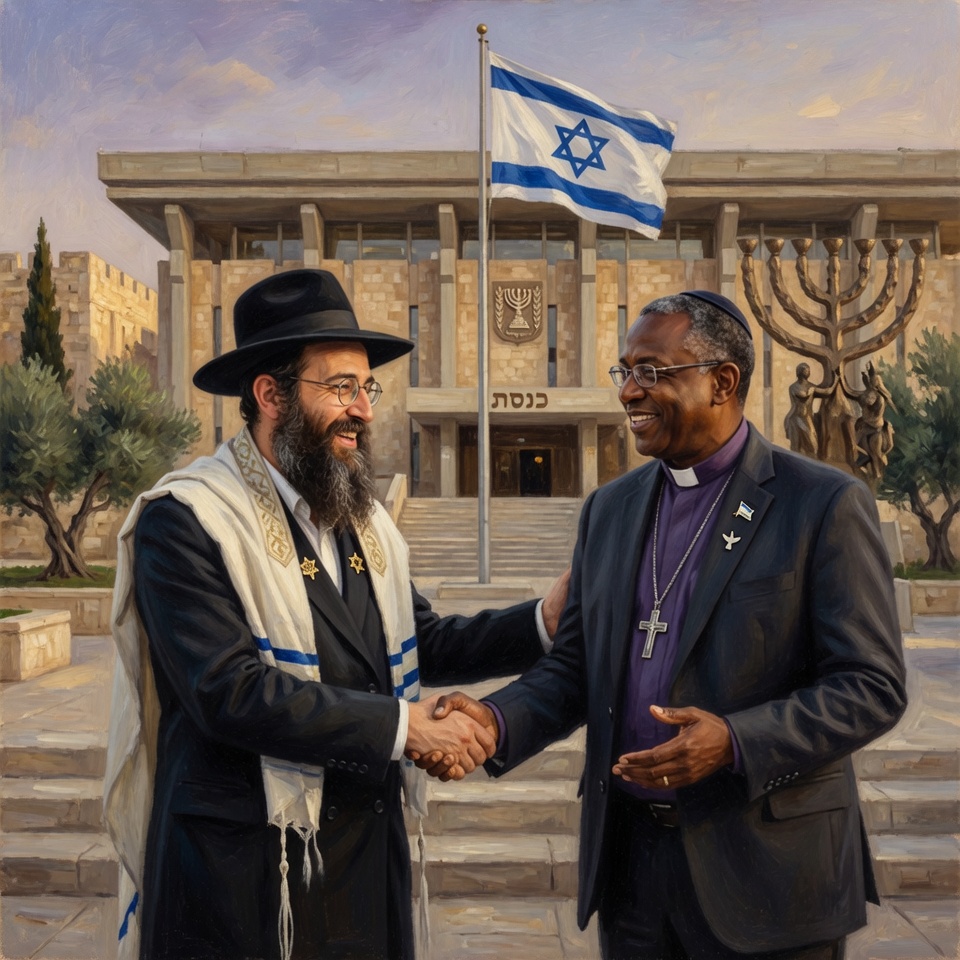
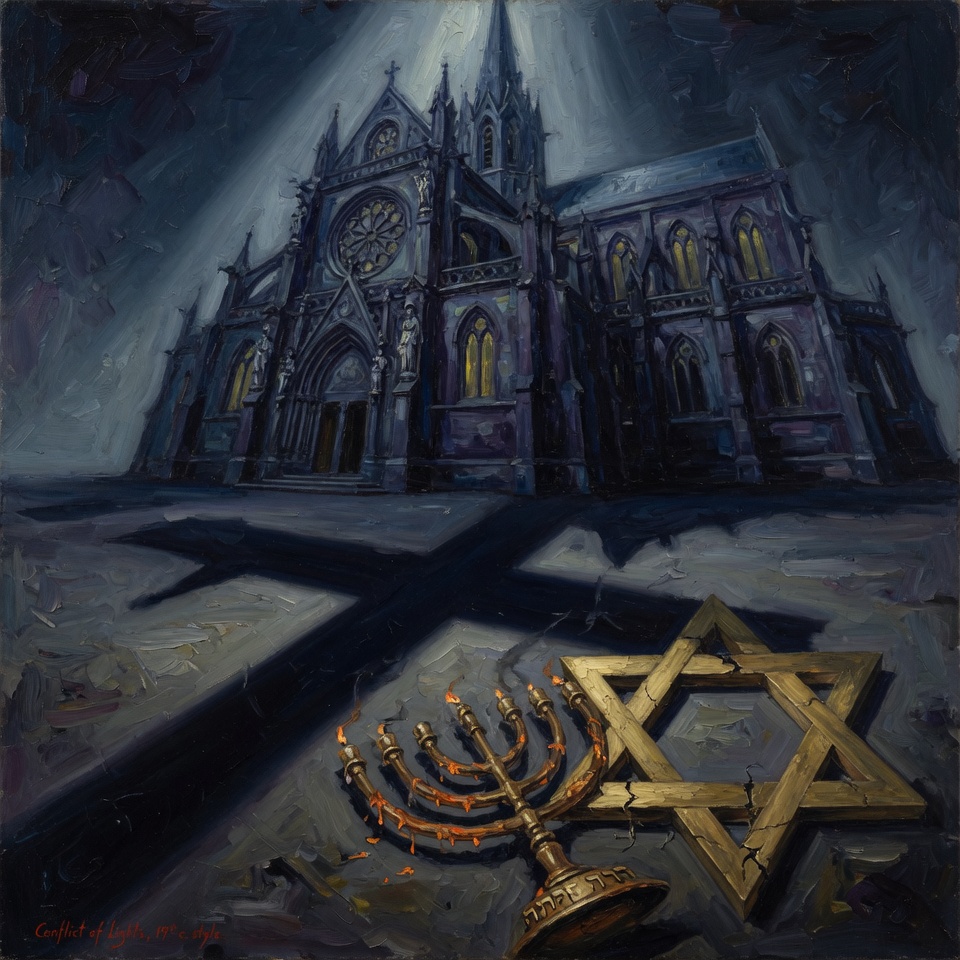
The current "state of affairs" that is the relationship between Jews and Christians remains a "work in progress", and understandably so. Although Jewish sentiment towards Christians remains, to a lesser degree, one of caution and skepticism, Jewish-Christian relations have, more so in recent years, been assisted through the realization that Christian sincerity and its genuine desire to stand alongside the people of Israel is entirely unconditional.
Several manifestations of enhanced Jewish-Christian relations have solidified into professional, organizational entities. Such examples include The Judeo-Christian Alliance and the Christian Allies Caucus, which has taken the form of an official political lobby in the Israeli Knesset. Founded by a Knesset member, the late Dr. Yuri Shtern, the Christian Allies Caucus, created on January 5, 2004, carries the following mission statement:
"The Knesset Christian Allies Caucus has attracted an increasingly diverse and growing number of Christian leaders globally. The caucus works with Christians who support Israel and with those who are undecided on their position towards Israel. Many Christians recognize that their belief in the Bible connects them to the land and the people of Israel. On this basis, we work together to achieve our goals."
Evidence supporting the "unconditional" nature of the Christian Zionist support for such an initiative is documented as a "Caveat of the Knesset Christian Allies Caucus":
"The caucus condemns and refuses alliances with any groups that pursue the conversion of Jews to Christianity."
The formation of the Christian Allies Caucus has been welcomed with open arms by many Christian Zionist organizations, including Christian Friends of Israel and the International Christian Embassy of Jerusalem (ICEJ). Upon learning of the Caucus' formation, Malcolm Hedding, Executive Director of the ICEJ, stated:
If the first epoch of Jewish-Christian relations was defined by the long collapse chronicled in the preceding installment, the present epoch is defined by something the church has rarely extended to the Jewish people across two millennia: repentance. The reconciliation now underway between believing Christians and the Jewish people is not the product of diplomatic convenience, nor the fruit of a softened theology that no longer takes Scripture seriously. It is, on the contrary, the product of a theology taken more seriously than it has been in centuries — a recovery of the plain biblical witness that the church, in its long detour through Replacement Theology, had buried beneath layers of allegory and contempt. Reconciliation, properly understood, is not the abandonment of conviction. It is conviction restored to its biblical foundation.
It must be said plainly that the burden of this reconciliation falls principally upon the church, not the synagogue. The historical record admits no honest dispute on this point: it was the church that charged the Jewish people with deicide, the church that authored the doctrines of contempt, the church that blessed the expulsions and stood by the massacres. The Jewish people did not withdraw from the relationship; they were driven from it at the point of a sword wielded in the name of Christ. Any reconciliation that fails to begin with this acknowledgment is not reconciliation at all, but a further insult — an invitation to the wronged party to forget the wrong. The Christian Zionist movement, at its most faithful, does not ask the Jewish people to forget. It asks the church to remember.
This is why the unconditional character of authentic Christian Zionist support is so essential, and why the Knesset Christian Allies Caucus took such care to repudiate any alliance aimed at the conversion of Jews. The Jewish people have ample historical reason for caution; for centuries, Christian friendship arrived bearing conditions, and the price of that friendship was frequently the surrender of Jewish identity itself. The forced baptisms of the Crusades, the coerced conversions of the Inquisition, the missionary campaigns that treated the Jew as a soul to be harvested rather than a neighbor to be loved — these are the memories that any genuine reconciliation must overcome. When Christian Zionists declare their support to be unconditional and disavow any agenda of conversion, they are not diluting the Gospel. They are removing the historical poison that has, for too long, made the very word “Christian” a source of dread in Jewish ears.
The reconciliation now taking shape is therefore best understood not as a novelty but as a homecoming. The earliest church knew no division between love of Christ and love of the Jewish people, for the two were inseparable in the persons of the apostles themselves. The branches were not yet at war with the root. What the modern Christian Zionist movement seeks is the restoration of that original unity — a church once again willing to honor the covenant people through whom it received the oracles of God, the patriarchs, the prophets, and the Messiah Himself. The healing of this ancient division is not, in the final analysis, a matter of politics or sentiment. It is a matter of obedience: a return to the explicit instruction of Scripture that the Gentile believer is to provoke no arrogance toward the natural branches, but rather to stand in humble gratitude alongside them.
There remains, of course, a residue of caution on the Jewish side, and it would be naive to pretend otherwise. Trust shattered over two thousand years is not rebuilt in a single generation, however sincere the present effort. The Jewish people have learned, through bitter and repeated experience, to scrutinize the friendship of the nations, and the church has given them little historical reason to lower their guard. Yet the evidence of changed hearts is mounting. The proliferation of organizations devoted to standing with Israel without precondition, the willingness of Christian leaders to confront the anti-Semitic legacy of their own tradition, and the growing chorus of believers who pray for the peace of Jerusalem out of conviction rather than calculation — all of these testify that something genuine is afoot. The reconciliation is real, even where it remains incomplete.
For the Christian Zionist, this work of healing carries an urgency that transcends the merely historical. To bless the Jewish people is not an optional addendum to the faith but a direct command, rooted in God’s promise to Abraham that He would bless those who bless his descendants and curse those who curse them. The reconciliation of Jew and Christian is therefore not a humanitarian project layered atop the Gospel; it is an expression of the Gospel’s own logic, a recognition that the God who keeps His covenant with Israel is the same God in whom the Gentile believer has placed his trust. To heal the division is to honor that God. To perpetuate it is to call His faithfulness into question. In this sense, the reconciliation of Christians and Jews is among the truest tests of whether the church has, at last, learned to take God at His word.
It is instructive to observe where this reconciliation has taken institutional root, for the pattern is telling. It has flourished not in the academic seminaries that produced the literature of supersessionism, nor in the denominational bureaucracies that to this day pass resolutions against the Jewish state, but among ordinary believers and the grassroots organizations they have built. The Christian Allies Caucus, the International Christian Embassy Jerusalem, Christian Friends of Israel, and the scores of ministries that have followed in their wake did not arise from the top of the ecclesiastical hierarchy. They arose from the conviction of laymen and pastors who read their Bibles and concluded that the God of Israel had not abandoned Israel. This is reconciliation from the ground up — a healing that proceeds not by official decree but by the slow, sincere labor of people who have chosen, against the inertia of centuries, to stand where Scripture told them to stand.
The Jewish reception of this changed posture, while measured, has been significant in its own right. That a sitting member of the Knesset would establish a formal caucus to cultivate Christian friendship, and that Israeli leaders would welcome Christian support into the very chambers of the Jewish state, marks a development that would have been unthinkable for most of the preceding two thousand years. It signals a cautious but genuine willingness, on the Jewish side, to distinguish the Christian Zionist from the Crusader, the friend from the missionary, the one who comes to bless from the one who came to convert. This distinction, hard-won and still being tested, is the very substance of reconciliation. It is the recognition that the hand now extended is, at last, an open one.
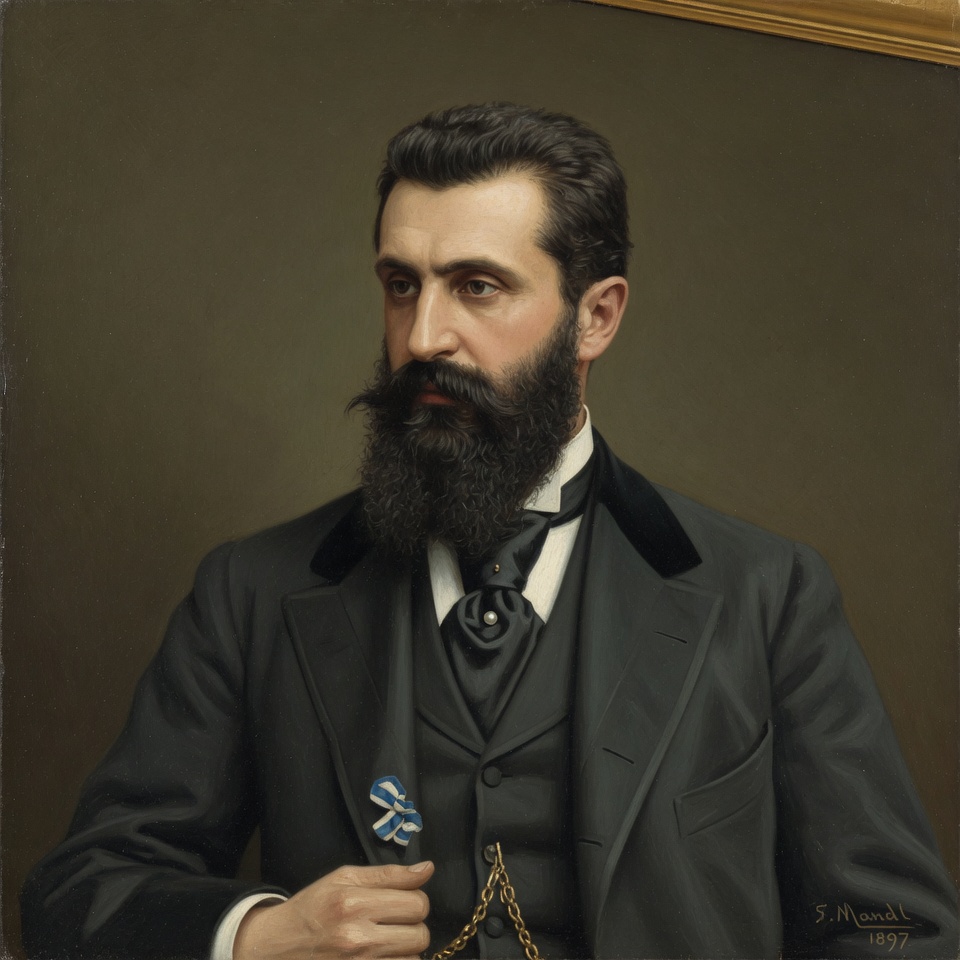
Some of the misconceptions regarding Christian Zionism can be found when attempting to trace its origin. There are those scholars who would argue that Christian Zionism originated with Theodore Herzl, as evidenced by his acknowledgement of the "Christian Zionists" in attendance at the first Zionist congress in 1897. Others would acknowledge the Anglican, John Nelson Darby (1800–1882), founder of the doctrine of Dispensationalism, as the "inventor" of Christian Zionism. Even so, there is historical support showing that Christian Zionist theory predates both individuals.
Considered a "forerunner" of Christian Zionist dogma, the prominent British lawyer Sir Henry Finch wrote a discourse in the year 1621 entitled The World's Great Restoration or Calling of the Jews in which he openly called for the support of his fellow countrymen for the Jewish people and a return to their biblical homeland in support of biblical prophecy. His position was not greeted favorably by his fellow Englishmen, and would eventually land him in jail.
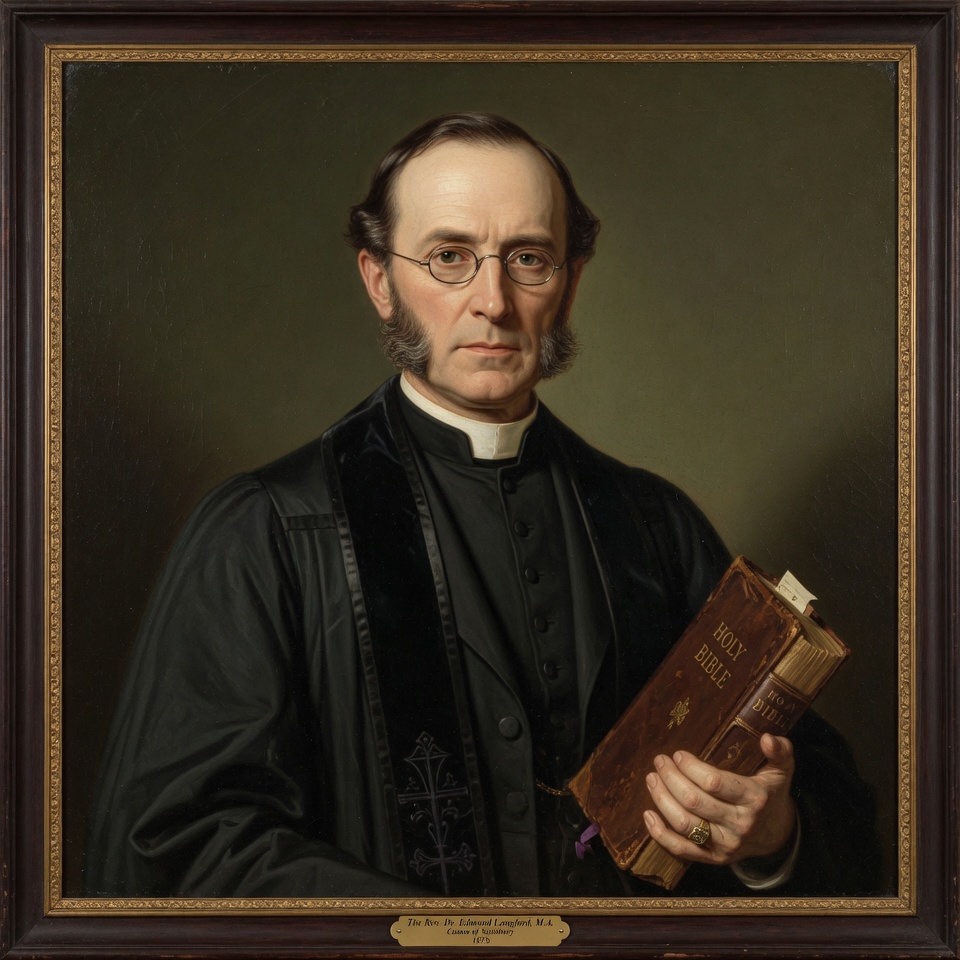
Christian Zionism gained momentum in the 19th century by way of John Nelson Darby. Widely known for his doctrine of Dispensationalism, Darby surmised that biblical history can be effectively explained by dividing it into 7 segments, or dispensations. Each dispensation represents a manner in which God has dealt with man. The seven dispensations are:
2. Conscience or Moral Responsibility (Genesis 3:7)
3. Human Government (Genesis 8:15)
4. Promise (Genesis 12:1)
5. Law (Exodus 19:3)
6. Church (Acts 2:1)
7. Kingdom (Revelation 20:4)
A tie-in between Darby's theory and Christian Zionism is found in his belief that the Jewish people have a unique role in God's redemptive plan — a belief supported by Christian Zionist dogma. Such a belief neither originated with nor was exclusive to Darby's. As Isseroff states:
Opponents of Christian Zionism, such as the Anglican Stephen Sizer, have publicly opined that it was invented by Darby. This is entirely false. Quite literally, Christian Zionism originated, as previously stated, centuries prior to Darby.
While an increasing number of Christians are only now beginning to realize the biblical foundation upon which Christian Zionism stands, the controversy surrounding its doctrinal beliefs increases at a rate seemingly proportionate to its support. Among the most prevalent misconceptions is a view of Christian Zionism as a "fundamentalist movement" with the overall objective of converting the Jews to Christianity. This is partially incorrect. Christian Zionists are, first and foremost, "Christians". As Christians, we are commanded by the Lord to "love":
Christian Zionists assert that Christians are called to love in the same manner in which Christ our Lord loves us — and it is as He loves Israel: unconditionally. Just as God did not place conditions upon His loving promises to His people, true Christian Zionism does not, and shall not, place conditions upon the love it extends towards not only the Jewish people, but to all humanity.
While the cornerstone objective of all Christian Zionists remains to advance the Kingdom of God, their becoming blessings to the "apple of God's eye" does not depend on the Jewish conversion to Christianity. For Christians to place this kind of condition on the love shown to the House of Israel is to once again facilitate the complete and total collapse of Jewish-Christian relations — an assertion proven consistently through history. The Christian support for and love of the nation of Israel and the Jewish people is entirely unconditional.
Another misconception contends that Christian Zionists "blindly support the Israeli government and its politics". May this be, in no way, unclear: Christian Zionism blindly supports the Holy Word of God — no more; no less. Since political decision-making is rarely cohesive with theological doctrine, such an assertion is as unbiblical as it is nonsensical.
It should be said that Christian Zionists stand in diametric opposition to any concessions through which the land of Israel becomes divided and/or surrendered to her neighbors — a doctrinal belief predicated upon the Word of God:
Perhaps the most widely-held misconception regarding Christian Zionist dogma states that Christian Zionists consider it their biblical duty to facilitate "Armageddon" — the earth's final battle which will, according to the book of Revelation, precede the Second Coming of Christ. This is yet another falsehood. As loyal followers of the Word of God, true Christian Zionists know that it is neither their place to concern themselves with, nor within their ability to facilitate, the exact hour in which Christ shall return:
Christian Zionism has little to do with Christian eschatology, and everything to do with Christian theology. David Brog, Executive Director of Christians United for Israel, equated such assertions to "slander":
Standing in diametric opposition to Christian Zionist dogma is the doctrine of Replacement Theology. The underlying doctrinal assertion seeking to not only belittle the objectives of Christian Zionism, but to discredit them as well, is the misguided opinion that an objective of all Christian Zionists is to act as "catalysts" to the literal fulfillment of Bible prophecy. In some cases, said opponents go so far as to falsely accuse Christian Zionists of being "extremists".
Ever-willing to quickly dismiss the biblical significance of Israel as a nation and the Jews as a people, the opponents of Christian Zionism have identified and labeled God's "everlasting" and "irrevocable" Covenant with Abraham as "conditional". In so doing, they have indirectly called into question the very faithfulness of the promises upon which the Abrahamic Covenant was established.
Replacement Theology — also known as "Supersessionism" — purports that Israel, in their ungodliness and rejection of Yeshua Ha'Mashiach, has been replaced by the Church. Furthermore, advocates maintain that "New Testament Christians" have superseded "Old Testament Israel" by way of the New Covenant ushered in by Yeshua. Replacement Theology holds that the literal "Israel" as well as the Jewish people mentioned in the Old Testament are simply allegorical representations of Christians, who have essentially "replaced" God's Chosen people and assumed the role of the "new Israel" in God's plan of redemption.
Leading the charge against Christian Zionism is Stephen Sizer, who holds the title of "vicar" of England's Christ Church. One needs to go no further than statements made by Sizer in the introduction to his book Christian Zionism: Roadmap to Armageddon? to learn that this is a church "leader" who is neither a friend of Israel nor an astute biblical scholar:
As the reader delves further into Sizer's suppositions, it is evident that his literary onslaught against Christian Zionists is deeply rooted in a clear anti-Israel agenda. Sizer goes so far as to equate Christian support for the state of Israel as the potential facilitator of another "holocaust":
Replacement Theology ultimately rises and falls on the belief that the covenantal promises made by God to Abraham in Genesis were entirely "conditional". Supersessionists hold that the Jewish people forfeited their role as benefactors to the Abrahamic Covenant through their disobedience and lack of repentance. Once again, Mr. Sizer provides an explanation, and once again allows a clearly anti-Semitic agenda to preclude his argument from sprouting any type of merit:
1 Israeli Knesset (2007). Knesset Lobbies: Knesset Christian Allies Caucus. Retrieved from http://www.knesset.gov.il/lobby/eng/LobbyPage_eng.asp?lobby=41
2 Ibid.
3 Hedding, M. (2004, March). The Judeo-Christian Alliance. Retrieved from http://www.khouse.org/articles/2004/512/
4 Isseroff, A. (2007). Christian Zionism. Retrieved from http://www.zionism-israel.com/dic/Christian_Zionism.htm
5 Ibid.
6 Brog, D. (2007, October 8). Slander. Christians United for Israel.
7 Sizer, S. (2004). Christian Zionism: Road-map to Armageddon? InterVarsity Press.
8 Sizer, S. (2007). The Development of a Literalist Christian Zionist Hermeneutic. Retrieved from http://cc-vw.org/articles/hermeneutics.html
9 Sizer, S. (1999). An Alternative Theology of the Holy Land: A Critique of Christian Zionism. Retrieved from http://cc-vw.org/articles/churchmanland.HTM