

The Palestinian narrative did not conquer the world on the battlefield. It conquered the world in the classroom. What decades of Arab military aggression could not achieve against the State of Israel, a generation of academics, intellectuals, and campus ideologues accomplished through something far more powerful than weapons: the systematic corruption of language, history, and the educated mind. Today, in elite universities across the United States, Britain, Europe, and Australia, the Palestinian cause has become the most fashionable moral position in the academy — taught with the authority of scholarship, repeated with the certainty of settled fact, and enforced with the social brutality of ideological conformity. Understanding how this happened — and why it is historically, morally, and theologically false — is not merely academic. It is a matter of spiritual discernment.
The Architect: Edward Said and the Weaponization of Theory
The intellectual transformation of Western academia on the question of Israel and Palestine begins with one man: Edward Said. Born in Jerusalem in 1935 — though aspects of his account of his Jerusalem childhood were later disputed by some biographers — Said became a professor of comparative literature at Columbia University and, in 1978, published Orientalism, a book that would reshape the humanities for the next half-century. The argument of Orientalism was seductive in its simplicity: that Western scholarship about the Middle East was not objective knowledge but rather a tool of colonial domination, a system of representation designed to subjugate and control the peoples of the East. Western scholars, Said argued, did not describe the Orient — they invented it, and in inventing it, they justified its conquest.
The book was immediately embraced by the academic left, and its influence spread with extraordinary speed into literature departments, history departments, political science programs, and eventually law schools and schools of education. The genius of Said’s framework — and its greatest danger — was that it preemptively delegitimized any Western scholarship that reached conclusions unfavorable to Arab or Palestinian claims. If an historian used documentary evidence to challenge the Palestinian narrative, the response was ready-made: this is Orientalism, a colonial discourse, the master’s tools being used to silence the colonized voice. The framework was not designed to be refuted. It was designed to make refutation impossible.
What Said gave the Palestinian cause was not historical evidence — he had very little of that to offer — but something more valuable in the contemporary academy: moral standing. By casting the Palestinian narrative within the framework of post-colonial theory, he transformed a territorial and political dispute into a question of justice, liberation, and the rights of the oppressed. Israel ceased to be a nation reborn from the ashes of genocide. It became a settler-colonial project. The Jewish people ceased to be the indigenous inhabitants of their ancestral land, confirmed by three thousand years of continuous presence and an unbroken covenant with God. They became European colonizers, white oppressors, the functional equivalent of South African apartheid. The lie was not crude or obvious. It was sophisticated, academically credentialed, and published by a respectable university press.
From Orientalism to “Settler Colonialism”: The Paradigm That Erased Jewish Indigeneity
If Orientalism supplied the moral posture, the decades that followed supplied the machinery. After 1978, “colonialism” hardened from one analytical lens among many into the master key of the humanities — the single frame through which literature, history, and politics were increasingly read. Out of that turn grew a dedicated field, settler-colonial studies, organized around the idea that certain societies are defined by a “logic of elimination”: settlers arrive, displace a native population, and build a new nation upon the erasure of the old. The model was developed to describe places such as Australia and North America, where it carries real explanatory force. Applied to the Jewish return to the Land of Israel, however, it required a remarkable inversion — recasting an indigenous people returning home as foreign colonizers invading someone else’s country.
That inversion is where the paradigm breaks against the evidence. To code the Jews as “settlers,” the framework must treat them as aliens to the land — yet the documentary, archaeological, and genetic record places Jewish presence there continuously for three thousand years, and the modern Zionist movement was understood by its own founders, and by much of the world that received them, as a national revival rather than an imperial expansion. Unlike the colonial powers of Europe, the Jews who came to the land served no mother country, extracted no resources for a distant crown, and returned to the one place their liturgy, language, and law had named as home through two millennia of exile. The settler-colonial label does not describe this history; it overwrites it. To make the theory fit, its practitioners were obliged to do precisely what Said accused the old Orientalists of doing — to construct the people they studied to suit a predetermined conclusion.
Nor did the framework go unchallenged within the academy itself. From the outset, serious scholars objected: the historian Bernard Lewis and others in Middle East studies argued that Orientalism oversimplified its subject, painted virtually all Western scholarship as political bias, and dismissed a great deal of genuine, careful work — a critique that has only sharpened as the paradigm calcified into orthodoxy. Its end products are now visible well outside the seminar room. The slogans that filled Western campuses after October 7, 2023 — that “decolonization is not a metaphor,” that the answer is to “globalize the intifada” — were not spontaneous eruptions. They were the public harvest of an idea cultivated in graduate programs for four decades: that Israel is a settler-colonial outpost, and that its undoing is therefore not aggression but justice.
What gives the paradigm its durability is that it reproduces itself. A framework that began as one argument among many became, over a generation, the precondition for entry into the field. Graduate admissions, dissertation committees, peer review, conference programming, hiring, and tenure all came to be administered by scholars formed within the same assumptions, so that the questions the theory cannot survive are rarely the ones a young academic is rewarded for asking. A doctoral student who set out to test whether Jewish indigeneity might be real, or whether the 1948 refugee crisis owed more to the Arab invasion than to Israeli design, would learn quickly that such inquiries carry a professional cost the opposite conclusions do not. The result is not a conspiracy but something more efficient: a self-selecting consensus that mistakes its own uniformity for proof. When everyone in the room was trained to reach the same conclusion, the absence of dissent looks like agreement rather than what it often is — a field that has quietly stopped admitting the people who would dissent.
There is a further fact the settler-colonial frame cannot absorb. The model imagines a population of European whites planted atop a native people of colour — yet roughly half of Israel’s Jews are Mizrahi and Sephardi, descendants of communities driven from Iraq, Yemen, Iran, Morocco, Egypt, Libya, and across the Arab and Muslim world in the years around 1948. They did not arrive from a European metropole; they fled to Israel from the very region the theory casts as the colonized victim, after losing homes and property their families had held for centuries. To describe a Baghdadi or Yemenite Jewish family, dispossessed by an Arab government and resettled in Israel, as a “white settler-colonizer” is not a contestable interpretation; it is a category error. The roughly eight hundred and fifty thousand Jews expelled from Arab lands are among the largest single bodies of evidence against the colonial thesis — which is precisely why the academy that built the thesis has so little to say about them. A framework obliged to erase half of its own supposed colonizers in order to stay coherent is not describing history; it is defending itself against it.
The Disciples: Building the Academic Industry of Palestinian Revisionism
Said did not work alone, and his influence did not die with him in 2003. He trained and inspired a generation of scholars who carried the project forward, institutionalized it in Middle East Studies departments across the English-speaking world, and embedded it in textbooks, curricula, and peer-reviewed journals that now constitute the mainstream of academic discourse on the subject. Columbia’s Joseph Massad, Said’s most prominent intellectual successor, has argued in published academic work that Zionism itself is a form of anti-Semitism — a position so untethered from historical reality that it would be dismissed as absurd in any other context, yet it circulates freely in academic journals without causing professional consequences for its author. At Harvard, at Yale, at Oxford, at SOAS in London, similar positions are held, published, and rewarded with tenure and promotion.
Rashid Khalidi, who holds the Edward Said Chair in Arab Studies at Columbia, has produced work that consistently minimizes Palestinian responsibility for violence, erases the history of Arab rejection of Jewish statehood, and frames every point of conflict as Israeli aggression. Norman Finkelstein, whose book The Holocaust Industry argued that the memory of the Holocaust has been politically and financially exploited — a thesis sharply condemned by mainstream Holocaust historians — nonetheless drew speaking invitations at universities across the West throughout his career. These are not fringe figures. They are published scholars, invited lecturers, and in several cases the holders of endowed chairs at prestigious institutions.
What is remarkable is not merely the content of their positions but the consistency of the pattern: in every case, the evidence is selectively presented, inconvenient historical facts are omitted, Arab agency and Arab violence are minimized or erased, and Jewish historical claims are treated with a skepticism never applied to Palestinian historical claims. The Israeli archaeologist and the Palestinian oral historian are not judged by the same evidentiary standards. The former is subjected to rigorous critical scrutiny; the latter is accepted with the reverence reserved for testimony from the margins. This is not scholarship. It is advocacy dressed in the costume of scholarship, carrying the credentials of scholarship, and protected by the institutional authority of scholarship.
BDS: When Ideology Becomes an Enforcement Mechanism
The Boycott, Divestment, and Sanctions movement — launched in 2005 — represents the organizational expression of what Said’s theory had prepared the academy to accept. BDS calls for the academic and economic isolation of Israel, the boycott of Israeli universities and scholars, and the dismantling of what it describes as Israeli “apartheid.” It has been adopted by faculty senates, student governments, academic associations, and professional organizations across the Western world. In some cases, Israeli scholars have been uninvited from conferences, their papers rejected from journals, and their careers deliberately damaged because of their nationality. This is discrimination that, applied to any other national or ethnic group, would be immediately recognized as bigotry. Applied to Israelis and Jews, it is celebrated as solidarity.
“What Said gave the Palestinian cause was not historical evidence — he had very little of that to offer — but something more valuable in the contemporary academy: moral standing.”
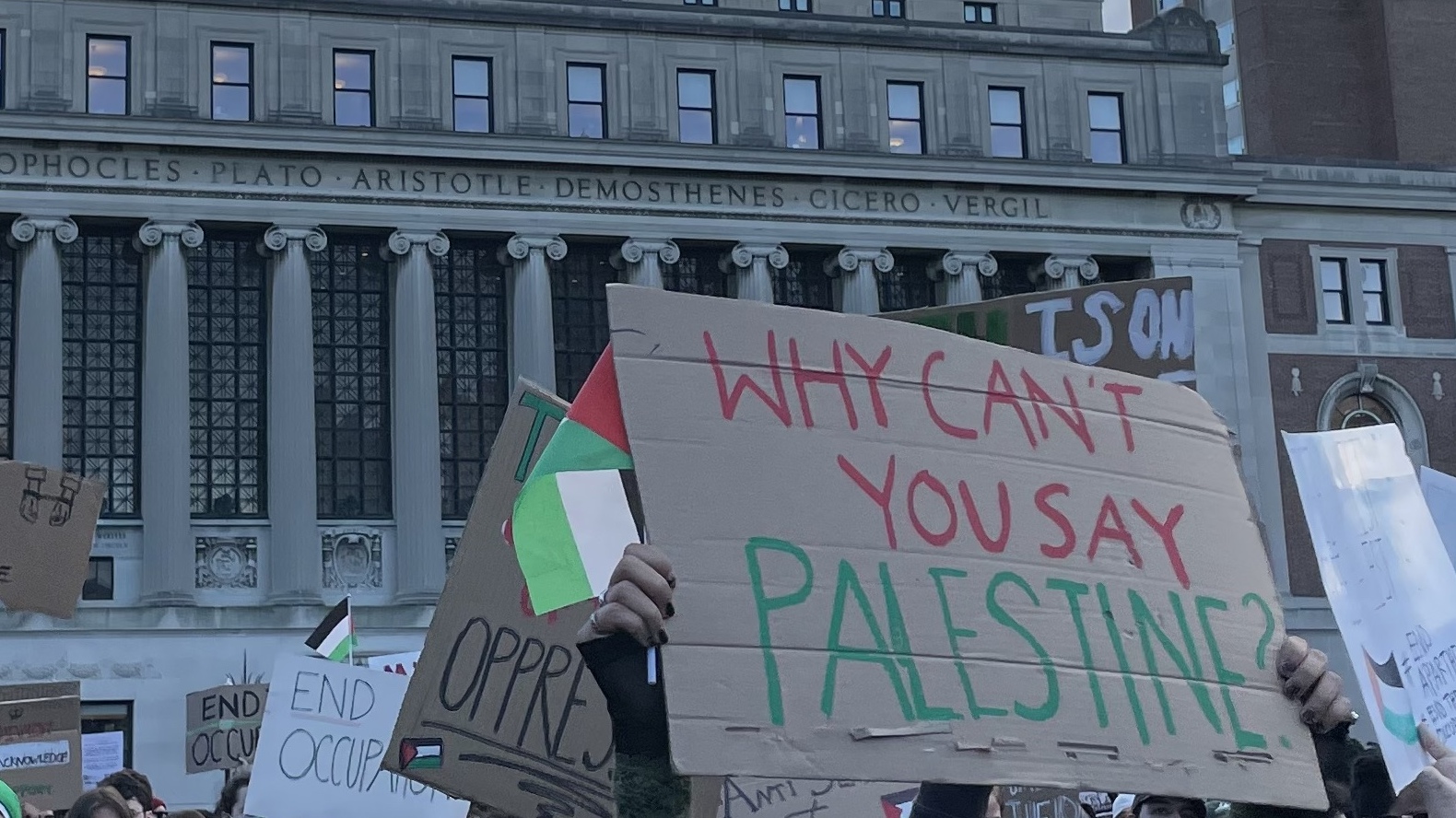
The American Studies Association voted in 2013 to boycott Israeli academic institutions — an unprecedented act of discrimination by a major scholarly organization. The American Anthropological Association came within votes of doing the same. The Modern Language Association, the Women’s Studies Association, and dozens of smaller academic bodies have passed BDS-aligned resolutions. On campuses from Berkeley to Edinburgh, Students for Justice in Palestine chapters have organized disruption of lectures by Israeli speakers, shouted down pro-Israel voices, and made Jewish students feel unwelcome and unsafe. In many cases, university administrations have either sanctioned this behavior through silence or actively endorsed it through the language of “decolonization” and “social justice.”
The irony is staggering. The Middle East’s only functioning democracy — a country where Arab citizens serve in parliament, on the Supreme Court, in the military, and as university professors — is denounced as an apartheid state. The nations that surround it, where political opposition is imprisoned, religious minorities are persecuted, and women are denied basic legal rights, receive no comparable academic scrutiny. The double standard is not coincidental. It is structural. Palestinian revisionism does not operate as a system of consistent principles applied equally to all parties. It operates as a political project with a single target.
The Textbook as Weapon: How the Lie Reaches the Next Generation
The most consequential long-term damage done by academic revisionism is not in conference papers or faculty resolutions. It is in textbooks. A generation of university students — and through them, a generation of schoolchildren — is being taught a version of Middle Eastern history in which Israel’s founding is an act of dispossession, in which Palestinian violence is resistance and Israeli self-defense is aggression, in which the word “Palestine” describes an ancient nation predating Israel rather than a Roman administrative designation adopted by political entrepreneurs in the twentieth century. These textbooks omit the Arab rejection of the 1947 Partition Plan, the Arab invasion of 1948, the expulsion of eight hundred thousand Jews from Arab countries, and the consistent Palestinian rejection of every negotiated peace offer. They present a narrative so thoroughly cleansed of inconvenient facts that it bears no recognizable relationship to the documentary historical record.
The Institute for Monitoring Peace and Cultural Tolerance in School Education (IMPACT-se) has conducted systematic reviews of Palestinian Authority textbooks and found that they do not recognize Israel’s existence, refer to Jewish holy sites as exclusively Muslim, portray all of Israel — not merely the West Bank and Gaza — as occupied Palestinian land, and celebrate terrorists as martyrs and heroes. These are the textbooks funded in part by European governments and distributed in UNRWA schools. When the United Nations agency established specifically to serve Palestinians uses educational materials that deny Israel’s existence and glorify murder, the academic world that defends UNRWA’s integrity has a great deal to answer for.
What the Academy Will Not Say
Amid all the sophisticated academic apparatus of Palestinian revisionism — the endowed chairs, the peer-reviewed journals, the conference panels, the textbooks — there are a number of simple historical facts that the academy systematically avoids stating plainly. First: the Arab League invaded the newly declared State of Israel in 1948, seeking to destroy it in its infancy. This is documented in the public statements of Arab leaders at the time. Second: the Palestinian refugee crisis of 1948 resulted primarily from that Arab invasion, not from a calculated Israeli policy of expulsion. Third: at the same time, approximately eight hundred and fifty thousand Jews were expelled from Arab countries where their communities had lived for millennia, in a population exchange that the academy has almost entirely ignored. Fourth: Israel has offered the Palestinians a state — with a capital in East Jerusalem — on multiple occasions, most notably at Camp David in 2000 and at Taba in 2001, and the Palestinian leadership refused both offers without making a counteroffer. Fifth: the Arab population of Israel proper enjoys more civil rights, legal protections, and political freedoms than the citizens of any Arab nation.
None of these facts is disputed by serious historians. All of them are omitted from the dominant academic narrative. Their omission is not accidental. It is the defining feature of an ideological project that has captured the institutions of higher learning and uses them to manufacture consent for a political position that the evidence does not support. The students who emerge from this system are not better informed about the Middle East. They are more confidently wrong about it, armed with a vocabulary of oppression and liberation that has been systematically emptied of factual content.
Perspective
The Christian who takes Scripture seriously has a framework for understanding what is happening in Western academia that no secular theory of ideology can fully provide. Isaiah called it long before Edward Said was born: woe to those who call evil good and good evil, who substitute darkness for light and bitterness for sweetness. The systematic inversion of historical truth in the academy is not simply a political phenomenon. It is a spiritual one. When an entire institutional apparatus is dedicated to denying the covenantal connection between the Jewish people and their land — a connection affirmed in Scripture from Genesis to Revelation — something more than academic fashion is at work.
The Christian response to academic revisionism is not to retreat into anti-intellectualism. It is to hold the academy to its own stated standard: truth, evidence, and the honest evaluation of historical fact. The Palestinian narrative collapses under that standard. There was no ancient Palestinian nation. There was no pre-Israeli Arab state in the land. The word “Palestine” was not an Arab designation but a Roman one, imposed as an act of ethnic erasure. The “Palestinian people” as a national entity was constructed in the 1960s as a political weapon. And the God who made a covenant with Abraham concerning this land has not revised the terms to accommodate the political ambitions of those who have rejected Him. “For the LORD has chosen Zion, he has desired it for his dwelling place” (Psalm 132:13). That is not a negotiating position. It is a declaration. No university press, no endowed chair, and no faculty resolution has the authority to overrule it.