

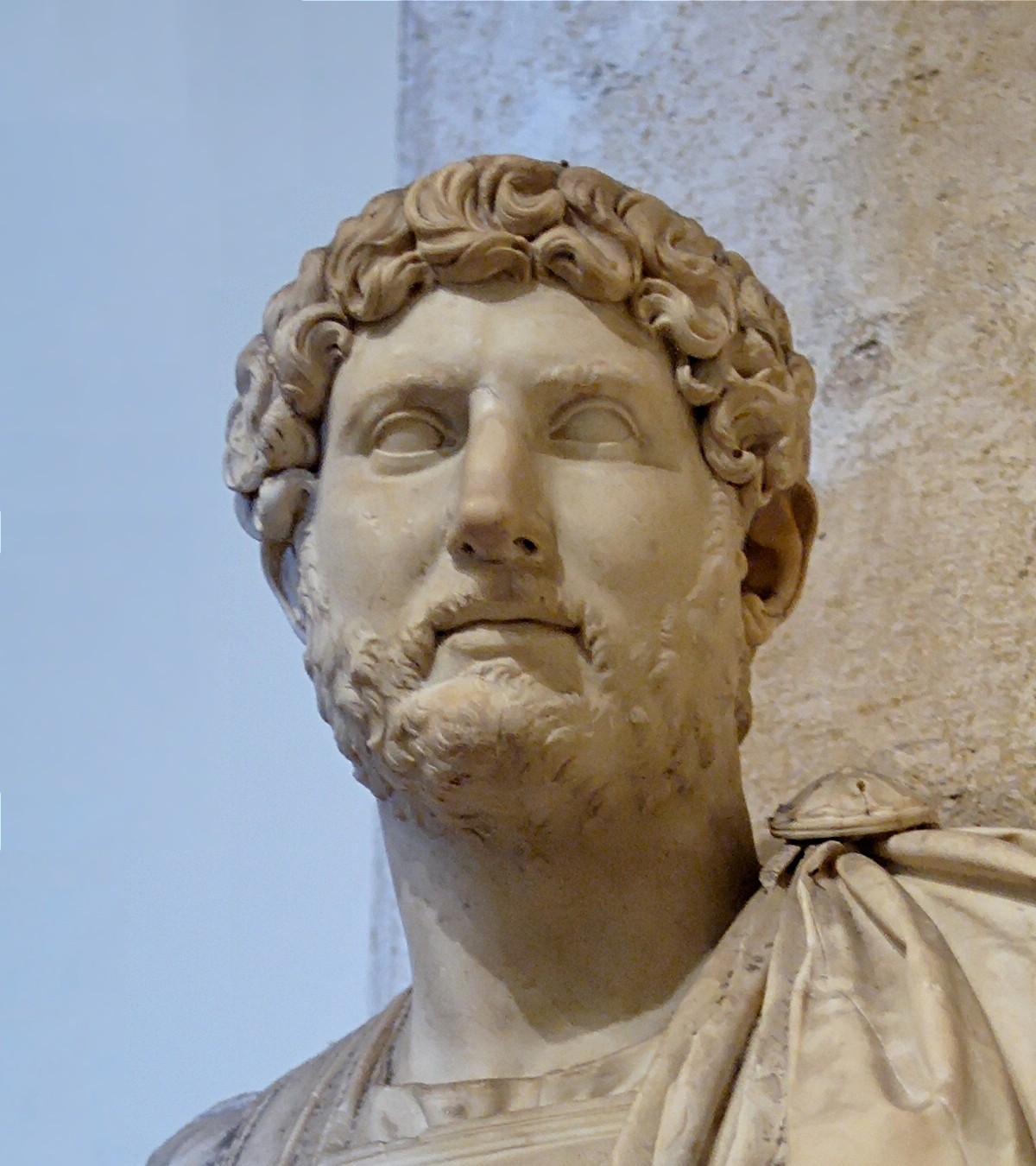
The word “Palestine” did not come from the Arab world. It did not come from history. It did not come from the people who today claim it as the name of their ancestral homeland. It came from a Roman emperor who despised the Jewish people and decided, after crushing the last Jewish revolt in 135 AD, to erase the very name of their nation from the face of the earth. Understanding this fact — not as a rhetorical point but as documented, undisputed history — is essential to understanding the entire modern conflict over the land of Israel. The name “Palestine” is not ancient. It is not indigenous. It is not Arab. It is Roman. And it was invented specifically to sever the Jewish people’s connection to their own land.
The Land Before Rome — What It Was Actually Called
From the earliest records of human civilization, the land between the Jordan River and the Mediterranean Sea was known by names rooted in its Hebrew and Semitic history. The Bible calls it Eretz Yisrael — the Land of Israel — a name that appears in the Hebrew Scriptures hundreds of times. It was also known as Canaan, the name used throughout the Pentateuch and the historical books to describe the land God promised to Abraham. After the Israelite conquest under Joshua, it became the land of the tribes of Israel, then the United Kingdom under Saul, David, and Solomon, and then the divided kingdoms of Israel in the north and Judah in the south.
When the Romans conquered the region in 63 BC under General Pompey, they inherited a land whose name, whose history, and whose people were unmistakably, documentably, and irreducibly Jewish. They called it Judaea — derived directly from the Hebrew Yehudah (Judah), reflecting the dominant ethnic and political reality of the region. Every Roman writer, geographer, historian, and administrator who mentioned the territory called it Judaea. The connection between the Jewish people and their land was so obvious and so well-established that even Rome, which had conquered it, could not avoid naming it after them.
That is, until one Roman emperor decided he had had enough of it.
Hadrian and the Bar Kokhba Revolt — The Act That Changed History
In 132 AD, the Jewish people launched their third and final revolt against Roman rule. Led by Simon bar Kokhba, whom Rabbi Akiva initially proclaimed as the Messiah, the revolt was the most widespread and militarily significant Jewish uprising since the Great Revolt of 66–73 AD. For three years, the Jewish rebels held significant territory, established a provisional government, and minted their own coins — stamped with the words “For the freedom of Israel” and “For the redemption of Israel.” The coins themselves are among the most powerful artifacts of the ancient world’s clearest statement of national identity.
Rome crushed the revolt in 135 AD with devastating efficiency. According to the Roman historian Cassius Dio, approximately 580,000 Jewish soldiers were killed in battle, fifty fortified towns were demolished, and 985 villages were razed to the ground. The remaining Jewish population was either killed, enslaved, or driven into exile. Jerusalem was rebuilt as a Roman pagan city, renamed Aelia Capitolina, and a temple to Jupiter was erected on the site of the Jewish Temple. Jews were formally banned from entering the city on pain of death — allowed to enter only once a year, on the anniversary of the Temple’s destruction, to mourn its ruins.
“Hadrian did not merely conquer a rebellion. He attempted to conquer a memory — to erase an entire people’s connection to their land by replacing the name of that land with the name of their ancient enemies.”
But Hadrian went further than military destruction. He understood, with the clear-eyed calculation of an experienced political strategist, that a conquered people’s connection to their land is most deeply rooted not in military force but in language — in the name by which the land is known. As long as the territory was called Judaea, it would always be the land of the Jews. The name itself was a claim, a covenant, a memory encoded in geography. To sever the Jewish people from their land permanently, Hadrian would have to sever the name.
In 135 AD, Emperor Hadrian issued an official decree renaming the province of Judaea as Syria Palaestina. The name was derived from Philistia — the ancient coastal strip associated with the Philistines, Israel’s most persistent biblical enemies. The choice was not accidental. It was not administrative convenience. It was a deliberate act of political warfare: erasing the Jewish name from the Jewish land and replacing it with the name of the people who had, for centuries, been the Jewish people’s most hated adversaries. It was the ancient equivalent of renaming France “Germania” after a German conquest, specifically to erase French national identity.
An Act Without Precedent — Erasing a Nation From Memory
The historical record lets us date Hadrian’s decree with precision, and the dating itself exposes the motive. Coins minted under Hadrian before the Bar Kokhba revolt still name the province Judaea; a Roman military diploma issued in 139 AD already carries the new name Syria Palaestina. The change falls squarely in the years immediately following the revolt’s suppression — not during some routine reorganization of the map, but in the direct aftermath of a war Rome regarded as a catastrophe on the scale of its greatest military disasters. The scale of Rome’s response confirms how gravely it took the threat: the emperor pulled Sextus Julius Severus from the governorship of Britain — one of the empire’s premier military commands — to direct the campaign, and committed detachments drawn from as many as twelve legions to subdue a province of otherwise modest size. And what makes the renaming remarkable is not that Rome renamed a province at all. Emperors relabeled and reorganized territories regularly, for administrative or geographic convenience. It is that, in the entire span of Roman provincial history, Judaea stands out as the single known case where a province’s name was changed explicitly as a punitive response to a rebellion. Rome had crushed many revolts. It had never before answered one by abolishing the name of the defeated nation’s homeland.
This was the application, on a national scale, of a practice Rome already knew intimately. Damnatio memoriae — the “condemnation of memory” — was the Roman custom of erasing a disgraced individual, usually a fallen emperor, from the historical record: striking his name from inscriptions, defacing his statues, deleting him from official documents as though he had never existed. Hadrian’s innovation was to inflict that erasure not on a man but on an entire people and their land. The choice of name carried the same intent. Judaea was an endonym — the name the land’s own people used for it, rooted in the tribe and kingdom of Judah. Palaestina was an exonym — an outsider’s label, drawn from a people who had vanished centuries earlier. Had Hadrian merely wanted a larger or tidier administrative unit, the natural choice was Syria-Judaea. He chose otherwise, and the choice was the message. The Greek roots of the word itself, and how it travelled from Herodotus into later Roman usage, are traced in Where Did the Word “Palestine” Come From? — but the question here is not where the word originated, it is what Rome did with it.
It should be said plainly that this reading — the renaming as deliberate de-Judaization — is the majority position among historians, not a partisan flourish. Scholars such as Seth Schwartz interpret the change as intended to celebrate the erasure of the province’s Jewish character, and the case is reinforced by everything Hadrian did alongside it: rebuilding Jerusalem as the pagan colony Aelia Capitolina, banning Jews from the city, and persecuting Jewish teachers. In fairness, the consensus is not unanimous. A minority of scholars, most notably David Jacobson, have argued that the new name was simply a rationalization of an enlarged province and need not imply vengeful intent. The dispute is genuine, and worth acknowledging honestly rather than papering over. But the weight of the evidence — the timing pinned to the revolt’s defeat, the simultaneous renaming of the Jewish capital, and the punitive measures that accompanied both — points firmly in one direction: the new name was chosen to wound, and chosen to last.
Who Were the Philistines — and What Happened to Them?
The irony of the name “Palestine” is compounded by a fact that the modern Palestinian national movement never discusses: the Philistines, whose name Hadrian appropriated, were not Arab. They were not Semitic at all. Archaeological and genetic evidence, confirmed by multiple peer-reviewed studies in the past decade, shows that the Philistines were Aegean migrants — most likely from the Greek islands or the broader Aegean world — who settled the coastal plain of Canaan during the Iron Age, around 1200 BC. They worshipped gods like Dagon and Baal-Zebub, spoke a non-Semitic language, and maintained a distinct culture that was entirely separate from and in persistent conflict with the Israelites.
More critically: the Philistines disappeared as a distinct people centuries before the Arab world even existed. By approximately 600 BC — during the period of the Babylonian Empire — the Philistine cities had been conquered, their population absorbed or dispersed, and their cultural identity had ceased to exist as a recognizable entity. When Hadrian renamed Judaea as “Syria Palaestina” in 135 AD, the Philistines had been gone for over seven hundred years. He was not naming the land after its current inhabitants. He was not naming it after an existing culture or people. He was reaching back nearly a millennium to find the most offensive, most deliberately provocative name he could for a Jewish land — the name of their ancient enemies — and stamping it onto the map as an act of calculated contempt.
“The Philistines had been extinct as a people for seven hundred years when Hadrian chose their name. He was not describing the land’s inhabitants. He was insulting the land’s rightful owners.”
The Arab World and the Roman Colonial Name
The Arab conquest of the region occurred in 637 AD, five centuries after Hadrian renamed it. The Arabs who swept out of the Arabian Peninsula under the banner of Islam did not arrive in a land called Palestine by its inhabitants. They arrived in a land that had been renamed by Roman imperial decree, and which continued to carry that Roman administrative designation in Byzantine records. When the Arab world refers to “Palestine” today, it is using a name given to a Jewish land by a pagan Roman emperor who hated Jews — not a name rooted in Arab culture, Arab history, or Arab identity.
This is worth pausing on, because the modern Palestinian national movement grounds its entire moral legitimacy in the claim that it represents a people resisting colonial oppression. Yet the very name of the state they demand — “Palestine” — is a Roman colonial imposition, applied to a land whose indigenous name was Israel, for the explicit purpose of erasing the indigenous people’s connection to it. The modern Palestinian movement has, unwittingly or deliberately, made Roman imperialism the foundation of its national identity. They have adopted as their defining national name the instrument of the most thoroughgoing act of ethnic erasure in the ancient world.
The Arab world never corrected Hadrian’s renaming because it suited their purposes not to. As long as the land was called “Palestine,” the Jewish claim to it could be presented as a modern intrusion, a colonial project, an act of dispossession. The moment the land is understood as having always been Eretz Yisrael — as it was called in every Jewish document, prayer, and piece of liturgy for two thousand years of exile — the entire framework of the modern Palestinian narrative collapses. You cannot be colonizing land that carries your own people’s name. You cannot be invaders in a place called “the Land of Israel.”
From Byzantium to the Ottomans — Why the Name Was Never Reversed
The most revealing part of the story is what happened after Hadrian. A name imposed by one emperor could have been undone by any of the powers that followed. None of them did. Under the Christian Byzantine Empire, the Roman label was not discarded but elaborated: around 390 AD the territory was subdivided into Palaestina Prima, Palaestina Secunda, and Palaestina Tertia, embedding Hadrian’s coinage still more deeply into the administrative map of the East. When Arab armies conquered the region in the seventh century, they did not restore the ancient name of the land either. They adapted the Roman one, governing the district as Jund Filasṭīn — the “military district of Palestine” — an Arabic inflection of the very Latin term a pagan emperor had imposed to blot out the Jews. The name that began as a deliberate insult had quietly become the ordinary name on the paperwork of one empire after another.
Under the long centuries of Ottoman rule there was no province called Palestine at all; the land was administered through districts such as the Sanjak of Jerusalem, reporting directly to Constantinople. At no point in this succession of rulers — Byzantine, Arab, Crusader, Mamluk, Ottoman — was the original name of the land revived, because at no point did reviving it serve the rulers’ interests. The Roman name was useful precisely because it carried no Jewish claim. To call the land Judaea or Israel was to concede whose land it had been; to call it Palaestina was to leave that question buried under a Latin word. Each successive power inherited Hadrian’s erasure and found its own reasons to preserve it — which is why a name coined in a single act of imperial spite in 135 AD still sits, almost two thousand years later, at the very center of the dispute over whom the land belongs to.
The British Mandate and the Perpetuation of the Roman Name
When the British Empire received the Mandate for Palestine from the League of Nations in 1920, it inherited and perpetuated Hadrian’s renaming. The Mandate territory was officially designated “Palestine,” and all official documents, administrative structures, and international designations used that name. Crucially, the Jewish residents of Mandatory Palestine were themselves referred to as “Palestinians” — a fact the modern Palestinian movement consistently ignores. The pre-state newspaper of the Jewish community was called The Palestine Post. The Jewish military force was called the Palestine Regiment. Jewish musicians formed the Palestine Symphony Orchestra, which became the Israel Philharmonic after 1948. The people who carried the name “Palestinian” through the Mandate period were largely Jews, not Arabs.
Arab residents of the Mandate, for their part, generally did not refer to themselves as Palestinians during this period. They identified primarily by family, clan, tribe, village, and religion — as Arabs, as Muslims, as residents of particular localities — not as a distinct Palestinian nation. The Palestinian national identity as a self-conscious, politically organized phenomenon was — as the complete absence of any Palestinian state in recorded history confirms — largely a post-1964 construction, formalized by the PLO and deliberately designed as a counter-narrative to Israeli sovereignty. The name “Palestinian,” with all the weight of implied historical indigeneity it carries today, was claimed by a movement less than sixty years old.
What God Calls the Land
Whatever Rome called it. Whatever the British called it. Whatever the United Nations calls it. The Word of God calls it Eretz Yisrael — the Land of Israel. That name appears in the Hebrew Bible over two thousand times. It appears in every Jewish prayer for the past two millennia. It appears in the founding declaration of the modern State of Israel, proclaimed on May 14, 1948. And it appears in the mouth of the God who gave it: “To your offspring I will give this land” (Genesis 12:7); “The whole land of Canaan, where you now reside as a foreigner, I will give as an everlasting possession to you and your descendants after you” (Genesis 17:8); “This is the land I swore with uplifted hand to give to Abraham, Isaac and Jacob” (Exodus 6:8). The names Scripture actually uses for this land — and the one name it conspicuously never uses — are set out in What the Bible Calls the Land.
No Roman decree has the authority to override a divine covenant. Hadrian could rename the land. He could ban Jews from their capital. He could erect pagan temples on their holy sites. He could drive the survivors of his campaign into a diaspora that would last nearly two thousand years. What he could not do — what no earthly power can do — is nullify the covenant of God. The very fact that the Jewish people returned to their land, rebuilt their cities, re-established their sovereignty, and revived their ancient language as a living tongue is the most powerful possible refutation of Hadrian’s project. He tried to erase a people from history. History did not cooperate.
Every time a Christian uses the word “Palestine” without qualification — every time a church bulletin, a sermon, or a theology textbook refers to the “Palestinian territories” as though that geographic designation is historically neutral — it is repeating, unknowingly, the act of an emperor who tried to destroy the Jewish people’s connection to their God-given land. Christians who understand what the name means, where it came from, and why it was chosen, should think carefully before allowing it to pass without challenge. The land is not “Palestine.” It never was. It is, and it always has been, the Land of Israel.