

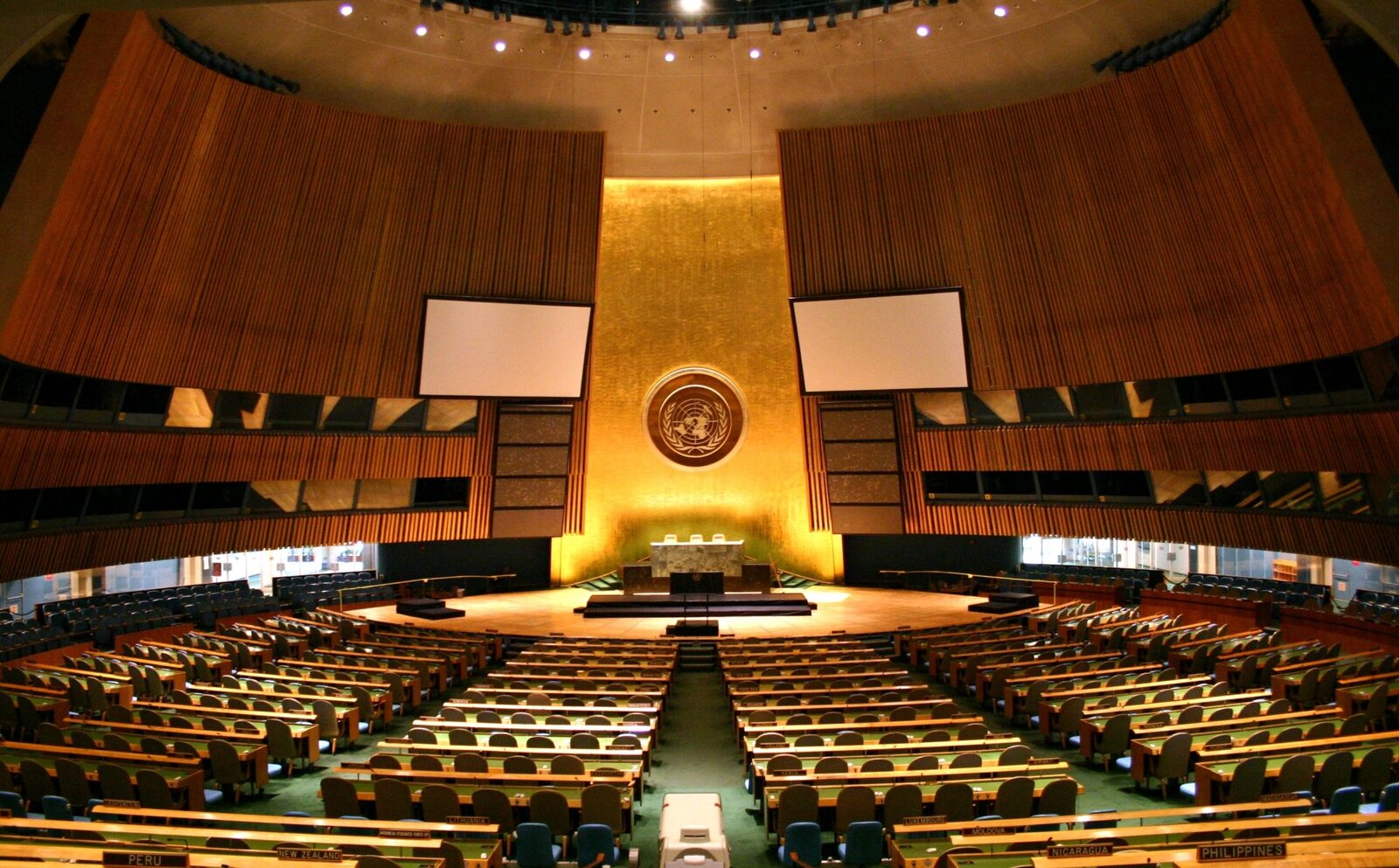
In 1949, the United Nations created a refugee agency unlike any other in its history. Every displaced population on earth — Koreans, Vietnamese, Afghans, Syrians, Sudanese, Rohingya, and the survivors of every war, famine, and ethnic cleansing the twentieth and twenty-first centuries have produced — is served by the United Nations High Commissioner for Refugees, the UNHCR. Every population, that is, except one. Palestinian Arabs displaced in the 1948 Arab-Israeli War were assigned their own dedicated agency: the United Nations Relief and Works Agency for Palestine Refugees in the Near East, universally known as UNRWA. The creation of UNRWA, and the singular definition of “refugee” it operates under, is not a humanitarian achievement. It is one of the most consequential acts of institutional bad faith in the history of international organizations — and it has done more to perpetuate the Israeli-Palestinian conflict than any act of violence by any armed group on either side.
The Definition That Changed Everything
UNHCR, which serves every other refugee population on earth, defines a refugee as a person who has fled their country of origin due to a well-founded fear of persecution. Under UNHCR’s mandate, refugee status is personal — it belongs to the individual who was displaced, and it ends when that person is resettled, integrated into a new country, or voluntarily returns home. Children born in exile to a refugee parent are not automatically refugees themselves; they are citizens of the country where they are born, and UNHCR works to ensure their integration and eventual permanent legal status. The goal of UNHCR, stated explicitly in its founding statute, is the elimination of the refugee problem through durable solutions: repatriation, local integration, or third-country resettlement.
UNRWA operates under a completely different definition — one with no parallel anywhere in international law or humanitarian practice. Under UNRWA’s rules, a “Palestine refugee” is any person whose normal place of residence was in Mandatory Palestine between June 1, 1946 and May 15, 1948, and who lost their home and means of livelihood as a result of the 1948 Arab-Israeli War — and all of their descendants in perpetuity. That last clause is the operative one. Refugee status is inherited. It passes from parent to child, from grandparent to grandchild, from great-grandparent to great-grandchild, indefinitely, across every subsequent generation, regardless of where those descendants were born, what citizenship they hold, or what country they have lived in their entire lives.
The implications of this definition are not subtle. Under UNRWA’s framework, a thirty-year-old man born in Amman, Jordan, holding full Jordanian citizenship, who has never set foot in Israel or the Palestinian territories, whose parents were born in Jordan, and whose grandparents were displaced in 1948, is a “Palestine refugee.” He is registered with UNRWA. He is entitled to UNRWA services. He is counted in UNRWA’s statistics as a displaced person awaiting the resolution of the refugee crisis. And crucially — his refugee status can never end, under UNRWA’s rules, until he “returns” to territory inside the State of Israel. No amount of time, no amount of successful resettlement, no amount of full citizenship in another country can terminate his classification as a refugee, because UNRWA’s definition has no mechanism for resolution except the one outcome that would destroy the Jewish state.
“Under UNRWA’s definition, refugee status can never end except through the one outcome that would destroy the Jewish state. That is not humanitarian policy. That is a strategic weapon.”
The Numbers That Were Never Allowed to Fall
When UNRWA began operations in 1950, it was responding to the needs of roughly 750,000 Palestine refugees. Today the agency lists some 5.9 million — a figure that has grown nearly eightfold while the original displaced population has, by simple actuarial fact, almost entirely died out. That growth is not the product of new wars or new displacements. It is the arithmetic of an inherited status: every child born to a registered refugee is added to the rolls, and almost none are ever removed. In Gaza the registered count has multiplied many times over since 1950. A category that, under every other refugee regime in the world, shrinks over time as people are resettled and rebuild their lives was engineered here to do the opposite — to expand with each generation, indefinitely, by design. This is the institutional engine beneath the manufactured grievance of the refugee narrative: the numbers were never meant to fall.
It is worth being precise about what is and is not disputed here. UNRWA itself rejects the charge that its hereditary model is unique, arguing that under the international-law principle of family unity the descendants of refugees elsewhere — Afghans, Somalis, and others trapped in protracted situations — are likewise counted across generations until a durable solution is found. That argument deserves an honest hearing. But it does not touch the substantive point. Those other populations remain under UNHCR, an agency mandated and structured to end refugee status through resettlement and integration; the Palestinians alone were placed under an agency with no such mandate. The dispute over the word “unique” is real, but the decisive fact is not the inheritance of status — it is the deliberate absence of any path out of it.
The softness of the numbers was visible from the beginning. The UN’s own Conciliation Commission noted in the early 1950s that the registration rolls were inflated by duplicate ration cards and by the inclusion of people who had not, in fact, been displaced; by 1951 UNRWA had revised its count downward after weeding out false and duplicate registrations. From the outset, the “refugee” figure was a political instrument as much as a humanitarian census — a number that grew when growth was useful and resisted correction when correction was not.
The “Right of Return” — A Demographic Weapon
The Palestinian “right of return” is the demand that all UNRWA-registered Palestinian refugees — all 5.9 million of them — be permitted to return to the specific properties and villages their ancestors left in 1948. The demand is presented in the language of human rights and international law, and it has been endorsed by numerous UN General Assembly resolutions. What is rarely stated plainly in international forums — but is stated quite plainly by Palestinian leaders in Arabic — is what this return would mean in practice.
Israel’s current population is approximately 9.8 million, of whom approximately 7 million are Jewish. The introduction of 5.9 million Palestinian “returnees” into the State of Israel would, within a single electoral cycle, produce an Arab majority in a state that would still be called Israel but would no longer be a Jewish state in any meaningful sense. The Jewishness of Israel — its character as the nation-state of the Jewish people, the one place on earth where Jews can exercise national self-determination — would be eliminated not by war, not by terrorism, but by a demographic fait accompli dressed in the language of international humanitarian law. Former Palestinian Authority negotiator Saeb Erekat stated publicly on multiple occasions that the right of return is non-negotiable and is the “core issue” of the conflict. Yasser Arafat rejected the Camp David offer of 2000 in large part because it did not fully satisfy the right of return. The goal was never a Palestinian state alongside Israel. It was the elimination of Israel through legal and demographic means, with UNRWA’s growing refugee rolls providing the permanent justification.
The legal scaffolding for this demand is almost always traced to a single line in UN General Assembly Resolution 194, passed in December 1948, which states that refugees wishing to return and to live at peace with their neighbours should be permitted to do so. What is rarely quoted is the rest of the same resolution, which speaks in the same breath of resettlement and economic rehabilitation, and which created a Conciliation Commission charged with achieving a final settlement between the parties. The return clause was conditional — it applied to those willing to live in peace — and it was offered alongside resettlement as one option among several, not as an absolute and perpetual entitlement. Over the decades the resettlement half of the resolution was quietly buried, the Conciliation Commission was allowed to wither, and the conditional return clause was reframed as an unconditional “right” belonging to every descendant in perpetuity. That reframing was not an accident of drafting; it was of a piece with the strategy of national invention-for-the-purpose-of-destruction that animated the 1964 PLO Charter — a movement defined less by what it sought to build than by what it sought to undo.
UNRWA’s Classrooms — Educating for Hatred
UNRWA operates 709 schools in Gaza, the West Bank, Jordan, Lebanon, and Syria, educating approximately 540,000 Palestinian children. The content of those schools has been the subject of extensive documentation by IMPACT-se, an Israeli research institute that monitors educational materials in Palestinian Authority and UNRWA institutions. Their findings, confirmed by multiple independent European investigations, reveal a consistent pattern: UNRWA textbooks across multiple territories feature maps of “Palestine” from which Israel has been erased entirely; glorify individuals who committed acts of terrorism against Israeli civilians; present Jews as historically foreign to the land of Israel; and frame armed struggle against Israel as a religious and moral obligation.
A 2021 IMPACT-se report on UNRWA’s Gaza curriculum found that mathematics problems used the number of “martyrs” (terrorists killed carrying out attacks) as teaching exercises, that Arabic language lessons used passages celebrating Palestinian armed resistance as their reading material, and that the concept of a Jewish historical connection to the Land of Israel was entirely absent from the curriculum. Germany, the Netherlands, Switzerland, and other European donors temporarily suspended UNRWA funding in 2024 following evidence that UNRWA employees had participated in the October 7, 2023 Hamas massacre of 1,200 Israeli civilians — the deadliest single-day killing of Jewish people since the Holocaust. UNRWA subsequently acknowledged that twelve of its employees had participated in the attack, though investigators believed the actual number was significantly higher.
“An agency that teaches 540,000 children that Israel does not exist and that martyrdom is honorable is not a humanitarian organization. It is a radicalization pipeline funded by the Western world.”
The United Nations and Israel — A System Built for One Purpose
UNRWA is the most visible expression of the United Nations’ institutionalized bias against Israel, but it is far from the only one. Israel is the only country in the world with a permanent, dedicated agenda item at the UN Human Rights Council — Agenda Item 7, which requires that every session of the UNHRC include a discussion of Israeli human rights violations. No other country — not China, not Russia, not Iran, not North Korea, not Sudan — has a permanent agenda item dedicated to its conduct. Every other country’s human rights record is addressed, when it is addressed at all, under the general agenda item that covers the entire rest of the world.
Between its founding in 1948 and 2023, Israel has been the subject of more UN General Assembly resolutions condemning it than all other countries combined. The UN General Assembly in 1975 adopted Resolution 3379, declaring Zionism — the Jewish national liberation movement — to be “a form of racism and racial discrimination.” The resolution was revoked in 1991 after the Soviet Union’s collapse removed its primary sponsor, but the institutional mindset that produced it has never been revoked. UNESCO, the UN’s cultural agency, voted in 2017 to declare the Tomb of the Patriarchs in Hebron — the burial site of Abraham, Isaac, and Jacob, documented in the Book of Genesis and venerated by Jews for three thousand years — to be an “endangered Palestinian World Heritage Site,” erasing its Jewish connection by institutional decree.
The pattern is consistent and undeniable. In every forum where the United Nations has authority to act, it has systematically used that authority to delegitimize Israel, inflate Palestinian claims, and institutionalize a version of history in which the Jewish state is a colonial intruder in its own land. UNRWA is the most expensive expression of that pattern — with an annual budget now exceeding one billion dollars, funded overwhelmingly by Western democracies — but the pattern extends through every major UN body.
Why the Myth Must Be Institutionalized
The Palestinian narrative requires institutional support to survive because it cannot survive contact with history. Every other refugee crisis in modern history has been resolved. The twelve million Germans expelled from Eastern Europe after World War II were absorbed into West Germany. The hundreds of thousands of Jews expelled from Arab countries after 1948 were absorbed into Israel and Western nations. The millions displaced by the partition of India and Pakistan were resettled. The Koreans displaced by the Korean War, the Vietnamese displaced by the Vietnam War, the Cambodians displaced by the Khmer Rouge — all of these populations, over time, were resettled, integrated, and ceased to be refugees. Their children were not refugees. Their grandchildren were not refugees.
The contrast with how the Palestinians were handled is deliberate and instructive. Where other host nations absorbed and naturalised the displaced, most Arab states did the reverse. Lebanon has for decades barred Palestinians from owning property and from working in dozens of licensed professions, confining generations to camps rather than offering any path to citizenship. Kuwait expelled hundreds of thousands of Palestinians in the early 1990s. The one conspicuous exception — Jordan, which extended citizenship to the Palestinians it administered — only underscores the rule, because it proves that integration was always possible and was elsewhere refused as a matter of policy. The refusal was not born of inability. The Arab League understood, and at times stated openly, that resettling the refugees would dissolve the single most useful grievance in the campaign against Israel. Keeping millions stateless and dependent, generation after generation, was the price those governments were willing to make others pay to keep the wound from healing — and UNRWA supplied the permanent infrastructure that made the arrangement sustainable.
The Palestinian refugee crisis has not been resolved because the political forces that benefit from its continuation — the Palestinian leadership, the Arab states that have refused to absorb Palestinian populations for seventy-five years, and the United Nations apparatus that has made a multi-billion-dollar industry out of managing it — have actively prevented its resolution. Arab states kept Palestinian refugees in camps for decades, denying them citizenship and integration, deliberately preserving their refugee status as a political weapon against Israel. Jordan, which controls significant territory on the Palestinian side of the Jordan River, has never been seriously pressured by the international community to absorb and integrate Palestinian populations it has administered for decades. UNRWA has no mandate and no mechanism for resettlement or integration — its sole purpose, structurally, is to service a refugee population that it has every institutional incentive to preserve indefinitely.
Strip away the agency, the budget, and the vocabulary of humanitarian law, and what remains is a status with no object. A refugee is, in the ordinary sense, a person displaced from a state; yet there had never been a sovereign Palestinian state to be displaced from — a point developed at length in there was never a Palestinian state. The 5.9 million are not citizens-in-exile of a country awaiting restoration; they are the registered population of an institution that exists to keep a grievance permanently open. UNRWA did not inherit a refugee problem it proved unable to solve. It was built so that the problem could never be solved — which is why its longevity is not a failure of the agency but the fulfilment of its design.
What God Says About the Nations and Israel
The United Nations was founded on principles of equality, justice, and the protection of human rights. In its treatment of Israel, it has systematically violated every one of those principles. But the Christian who understands Scripture is not surprised. The Bible foretells, with remarkable clarity, that in the last days the nations of the world will gather against Israel — not in simple military confrontation, but in coordinated, institutional opposition. Zechariah 12:3 describes Jerusalem as a “burdensome stone for all peoples” and declares that “all the nations of the earth will gather against it.” The machinery of the United Nations, with its anti-Israel architecture, its UNRWA apparatus, its permanent agenda items and coordinated condemnations, is a remarkably precise contemporary fulfillment of that ancient word.
What the nations cannot accomplish through these instruments, they will not accomplish. The God who brought His people back to their land after nearly two thousand years of exile did not do so in order to allow a UN agency and a manufactured refugee crisis to undo it. The Jewish people have outlasted Pharaoh, Haman, Nebuchadnezzar, Antiochus, Hadrian, the Crusaders, the Inquisition, the pogroms, and the Holocaust. They will outlast UNRWA. Joel 3:2 declares God’s judgment against the nations who “scattered my people among the nations and divided up my land.” Every vote in the UN General Assembly, every UNRWA textbook that erases Israel from the map, every resolution that denies the Jewish people’s connection to their land — it is all recorded. And God, who does not forget His covenants, will have the final word.