

Is America in Bible Prophecy? Why the United States Is Absent From the End Times
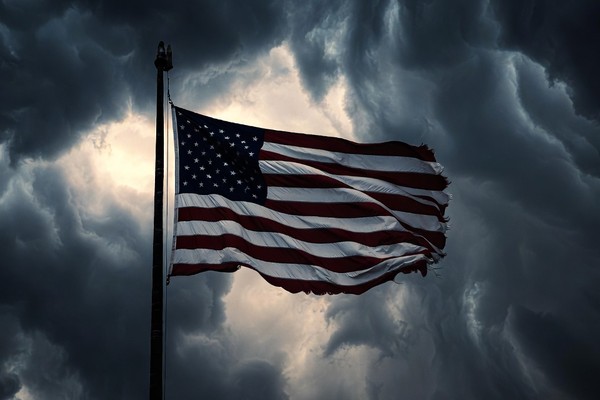 It is among the most natural questions a thoughtful believer can ask, and one of the most frequently asked in our own generation: where is America in the prophetic Scriptures? We are the wealthiest nation in the history of the world, the foremost military power on the earth, the chief defender of the Jewish state, and the home of a great body of Bible-believing Christians who have stood by Israel through every storm. Surely, the reasoning runs, a nation of such consequence must appear somewhere in the divine forecast of the last days. And yet when the honest reader turns to the pages of prophecy—to Daniel and Ezekiel, to the Olivet Discourse, to the great unveiling that closes the New Testament—he searches for the United States and does not find it. There is no obvious America in the book of Revelation. There is no plain mention of the republic between the seas in the catalog of nations that gather against Israel at the end. The silence is striking, and it deserves a careful answer rather than a clever evasion.
Let us say at the outset what this study is and is not. It is not an exercise in date-setting, nor a chart of beasts and horns drawn with more confidence than the text allows. It is a sober attempt to ask why the Scriptures are quiet about the nation that looms so large in our own eyes, and to consider what that quietness might mean. We will look at the proposals offered by earnest students who have tried to locate America in the prophetic word, weigh them fairly, and then turn to the harder and more fruitful question that lies beneath the curiosity: what does the absence of the United States from the end-times drama teach the people of God about the rise and fall of nations, and about the One who alone abides? For the friend of Israel especially, this is no idle matter. The same God who keeps the covenant with Abraham’s seed numbers the days of every empire that has ever sheltered or threatened that people, and the believer who reads prophecy rightly will come away not with a flag in his hand but with the fear of God in his heart.
The Question Honestly Stated
The puzzle is real, and pretending otherwise serves no one. The prophetic Scriptures are remarkably specific about nations. Ezekiel names Persia and Cush and Put, Gomer and Togarmah, Sheba and Dedan and the merchants of Tarshish. Daniel traces the succession of world empires—Babylon, Medo-Persia, Greece, Rome—with such precision that skeptics have strained for centuries to date his book after the fact. The Revelation speaks of a great city and a great harlot, of kings of the east and a confederacy of ten, of nations gathered to a place called Armageddon. The prophets are not vague about geography; they knew the names of the peoples around the Holy Land and around the Mediterranean basin, and they spoke of them by name. Into this detailed picture the modern reader looks for the greatest power his own age has produced, and the picture does not contain it. That is the difficulty, and it is felt most keenly precisely by those who love the Scriptures most and who have been taught, rightly, that every word of God is pure.
We must also be honest about a temptation that attends this question. It is the temptation of national vanity, the quiet assumption that because America is central to our experience it must be central to God’s. Every great power in history has imagined itself the hinge of the ages. Babylon thought so; Rome thought so; the Christendom of Europe thought so in its turn. The Scriptures have a way of deflating such assumptions, of reminding the proud that the nations are as a drop of a bucket and are counted as the small dust of the balance. It is at least possible—we shall argue it is probable—that the absence of America from prophecy is not a riddle to be solved by ingenuity but a lesson to be received with humility. But before we draw that conclusion, fairness requires that we examine the serious attempts that have been made to find the United States in the text.
The Attempts to Find America in the Text
Earnest expositors have not been content to leave the question unanswered, and over the past century several identifications have been proposed. The most popular fastens upon a phrase in Ezekiel’s great oracle against Gog. When the northern confederacy descends upon the mountains of Israel, a cluster of nations raises a protest: Sheba, and Dedan, and the merchants of Tarshish, with all the young lions thereof, shall say unto thee, Art thou come to take a spoil? Some have proposed that Tarshish, an ancient trading power of the far west, represents the great maritime and commercial nations descended from it, and that the “young lions”—the offspring of that western sea power—may include the United States, a daughter nation of the British Isles. On this reading America does appear, faintly, as one of the merchant nations that lodge a diplomatic objection but do nothing more.
The reading is not absurd, and it has been held by men of learning and devotion. But it rests upon a chain of inferences that grows thin under examination. Tarshish in the Old Testament is most plausibly identified with a site in the western Mediterranean or on the Atlantic coast of Spain, a source of the silver and tin that the ships of Tyre and Solomon fetched from afar. To leap from that ancient port to the British Empire, and from the British Empire to the American republic, is to build a great deal upon a single word. The text says nothing of constitutions or continents; it speaks of merchants who profit by trade and who, when the great invasion comes, content themselves with a question rather than a sword. If America is there at all, she is there as a bystander, not as a protagonist, and the honest expositor must admit that the identification is a possibility and not a certainty.
Other proposals have been bolder and less persuasive. Some have read the eagle’s wings given to the first beast of Daniel’s vision, or the eagle that bears the woman into the wilderness in the Revelation, as a cipher for the United States, whose national emblem is the eagle. But this is to mistake a symbol drawn from the ancient Near East—where the eagle and the lion were the common imagery of empire—for a coded reference to a nation that would not exist for millennia. Others have searched the description of Babylon the Great, the city of merchandise whose fall is mourned by the merchants of the earth, and have seen in her luxury and commerce a portrait of America, or of New York, or of the West in general. We shall return to the question of Babylon, for it is the most substantial of these proposals; but here it is enough to say that the eagle and the lion of prophecy belong to the symbolic vocabulary of the prophets’ own world, and that to find a particular modern flag in them requires more imagination than exegesis.
Is America the Babylon of Revelation?
Of all the attempts to locate the United States in the prophetic word, the identification of America with the Babylon of Revelation 17 and 18 has the most apparent strength, and so deserves the most careful answer. The eighteenth chapter paints a city of fabulous wealth, a queen of commerce whose merchandise is gold and silver and precious stones, fine linen and purple and silk, and the bodies and souls of men. The merchants of the earth grow rich by her, and when she falls in a single hour they stand afar off and weep, for no man buys their cargo any more. It is a vivid picture of a great economic power, drunk with luxury and corrupt with idolatry, and it is not hard to see why some have laid it like a template over the modern West and found a resemblance. The United States is, by any measure, the great marketplace of the modern world, and her culture has carried both her goods and her vices to the ends of the earth.
Yet the resemblance, suggestive as it is, will not bear the full weight of identification. The Babylon of the Revelation is at once a city and a system; she is seated upon seven mountains, she reigns over the kings of the earth, and she is steeped in the blood of the saints and the martyrs of Jesus. The imagery reaches back to the literal Babylon of the Old Testament, the proud city of the Euphrates that carried Judah into captivity and set up its golden image upon the plain of Dura, and forward to a final, climactic embodiment of the world’s rebellion against God—a religious and political and commercial order that gathers up the whole long history of human pride into a last great apostasy. To narrow this towering figure to a single modern nation, however powerful, is to shrink the vision. America may well partake of the spirit of Babylon, as every wealthy and worldly power has partaken of it; but the Babylon of prophecy is larger than America, older than America, and will outlast the particular fortunes of any one republic. The believer does well to hear the warning against Babylon—Come out of her, my people—as addressed to himself, wherever he dwells, rather than to congratulate or condemn a single flag.
Why the Silence Is Not Strange
Having weighed the attempts to find America in the text, we come to the deeper question: why is she not plainly there? The first answer is the simplest, and it is too often overlooked. The prophetic Scriptures are not a history of the world; they are the history of redemption, and their geographic center is not Washington or London but Jerusalem. The prophets see the nations as they bear upon the people and the land of the covenant. Egypt appears because Egypt enslaved and later sheltered Israel; Assyria and Babylon appear because they carried the tribes away; Persia appears because Persia sent them home; Greece and Rome appear because they ruled the land in the days of the Messiah’s first coming and will, in some final form, be present at His return. Nations enter the prophetic record not in proportion to their power but in proportion to their relation to Israel and to the purposes of God in Israel. A nation may be vast and yet prophetically silent, if it stands at the margin of that sacred story.
Seen in this light, the absence of the United States is far less strange. The drama of the last days, as the prophets describe it, is staged in the old world—in the lands of the ancient empires, around the Mediterranean and the Fertile Crescent, with Jerusalem at the center and the powers of the north and the east and the south converging upon her. America lies across an ocean, on a continent the prophets never named and likely never knew, founded thousands of years after the visions were given. That she does not appear by name in oracles delivered to ancient Israel about her ancient and future neighbors is no more surprising than that Australia or Japan or Brazil does not appear. The prophetic lens is trained upon a particular theater, and the New World simply lies outside its frame. The wonder would be if it were otherwise.
There is a second consideration, more sobering than the first. It may be that America is absent from the climactic scenes of prophecy not merely because of where she sits upon the map but because of what she will have become, or ceased to be, by the time those scenes unfold. Empires do not endure. The same Scriptures that are silent about America are eloquent about the rise and fall of every power that has gone before her, and they teach a lesson as unwelcome as it is plain: that the mightiest kingdoms are temporary, that the gold of one age becomes the rubble of the next, and that no nation, however favored, holds a perpetual lease upon greatness. We will consider this lesson directly, for it is the heart of the matter; but already we may see that the question “Why is America not in prophecy?” may have an answer that is humbling rather than flattering, and that the wise believer will not hurry past it.
The Prophets and the Rise and Fall of Nations
No book of Scripture teaches the impermanence of empire more vividly than Daniel. To the proud king of Babylon there came in the night a dream of a great image: a head of gold, breast and arms of silver, belly and thighs of brass, legs of iron, and feet of iron mixed with clay. The prophet’s interpretation is a panorama of falling kingdoms. Thou art this head of gold, he tells the king; and after thee shall arise another kingdom, and another, and another, each succeeding the last as surely as the metals descend in value down the body of the image. Then a stone, cut without hands, smites the image upon its feet and grinds it to powder, and the stone becomes a mountain that fills the whole earth—the kingdom of God, which alone shall never be destroyed. The vision is not a flattery of any empire but a funeral oration over all of them. Babylon the golden fell to Persia; Persia to Greece; Greece to Rome; and Rome, in its turn, to the long erosion of the centuries. Every head and breast and thigh of that towering figure lies now in the dust.
The lesson is pressed home in the fourth chapter, where the same proud king is humbled until he learns the truth that this whole study circles: that the most High ruleth in the kingdom of men, and giveth it to whomsoever he will. Nebuchadnezzar, walking upon the roof of his palace and surveying the great Babylon that he had built for the honor of his majesty, is struck down in the very moment of his boast and driven out to eat grass like an ox until seven times pass over him and he lifts up his eyes to heaven and blesses the Most High. It is the parable of every empire that ever congratulated itself upon its own greatness. The God who raised Babylon up could bring Babylon down; the God who gives the kingdom to whomsoever He will can take it back again at His pleasure. America is not exempt from this law, written into the very structure of prophetic history. The question is not whether the United States stands under the sovereignty that humbled Babylon, but only whether she will learn the lesson before, or only after, the humbling.
The Psalms strike the same note. Why do the heathen rage, asks the second Psalm, and the people imagine a vain thing? The kings of the earth set themselves, and the rulers take counsel together, against the LORD, and against his anointed. And the answer comes not in alarm but in serene contempt for the pretensions of the powerful: He that sitteth in the heavens shall laugh: the Lord shall have them in derision. The nations are forever imagining that their counsels are decisive, that the future turns upon their summits and their armies; and the Scriptures forever reply that the future belongs to the One enthroned above the nations, who appoints the bounds of their habitation and the term of their dominion. To the believer who has absorbed this teaching, the absence of any particular nation from the prophetic word is no scandal. The prophets were not concerned to flatter the powers of any age, including their own, and least of all to assure them of perpetuity.
What the Silence May Mean
If we ask what the prophetic silence about America may signify, we must answer with the modesty the subject demands, for here we move from what the text says to what its silence might imply, and silence is a poor foundation for dogmatism. Several possibilities have been offered, and each carries a measure of plausibility. It may be that America has by then declined from her present eminence, no longer a power of the first rank, absorbed into some larger western confederacy or eclipsed by the rising nations of the east, and so unworthy of separate mention in a drama that concerns itself only with the chief actors. The history of empires lends this possibility a sober weight; the powers that bestride one century are often the footnotes of the next, and there is no law of nature or of grace that guarantees America an exception.
It may be, again, that America is present in the end-times scene but unnamed, folded into one of the coalitions the prophets do describe—numbered, perhaps, among the merchant nations of Tarshish who protest but do not act, or among the western kingdoms that some see gathered under the final form of the old Roman power. On this view the United States does not vanish; she simply loses her distinct identity, becoming one voice in a chorus rather than a soloist upon the stage. And it may be, as some have feared and others hoped, that the great body of believing Christians in America—the salt that has preserved much of her character and the chief root of her friendship with Israel—will by then have been gathered to their Lord, leaving the nation without the very element that gave her, in her best hours, a heart for the covenant people. We do not know which of these, if any, is the truth, and we will not pretend to a certainty the Scriptures withhold.
What we may say with confidence is that the silence is not a denial of God’s care for the nation in the present hour, nor a sentence passed upon her future, but a summons to humility. The believer who learns that his country is not the center of the prophetic word is freed from a subtle idolatry—the idolatry that confuses the fortunes of a flag with the purposes of God, and that reads the Bible as though it were chiefly a commentary upon the affairs of one’s own nation. The Scriptures resist that confusion at every turn. They set Jerusalem, not Washington, at the center; they set the Messiah, not any president or parliament, upon the throne of the age to come; and they call the believer of every land to lift his eyes above the rise and fall of his own people to the kingdom that shall not be moved. The friend of Israel will recognize here the same lesson the Scriptures press upon all who would be the keepers of what God calls the apple of His eye: that our confidence rests upon the faithfulness of God and not upon the strength of any nation.
America’s Place in the Purpose of God
To say that America is not named in the prophetic word is not to say that she has played no part in the purposes of God. The friend of Israel can trace with gratitude the providence that raised up, on a far continent, a nation whose founding documents drew upon the Hebrew Scriptures, whose people in their better moments saw themselves as an errand into the wilderness under the eye of heaven, and which, when the hour came, threw the weight of its power behind the restoration and the survival of the Jewish state. It was an American president who recognized the new nation within minutes of its declaration; it has been American friendship, imperfect and inconstant but real, that has stood between Israel and destruction in more than one dark hour. None of this requires a verse of prophecy to be precious in the sight of the God who said, I will bless them that bless thee. The promise to Abraham is not confined to the nations the prophets happened to name; it reaches every people and every generation, and the nation that has blessed Abraham’s seed has laid up a treasure that no prophetic silence can diminish.
Yet the same promise carries a warning as plain as its blessing, and the lover of his country must hear both. I will bless them that bless thee, and curse him that curseth thee. The favor that has rested upon America in the measure that she has befriended the covenant people is not a possession to be presumed upon but a stewardship to be kept. Nations, like men, are dealt with according to their treatment of the people and the purposes of God; and a nation that turned against Israel, or that abandoned the faith that once gave it a heart for Israel, would forfeit by its own act the blessing it had once enjoyed. The friend of Israel who loves America will therefore not flatter her with promises of perpetual greatness, for the Scriptures make no such promise to any nation save the one God Himself has planted and sworn never to uproot. He will rather pray that his country may continue in the path of blessing, knowing that her place in the favor of God depends not upon her appearing in a prophecy but upon her keeping faith with the God of the covenant.
For the believer the practical counsel that flows from all this is clear, and it is the counsel the prophets themselves pressed upon the people of their day. We are not to set our hope upon the arm of flesh, upon the guarantees of any power however friendly, for the Scriptures warn against trusting in princes and in the staff of broken reeds. We are not to read the headlines as though they were a fifth gospel, nor to bend the prophetic word to fit the anxieties of the hour. We are rather to do the duty that lies nearest—to bless Israel, to pray for the peace of Jerusalem, to keep ourselves from the idols of national pride, and to wait for the kingdom that shall fill the earth as the waters cover the sea. The God who numbers the nations has numbered ours, and whether her name is written in the prophetic scroll or not, her destiny, like every nation’s, lies in the hand of Him who doeth according to His will among the inhabitants of the earth.
The Gospel to All Nations: America’s Unwritten Chapter
There is a strand of prophecy in which America may have played a part more glorious than any named kingdom, though her name is nowhere written, and the friend of Scripture ought not to pass it by. When the disciples sat with their Lord upon the Mount of Olives and asked Him for the sign of the end of the age, He gave them, amid the wars and rumors of wars, one great positive token: And this gospel of the kingdom shall be preached in all the world for a witness unto all nations; and then shall the end come. The last days are not only an account of armies and antichrists; they are an account of a message running out to the ends of the earth, of a witness borne to every people and tongue before the consummation. And in the carrying of that witness, in the modern era above all, the believing people of the United States have labored as few nations ever have.
It was from the churches of America, in no small measure, that the great missionary enterprise of the last two centuries went out—to translate the Scriptures into a thousand tongues, to plant congregations on every continent, to carry the name of the God of Israel and of His Messiah to peoples who had never heard it. If the sign of the end is a gospel preached for a witness unto all nations, then the believing remnant of America has been, under God, an instrument in the fulfilling of that very sign. Here is a prophetic role worth coveting far above the doubtful honor of a named place among the powers that gather to make war. The nation is not mentioned; but the work of her faithful has been woven, perhaps more deeply than any flag-bearer suspects, into the one labor that the Olivet Discourse marks as the herald of the Lord’s return. It is a quieter glory than empire, and a far more enduring one, and it belongs not to the state but to the church within the state.
This observation, rightly weighed, turns the whole question on its head. The believer who asked, with a touch of wounded pride, why his great nation is missing from the prophetic honor roll, may come to see that the honor he should have sought was never the kind that prophecy assigns to Gog or to Babylon or to the kings of the east. Those are named for judgment, not for praise; to be written into the catalog of nations that gather against Jerusalem is no distinction a believer should desire for his homeland. The distinction worth desiring is to be found among those who blessed Israel, who carried the gospel, who prayed for the peace of Jerusalem and stood with the covenant people in the day of trouble—and that distinction is recorded, not in the geopolitical prophecies, but in the books that shall be opened at the last, where the deeds of nations and of men are remembered before God.
A Caution Against Curiosity and Despair
Two opposite errors lie in wait for the believer who ponders America’s absence from prophecy, and both must be named and avoided. The first is the error of idle curiosity, which treats prophecy as a puzzle to be solved, a code to be cracked, a map upon which one’s own nation must somewhere be plotted. This spirit has done much harm in the church, breeding a fascination with charts and timelines that the Scriptures never sanction, and turning the sober warnings of the prophets into a kind of speculative entertainment. The Lord rebuked even His own disciples when they pressed Him too closely upon the times and the seasons: It is not for you to know the times or the seasons, which the Father hath put in his own power. The believer who must know exactly where America fits, and grows restless when the text will not tell him, has mistaken the purpose of prophecy, which is given not to satisfy our curiosity but to fortify our faith and to quicken our obedience.
The second error is the opposite, and in our anxious age perhaps the more common: the error of despair. There are those who, persuaded that America’s absence from prophecy foretells her decline, sink into a gloom that paralyzes prayer and labor alike, as though the nation’s fate were already sealed and nothing remained but to watch the sunset. But this is to read more from the silence than the silence will yield, and to forget the long record of God’s mercy to nations that humbled themselves and turned. Nineveh was given forty days to its destruction, and Nineveh repented, and the destruction was stayed. The God who pronounces judgment also delights in mercy, and no prophetic silence forbids a nation to seek His face. The believer is nowhere commanded to despair of his country, but everywhere commanded to pray for it, to be salt and light within it, and to commit its future to the One who holds the hearts of kings and the destinies of peoples in His hand. Between the idle curiosity that must chart everything and the faithless despair that gives up everything, there lies the narrow path of faith: to do justly, to love mercy, to walk humbly, to bless Israel, and to leave the times and the seasons where the Lord has placed them.
The Kingdom That Shall Not Be Moved
We end where the believer must always end, not with the fortunes of any earthly power but with the kingdom that outlasts them all. The vision of Daniel did not close with the iron and the clay; it closed with the stone cut without hands that became a mountain and filled the whole earth. The Revelation does not end with Babylon’s fall but with the descent of the holy city and the reign of the Lamb, when the kingdoms of this world are become the kingdoms of our Lord and of his Christ. Against that horizon the whole question of America’s place in prophecy finds its proper proportion. The nations rise and the nations fall; the gold becomes the dust; the empires that seemed eternal to those who lived under them are remembered, if at all, as the names in an old man’s vision. And through it all the purpose of God runs straight as a plumb line toward its appointed end: the gathering of His ancient people, the coming of His anointed King, and the establishment of a dominion that shall not pass away.
The friend of Israel, then, may lay down his anxious search for his own nation in the prophetic scroll and take up instead the older and better occupation of faith. He may love his country without idolizing her, serve her without despairing of her, and pray for her without presuming upon her future. He may bless the covenant people and stand with the land that God has promised never to forsake, knowing that in standing with Israel he stands with the purpose that runs through all the prophets to its certain fulfillment. And he may lift his eyes, above the flags and the borders and the summits of the powers, to the One who sits enthroned above the circle of the earth, before whom the inhabitants thereof are as grasshoppers, and who has promised that of the increase of His government and peace there shall be no end. Whether America’s name is written in the prophecy or not, that kingdom is sure; and the heart that rests there has found the one country that no rise or fall of empires can ever take away.