
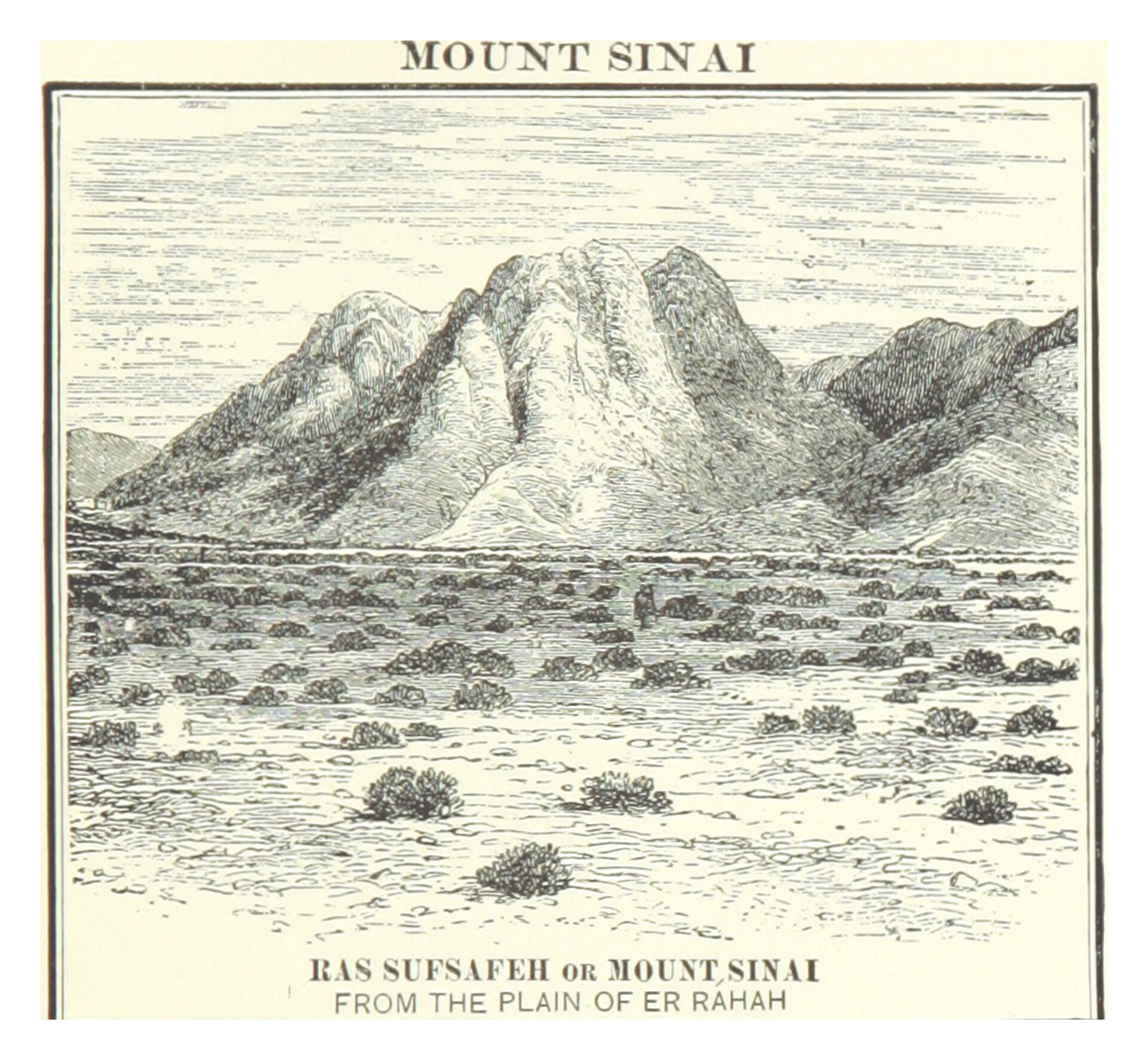
Look at this engraving. It was drawn in the 19th century from the actual location — the Plain of er-Rahah at the foot of Mount Sinai. The broad flat expanse in the foreground is the plain itself. The tiny figure standing in the middle distance is a man. And the mountain behind him is where God descended in fire, smoke, thunder, and earthquake to give Israel the Law.
The Wilderness of Sin was the region Israel entered after leaving Elim — a month after the Exodus, six weeks after crossing the Red Sea. The name has nothing to do with moral failure; it is simply the geographic designation for this portion of the Sinai interior. It was here that Israel ran out of the food they had brought from Egypt and began to murmur. God responded by providing manna — bread from heaven, appearing on the ground every morning like dew, except on the Sabbath. For the next forty years, Israel would eat this food every day. It became the central provision of the wilderness years and the central test: would they trust God one day at a time, or try to hoard and control their own supply?
After manna at the Wilderness of Sin came the water crisis at Rephidim and the battle with Amalek. And then — follow the approach from the right side of the plain, through the Nagb Hawa pass — Israel arrived here. At this plain. Before this mountain. Exodus 19:1 records simply: "In the third month, when the children of Israel were gone forth out of the land of Egypt, the same day came they into the wilderness of Sinai." One month and fifteen days after leaving Egypt, they stood where this engraving was drawn.
God told Moses to consecrate the people and set bounds around the mountain — "Take heed to yourselves, that ye go not up into the mount, or touch the border of it: whosoever toucheth the mount shall be surely put to death" (Exodus 19:12). On the third day, the mountain smoked and quaked and thundered. The people trembled. And God spoke. The plain you are looking at in this engraving is where they stood when they heard the voice of God — a voice so overwhelming that they begged Moses to be their mediator: "Speak thou with us, and we will hear: but let not God speak with us, lest we die."