✡ "Pray for the peace of Jerusalem" — Psalm 122:6
Christians Standing With Israel
Home Site Map Search About Us Our Beliefs Online Bible Maps of Israel Articles Grafted In? Apple of His Eye Contact
TOPICS
Israel — Then & Now Anti-Semitism Middle East Christian Zionism Bible Prophecy US & Israel Media Bias Spiritual Deception Arab-Israeli Conflict Islamic Extremism The Iranian Threat Replacement Theology
LATEST: New article by Michael Knighton  •  Subscribe to our weekly newsletter  •  400 Maps of Israel now available  •  Online Bible (KJV) now online
Advertisement
Map 064  ·  The Patriarchs & the Exodus  ·  Numbers 22:1

The Final Approach — The Plains of Moab

The last camp before the crossing — Israel stood on the east bank of the Jordan opposite Jericho, and the Promised Land was finally within sight
"And the children of Israel set forward, and pitched in the plains of Moab on this side Jordan by Jericho."
— Numbers 22:1 (KJV)
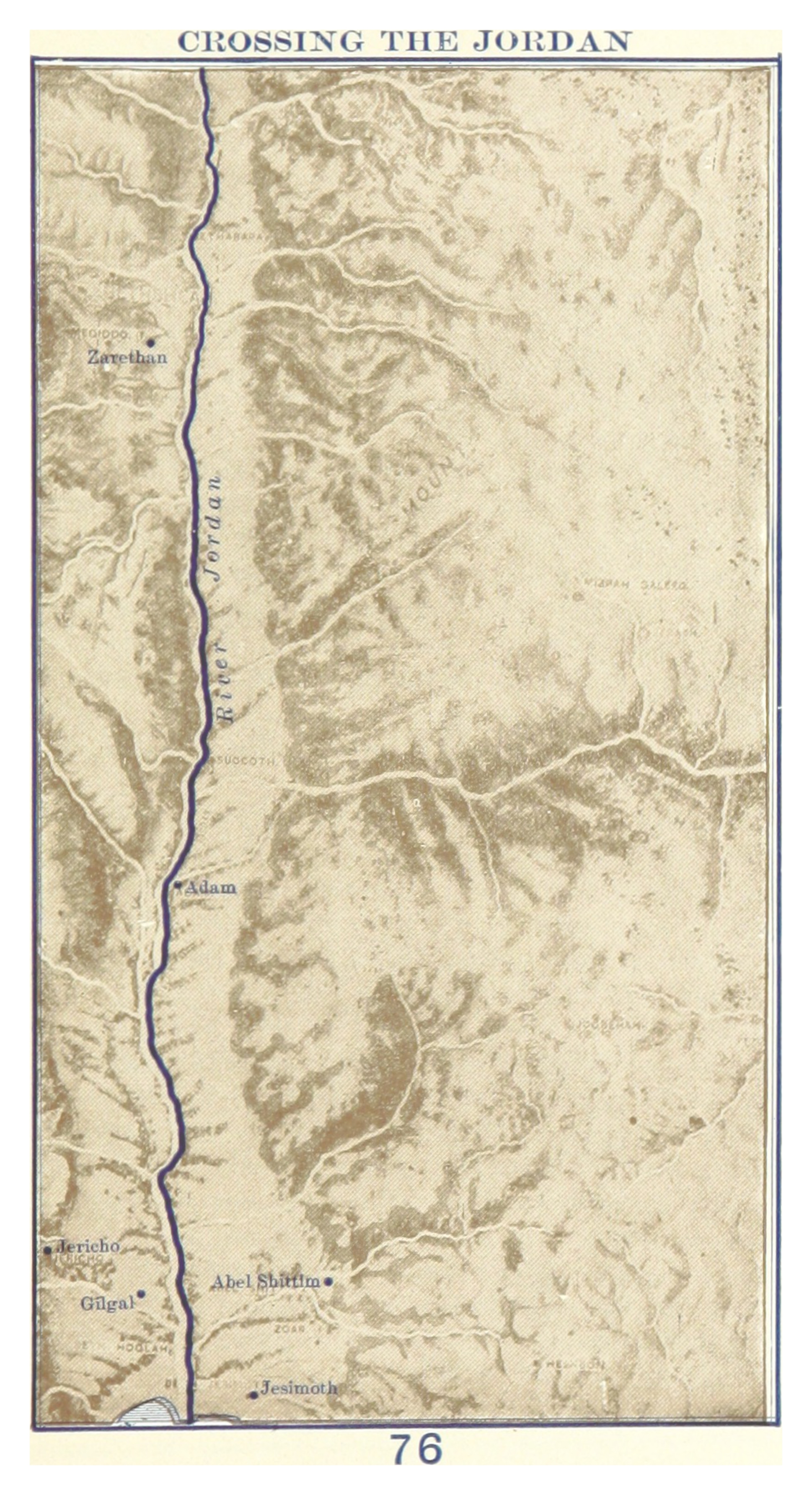
Map titled Crossing the Jordan showing the River Jordan highlighted in blue running north to south with Zarethan labeled to the north, Adam in the center where the waters were cut off, Jericho and Gilgal labeled on the west bank, Abel Shittim on the east bank — the last Israelite campsite before crossing — and Jesimoth to the south, with the rugged Transjordanian highlands visible to the east
"Crossing the Jordan." This map shows the Jordan River at the moment of Israel's crossing — with Abel Shittim on the east bank (Israel's final Plains of Moab campsite), Jericho visible on the west bank directly opposite, the city of Adam to the north where the waters stopped flowing, and Gilgal where Israel camped after crossing.
Source: Maccoun, The Holy Land in Geography and in History (1899). Public domain, via Wikimedia Commons.  ·  Historical commentary by Michael Knighton  ·  Christians Standing With Israel
🗺 How to Read This Map
① Abel Shittim — The Final Camp — Find "Abel Shittim" labeled on the east bank of the Jordan in the lower portion of the map. This was Israel's last campsite in the wilderness — the final station of forty years of wandering. It was here that the census was taken, the tribes were organized for battle, and Moses delivered his final addresses recorded in Deuteronomy. The name means "meadow of the acacias" — a green oasis on the edge of the crossing.
② Jericho — Directly Opposite — Find "Jericho" labeled on the west bank of the Jordan, almost directly across from Abel Shittim. The Jordan at this point is relatively narrow — visible from one side to the other. Israel could see their first target city from their final camp. Jericho was strongly fortified, its walls imposing. Two spies had already been sent there by Joshua, hidden by Rahab, and returned with the report: the people of Canaan were already afraid of Israel.
③ The City of Adam — Where the Waters Stopped — Find "Adam" labeled on the Jordan in the center of the map. This is the precise location Scripture identifies as where the Jordan's waters piled up when the priests carrying the ark stepped into the river. The waters "rose up upon an heap very far from the city Adam" (Joshua 3:16) — some distance upstream — and the entire riverbed dried out from Adam to the Dead Sea, allowing Israel to cross on dry ground.
④ Gilgal — First Camp in Canaan — Find "Gilgal" labeled on the west bank, just inland from Jericho. This was Israel's first campsite in the Promised Land. It was here that Joshua set up twelve stones from the Jordan riverbed as a memorial. It was here that circumcision was renewed — the generation born in the wilderness had not been circumcised. And it was here that Israel ate the produce of the land for the first time, and the manna ceased.
What This Map Shows
✦ Abel Shittim — Israel's last wilderness campsite
✦ Jericho — first conquest target, visible from camp
✦ The city of Adam — where the Jordan waters stopped
✦ Gilgal — first campsite inside Canaan
✦ The River Jordan — the final boundary to cross
✦ Zarethan to the north — extent of the dry crossing
✦ Jesimoth to the south — southern boundary of the camp
✦ The Transjordanian highlands — forty years behind Israel

The Last Night in the Wilderness

Find Abel Shittim on the east bank of the Jordan — Israel's final camp before crossing. Look across the river to Jericho on the west bank. That is the distance Israel had been marching toward for forty years. The Jordan was the last barrier. The manna was still falling every morning. The cloud was still resting over the Tabernacle. But the wilderness chapter of Israel's story was about to end.

The Plains of Moab were Israel's final wilderness staging ground, and a great deal happened there. The census of Numbers 26 counted the new generation — none of the men twenty and above from the Egypt generation were left except Caleb and Joshua, exactly as God had decreed. Moses delivered the sermons recorded in Deuteronomy — the great covenant renewal address, retelling the entire wilderness story for the generation that had grown up in it. The cities of refuge were designated. The inheritance of the Transjordanian tribes was settled. The daughters of Zelophehad established the law of female inheritance. Moses wrote the Law and gave it to the Levites for safekeeping.

And then God told Moses to go up on Mt. Nebo and look at the land — because Moses would not be crossing. At the waters of Meribah-Kadesh, Moses had struck the rock instead of speaking to it as God commanded, and had said "must we fetch you water out of this rock?" — taking credit for the miracle rather than giving it to God. The consequence was severe: "Because ye believed me not, to sanctify me in the eyes of the children of Israel, therefore ye shall not bring this congregation into the land" (Numbers 20:12). The greatest leader in Israel's history would see the land but not enter it.

Find the city of Adam on this map — in the center of the Jordan. This is where the waters piled up when Joshua led the crossing. The priests carried the ark to the water's edge. Their feet touched the Jordan — and the river stopped. An entire nation walked across on dry ground, just as their parents had crossed the Red Sea forty years before. Find Gilgal on the west bank. That was the first ground Israel's feet touched in the land of promise. The manna stopped the day after they ate the produce of Canaan for the first time. Forty years of daily miracle ended the morning they no longer needed it.

Key Scripture References
Numbers 22:1 — Israel camps in the Plains of Moab opposite Jericho
Numbers 26:1–4 — The second census of the new generation
Deuteronomy 34:1–4 — God shows Moses the entire land from Mt. Nebo
Joshua 2:1–24 — Two spies sent to Jericho; Rahab shelters them
Joshua 3:14–17 — The Jordan stops at Adam; Israel crosses on dry ground
Joshua 5:10–12 — Israel keeps Passover at Gilgal; manna ceases
Map: Maccoun, The Holy Land in Geography and in History (1899). Public domain, via Wikimedia Commons.  ·  Historical commentary: © 2026 Michael Wayne Knighton | Christians Standing With Israel™ | All Rights Reserved.
MAP 063
The Route Around Edom
MAP 065
Mount Nebo — Moses Views the Land
Advertisement
The Final Approach — The Plains of Moab | Christians Standing With Israel — Michael Knighton The Final Approach — The Plains of Moab | Christians Standing With Israel — Michael Knighton
✡ "Pray for the peace of Jerusalem" — Psalm 122:6
Christians Standing With Israel
Home Site Map Search About Us Our Beliefs Online Bible Maps of Israel Articles Grafted In? Apple of His Eye Contact
TOPICS
Israel — Then & Now Anti-Semitism Middle East Christian Zionism Bible Prophecy US & Israel Media Bias Spiritual Deception Arab-Israeli Conflict Islamic Extremism The Iranian Threat Replacement Theology
LATEST: New article by Michael Knighton  •  Subscribe to our weekly newsletter  •  400 Maps of Israel now available  •  Online Bible (KJV) now online
Advertisement
Map 064  ·  The Patriarchs & the Exodus  ·  Numbers 22:1

The Final Approach — The Plains of Moab

The last camp before the crossing — Israel stood on the east bank of the Jordan opposite Jericho, and the Promised Land was finally within sight
"And the children of Israel set forward, and pitched in the plains of Moab on this side Jordan by Jericho."
— Numbers 22:1 (KJV)
Map titled Crossing the Jordan showing the River Jordan highlighted in blue running north to south with Zarethan labeled to the north, Adam in the center where the waters were cut off, Jericho and Gilgal labeled on the west bank, Abel Shittim on the east bank — the last Israelite campsite before crossing — and Jesimoth to the south, with the rugged Transjordanian highlands visible to the east
"Crossing the Jordan." This map shows the Jordan River at the moment of Israel's crossing — with Abel Shittim on the east bank (Israel's final Plains of Moab campsite), Jericho visible on the west bank directly opposite, the city of Adam to the north where the waters stopped flowing, and Gilgal where Israel camped after crossing.
Source: Maccoun, The Holy Land in Geography and in History (1899). Public domain, via Wikimedia Commons.  ·  Historical commentary by Michael Knighton  ·  Christians Standing With Israel
🗺 How to Read This Map
① Abel Shittim — The Final Camp — Find "Abel Shittim" labeled on the east bank of the Jordan in the lower portion of the map. This was Israel's last campsite in the wilderness — the final station of forty years of wandering. It was here that the census was taken, the tribes were organized for battle, and Moses delivered his final addresses recorded in Deuteronomy. The name means "meadow of the acacias" — a green oasis on the edge of the crossing.
② Jericho — Directly Opposite — Find "Jericho" labeled on the west bank of the Jordan, almost directly across from Abel Shittim. The Jordan at this point is relatively narrow — visible from one side to the other. Israel could see their first target city from their final camp. Jericho was strongly fortified, its walls imposing. Two spies had already been sent there by Joshua, hidden by Rahab, and returned with the report: the people of Canaan were already afraid of Israel.
③ The City of Adam — Where the Waters Stopped — Find "Adam" labeled on the Jordan in the center of the map. This is the precise location Scripture identifies as where the Jordan's waters piled up when the priests carrying the ark stepped into the river. The waters "rose up upon an heap very far from the city Adam" (Joshua 3:16) — some distance upstream — and the entire riverbed dried out from Adam to the Dead Sea, allowing Israel to cross on dry ground.
④ Gilgal — First Camp in Canaan — Find "Gilgal" labeled on the west bank, just inland from Jericho. This was Israel's first campsite in the Promised Land. It was here that Joshua set up twelve stones from the Jordan riverbed as a memorial. It was here that circumcision was renewed — the generation born in the wilderness had not been circumcised. And it was here that Israel ate the produce of the land for the first time, and the manna ceased.
What This Map Shows
✦ Abel Shittim — Israel's last wilderness campsite
✦ Jericho — first conquest target, visible from camp
✦ The city of Adam — where the Jordan waters stopped
✦ Gilgal — first campsite inside Canaan
✦ The River Jordan — the final boundary to cross
✦ Zarethan to the north — extent of the dry crossing
✦ Jesimoth to the south — southern boundary of the camp
✦ The Transjordanian highlands — forty years behind Israel

The Last Night in the Wilderness

Find Abel Shittim on the east bank of the Jordan — Israel's final camp before crossing. Look across the river to Jericho on the west bank. That is the distance Israel had been marching toward for forty years. The Jordan was the last barrier. The manna was still falling every morning. The cloud was still resting over the Tabernacle. But the wilderness chapter of Israel's story was about to end.

The Plains of Moab were Israel's final wilderness staging ground, and a great deal happened there. The census of Numbers 26 counted the new generation — none of the men twenty and above from the Egypt generation were left except Caleb and Joshua, exactly as God had decreed. Moses delivered the sermons recorded in Deuteronomy — the great covenant renewal address, retelling the entire wilderness story for the generation that had grown up in it. The cities of refuge were designated. The inheritance of the Transjordanian tribes was settled. The daughters of Zelophehad established the law of female inheritance. Moses wrote the Law and gave it to the Levites for safekeeping.

And then God told Moses to go up on Mt. Nebo and look at the land — because Moses would not be crossing. At the waters of Meribah-Kadesh, Moses had struck the rock instead of speaking to it as God commanded, and had said "must we fetch you water out of this rock?" — taking credit for the miracle rather than giving it to God. The consequence was severe: "Because ye believed me not, to sanctify me in the eyes of the children of Israel, therefore ye shall not bring this congregation into the land" (Numbers 20:12). The greatest leader in Israel's history would see the land but not enter it.

Find the city of Adam on this map — in the center of the Jordan. This is where the waters piled up when Joshua led the crossing. The priests carried the ark to the water's edge. Their feet touched the Jordan — and the river stopped. An entire nation walked across on dry ground, just as their parents had crossed the Red Sea forty years before. Find Gilgal on the west bank. That was the first ground Israel's feet touched in the land of promise. The manna stopped the day after they ate the produce of Canaan for the first time. Forty years of daily miracle ended the morning they no longer needed it.

Key Scripture References
Numbers 22:1 — Israel camps in the Plains of Moab opposite Jericho
Numbers 26:1–4 — The second census of the new generation
Deuteronomy 34:1–4 — God shows Moses the entire land from Mt. Nebo
Joshua 2:1–24 — Two spies sent to Jericho; Rahab shelters them
Joshua 3:14–17 — The Jordan stops at Adam; Israel crosses on dry ground
Joshua 5:10–12 — Israel keeps Passover at Gilgal; manna ceases
Map: Maccoun, The Holy Land in Geography and in History (1899). Public domain, via Wikimedia Commons.  ·  Historical commentary: © 2026 Michael Wayne Knighton | Christians Standing With Israel™ | All Rights Reserved.
MAP 063
The Route Around Edom
MAP 065
Mount Nebo — Moses Views the Land
Advertisement