✡ "Pray for the peace of Jerusalem" — Psalm 122:6
Christians Standing With Israel
Home Site Map Search About Us Our Beliefs Online Bible Maps of Israel Articles Grafted In? Apple of His Eye Contact
TOPICS
Israel — Then & Now Anti-Semitism Middle East Christian Zionism Bible Prophecy US & Israel Media Bias Spiritual Deception Arab-Israeli Conflict Islamic Extremism The Iranian Threat Replacement Theology
LATEST: New article by Michael Knighton  •  Subscribe to our weekly newsletter  •  400 Maps of Israel now available  •  Online Bible (KJV) now online
Advertisement
Map 062  ·  The Patriarchs & the Exodus  ·  Numbers 13:30

Kadesh-Barnea — The Rebellion

The oasis at the edge of the Promised Land — where Israel stood within reach of everything God had promised and turned away in unbelief
"And Caleb stilled the people before Moses, and said, Let us go up at once, and possess it; for we are well able to overcome it."
— Numbers 13:30 (KJV)
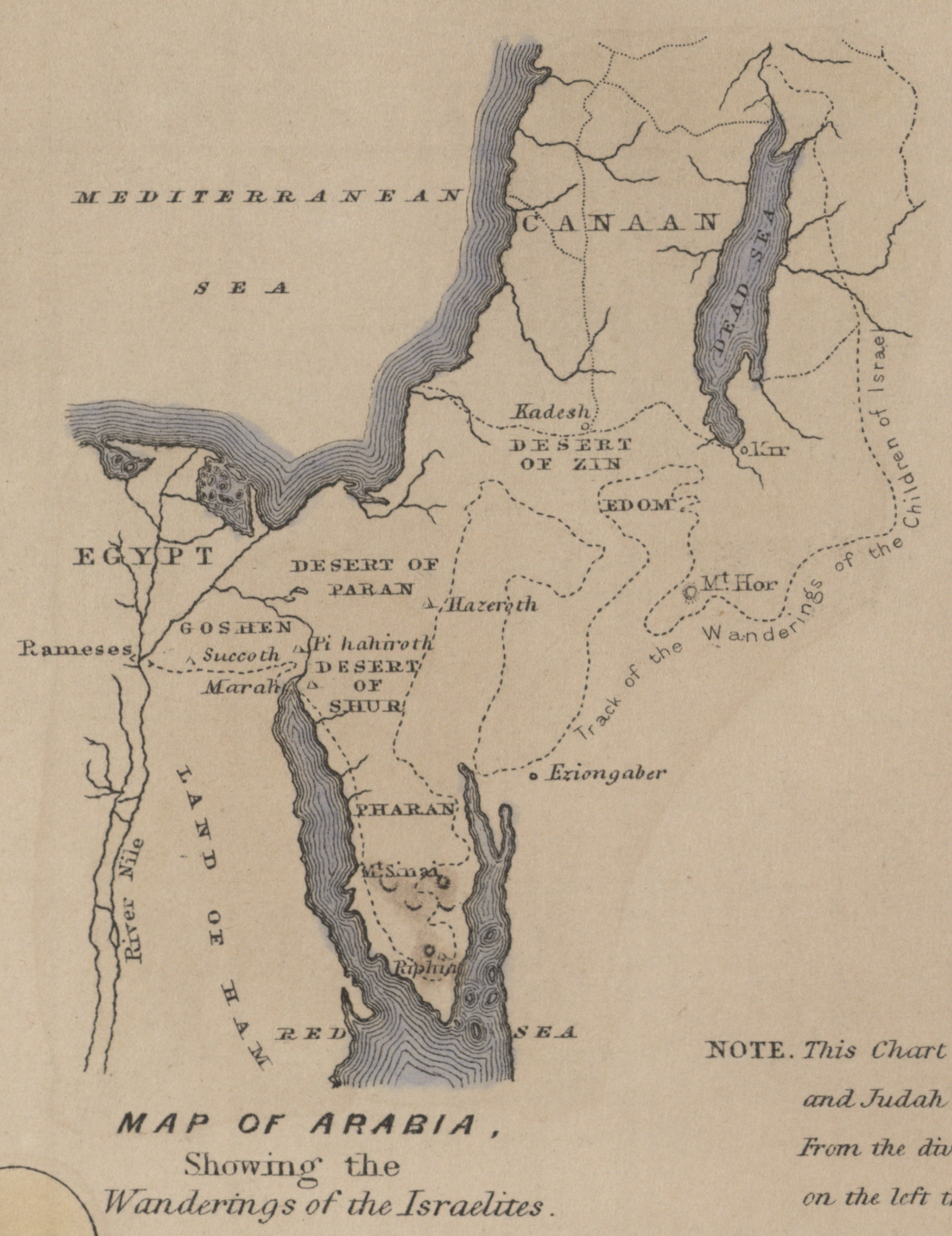
Map of Arabia Showing the Wanderings of the Israelites with a dotted route tracing the Track of the Wanderings of the Children of Israel from Rameses in Egypt through the Desert of Shur, Pi-hahiroth, Marah, the Desert of Paran, Mt. Sinai, Hazeroth, through Edom past Mt. Hor and Eziongaber, around to Canaan and the Dead Sea, with Kadesh clearly labeled in the Desert of Zin
"Map of Arabia, Showing the Wanderings of the Israelites." The dotted line traces the full wilderness route from Rameses in Egypt to the border of Canaan. Kadesh is clearly labeled in the Desert of Zin — the pivotal location where Israel turned away from the Promised Land and was sentenced to forty years of wandering.
Source: Map of Arabia, Showing the Wanderings of the Israelites (1920). Public domain, via Wikimedia Commons.  ·  Historical commentary by Michael Knighton  ·  Christians Standing With Israel
🗺 How to Read This Map
① Kadesh in the Desert of Zin — Find "Kadesh" labeled on the map in the upper-center area within the "DESERT OF ZIN" label. This oasis sits at the southern border of Canaan — close enough to the Promised Land that the twelve spies were sent from here to survey it. The cluster of springs at Kadesh (also called En-Mishpat, "spring of judgment") made it habitable for a large encampment. Israel returned here again and again during the forty years.
② The Dotted Route — Track of the Wanderings — Find the dotted line labeled "Track of the Wanderings of the Children of Israel" tracing around the right side of the map. This route goes from Egypt (Rameses, visible on the left), down through Sinai (Mt. Sinai labeled), back up through Edom, around to Eziongaber at the Gulf of Aqaba, and then up and around to Canaan. The route is deliberately indirect — shaped by rebellion at one end and blocked roads at the other.
③ Edom and Mt. Hor — Find "EDOM" labeled on the right side of the map with "Mt. Hor" marked nearby. It was at Mt. Hor, on the border of Edom, that Aaron died and his priestly garments were passed to his son Eleazar. The mountain sits within the Edomite highlands — a reminder that the nation descended from Esau was watching Israel's long march around their border.
④ The Geography of the Choice — Look at where Kadesh sits on this map — directly south of Canaan, with the Dead Sea just to its east and Canaan's highlands just to its north. The spies walked from here into that land and back. When the people chose to believe the fearful report rather than God's promise, they were not far from the land. They were within days of entering it. The tragedy of Kadesh is a tragedy of proximity — standing at the threshold and refusing to cross.
What This Map Shows
✦ Kadesh — in the Desert of Zin, at Canaan's border
✦ The dotted wilderness route traced
✦ Rameses — where Israel started
✦ Mt. Sinai — where the Law was given
✦ Edom — the blocked eastern passage
✦ Mt. Hor — where Aaron died
✦ Eziongaber — the southern port camp
✦ Canaan — just north of Kadesh

Standing at the Threshold

Find Kadesh on this map — in the Desert of Zin, just south of Canaan. Now look at how close it is to the land. That proximity is the heart of the Kadesh tragedy. Israel was not standing on the far side of an impossible distance. They were standing at the door. The twelve spies walked from here into Canaan and came back in forty days carrying its fruit. The land was real. The abundance was real. The only thing that failed was faith.

The two reports from the spies divided not on the facts but on the interpretation. Both sides agreed: the land was good, the cities were fortified, the people were large. Where they split was on the question of what those facts meant. The ten fearful spies said: the obstacles are too great. Caleb and Joshua said: our God is greater. The congregation voted with the ten. They wept through the night. They talked about stoning Moses and appointing a new leader to take them back to Egypt. They chose slavery over inheritance.

God's response to Moses in the aftermath is one of the most searching conversations in the entire Pentateuch. God offered to destroy the nation and start a new one from Moses. Moses interceded — brilliantly, arguing that God's own reputation among the nations was at stake: "Because the LORD was not able to bring this people into the land which he sware unto them, therefore he hath slain them in the wilderness" (Numbers 14:16). God relented. But the generation that had refused was still sentenced. Every man twenty and above would die in the wilderness before the nation entered.

Follow the dotted route on this map from Kadesh. It goes south and east — away from Canaan, back into the wilderness. Forty more years of circling the same terrain. Every funeral of a wilderness generation member was the sentence being carried out. And then — look at where the route eventually arrives — the eastern side of Canaan, approaching from the Jordan. The same destination, but now reached the long way around, by a generation that had never known Egypt and had no memory of standing at Kadesh and turning away.

Key Scripture References
Numbers 13:25–33 — The two reports; the people choose fear
Numbers 14:1–10 — Israel weeps; Caleb and Joshua nearly stoned
Numbers 14:11–25 — Moses intercedes; God relents but sentences the generation
Numbers 14:26–38 — Forty years decreed; ten spies die in plague
Numbers 20:1–13 — Israel returns to Kadesh; Moses strikes the rock
Deuteronomy 1:19–46 — Moses' retelling of the Kadesh rebellion
Map: Map of Arabia, Showing the Wanderings of the Israelites (1920). Public domain, via Wikimedia Commons.  ·  Historical commentary: © 2026 Michael Wayne Knighton | Christians Standing With Israel™ | All Rights Reserved.
MAP 061
Forty Years of Wandering
MAP 063
The Route Around Edom
Advertisement
Kadesh-Barnea — The Rebellion | Christians Standing With Israel — Michael Knighton Kadesh-Barnea — The Rebellion | Christians Standing With Israel — Michael Knighton
✡ "Pray for the peace of Jerusalem" — Psalm 122:6
Christians Standing With Israel
Home Site Map Search About Us Our Beliefs Online Bible Maps of Israel Articles Grafted In? Apple of His Eye Contact
TOPICS
Israel — Then & Now Anti-Semitism Middle East Christian Zionism Bible Prophecy US & Israel Media Bias Spiritual Deception Arab-Israeli Conflict Islamic Extremism The Iranian Threat Replacement Theology
LATEST: New article by Michael Knighton  •  Subscribe to our weekly newsletter  •  400 Maps of Israel now available  •  Online Bible (KJV) now online
Advertisement
Map 062  ·  The Patriarchs & the Exodus  ·  Numbers 13:30

Kadesh-Barnea — The Rebellion

The oasis at the edge of the Promised Land — where Israel stood within reach of everything God had promised and turned away in unbelief
"And Caleb stilled the people before Moses, and said, Let us go up at once, and possess it; for we are well able to overcome it."
— Numbers 13:30 (KJV)
Map of Arabia Showing the Wanderings of the Israelites with a dotted route tracing the Track of the Wanderings of the Children of Israel from Rameses in Egypt through the Desert of Shur, Pi-hahiroth, Marah, the Desert of Paran, Mt. Sinai, Hazeroth, through Edom past Mt. Hor and Eziongaber, around to Canaan and the Dead Sea, with Kadesh clearly labeled in the Desert of Zin
"Map of Arabia, Showing the Wanderings of the Israelites." The dotted line traces the full wilderness route from Rameses in Egypt to the border of Canaan. Kadesh is clearly labeled in the Desert of Zin — the pivotal location where Israel turned away from the Promised Land and was sentenced to forty years of wandering.
Source: Map of Arabia, Showing the Wanderings of the Israelites (1920). Public domain, via Wikimedia Commons.  ·  Historical commentary by Michael Knighton  ·  Christians Standing With Israel
🗺 How to Read This Map
① Kadesh in the Desert of Zin — Find "Kadesh" labeled on the map in the upper-center area within the "DESERT OF ZIN" label. This oasis sits at the southern border of Canaan — close enough to the Promised Land that the twelve spies were sent from here to survey it. The cluster of springs at Kadesh (also called En-Mishpat, "spring of judgment") made it habitable for a large encampment. Israel returned here again and again during the forty years.
② The Dotted Route — Track of the Wanderings — Find the dotted line labeled "Track of the Wanderings of the Children of Israel" tracing around the right side of the map. This route goes from Egypt (Rameses, visible on the left), down through Sinai (Mt. Sinai labeled), back up through Edom, around to Eziongaber at the Gulf of Aqaba, and then up and around to Canaan. The route is deliberately indirect — shaped by rebellion at one end and blocked roads at the other.
③ Edom and Mt. Hor — Find "EDOM" labeled on the right side of the map with "Mt. Hor" marked nearby. It was at Mt. Hor, on the border of Edom, that Aaron died and his priestly garments were passed to his son Eleazar. The mountain sits within the Edomite highlands — a reminder that the nation descended from Esau was watching Israel's long march around their border.
④ The Geography of the Choice — Look at where Kadesh sits on this map — directly south of Canaan, with the Dead Sea just to its east and Canaan's highlands just to its north. The spies walked from here into that land and back. When the people chose to believe the fearful report rather than God's promise, they were not far from the land. They were within days of entering it. The tragedy of Kadesh is a tragedy of proximity — standing at the threshold and refusing to cross.
What This Map Shows
✦ Kadesh — in the Desert of Zin, at Canaan's border
✦ The dotted wilderness route traced
✦ Rameses — where Israel started
✦ Mt. Sinai — where the Law was given
✦ Edom — the blocked eastern passage
✦ Mt. Hor — where Aaron died
✦ Eziongaber — the southern port camp
✦ Canaan — just north of Kadesh

Standing at the Threshold

Find Kadesh on this map — in the Desert of Zin, just south of Canaan. Now look at how close it is to the land. That proximity is the heart of the Kadesh tragedy. Israel was not standing on the far side of an impossible distance. They were standing at the door. The twelve spies walked from here into Canaan and came back in forty days carrying its fruit. The land was real. The abundance was real. The only thing that failed was faith.

The two reports from the spies divided not on the facts but on the interpretation. Both sides agreed: the land was good, the cities were fortified, the people were large. Where they split was on the question of what those facts meant. The ten fearful spies said: the obstacles are too great. Caleb and Joshua said: our God is greater. The congregation voted with the ten. They wept through the night. They talked about stoning Moses and appointing a new leader to take them back to Egypt. They chose slavery over inheritance.

God's response to Moses in the aftermath is one of the most searching conversations in the entire Pentateuch. God offered to destroy the nation and start a new one from Moses. Moses interceded — brilliantly, arguing that God's own reputation among the nations was at stake: "Because the LORD was not able to bring this people into the land which he sware unto them, therefore he hath slain them in the wilderness" (Numbers 14:16). God relented. But the generation that had refused was still sentenced. Every man twenty and above would die in the wilderness before the nation entered.

Follow the dotted route on this map from Kadesh. It goes south and east — away from Canaan, back into the wilderness. Forty more years of circling the same terrain. Every funeral of a wilderness generation member was the sentence being carried out. And then — look at where the route eventually arrives — the eastern side of Canaan, approaching from the Jordan. The same destination, but now reached the long way around, by a generation that had never known Egypt and had no memory of standing at Kadesh and turning away.

Key Scripture References
Numbers 13:25–33 — The two reports; the people choose fear
Numbers 14:1–10 — Israel weeps; Caleb and Joshua nearly stoned
Numbers 14:11–25 — Moses intercedes; God relents but sentences the generation
Numbers 14:26–38 — Forty years decreed; ten spies die in plague
Numbers 20:1–13 — Israel returns to Kadesh; Moses strikes the rock
Deuteronomy 1:19–46 — Moses' retelling of the Kadesh rebellion
Map: Map of Arabia, Showing the Wanderings of the Israelites (1920). Public domain, via Wikimedia Commons.  ·  Historical commentary: © 2026 Michael Wayne Knighton | Christians Standing With Israel™ | All Rights Reserved.
MAP 061
Forty Years of Wandering
MAP 063
The Route Around Edom
Advertisement
Kadesh-Barnea — The Rebellion | Christians Standing With Israel — Michael Knighton Kadesh-Barnea — The Rebellion | Christians Standing With Israel — Michael Knighton
✡ "Pray for the peace of Jerusalem" — Psalm 122:6
Christians Standing With Israel
Home Site Map Search About Us Our Beliefs Online Bible Maps of Israel Articles Grafted In? Apple of His Eye Contact
TOPICS
Israel — Then & Now Anti-Semitism Middle East Christian Zionism Bible Prophecy US & Israel Media Bias Spiritual Deception Arab-Israeli Conflict Islamic Extremism The Iranian Threat Replacement Theology
LATEST: New article by Michael Knighton  •  Subscribe to our weekly newsletter  •  400 Maps of Israel now available  •  Online Bible (KJV) now online
Advertisement
Map 062  ·  The Patriarchs & the Exodus  ·  Numbers 13:30

Kadesh-Barnea — The Rebellion

The oasis at the edge of the Promised Land — where Israel stood within reach of everything God had promised and turned away in unbelief
"And Caleb stilled the people before Moses, and said, Let us go up at once, and possess it; for we are well able to overcome it."
— Numbers 13:30 (KJV)
Map of Arabia Showing the Wanderings of the Israelites with a dotted route tracing the Track of the Wanderings of the Children of Israel from Rameses in Egypt through the Desert of Shur, Pi-hahiroth, Marah, the Desert of Paran, Mt. Sinai, Hazeroth, through Edom past Mt. Hor and Eziongaber, around to Canaan and the Dead Sea, with Kadesh clearly labeled in the Desert of Zin
"Map of Arabia, Showing the Wanderings of the Israelites." The dotted line traces the full wilderness route from Rameses in Egypt to the border of Canaan. Kadesh is clearly labeled in the Desert of Zin — the pivotal location where Israel turned away from the Promised Land and was sentenced to forty years of wandering.
Source: Map of Arabia, Showing the Wanderings of the Israelites (1920). Public domain, via Wikimedia Commons.  ·  Historical commentary by Michael Knighton  ·  Christians Standing With Israel
🗺 How to Read This Map
① Kadesh in the Desert of Zin — Find "Kadesh" labeled on the map in the upper-center area within the "DESERT OF ZIN" label. This oasis sits at the southern border of Canaan — close enough to the Promised Land that the twelve spies were sent from here to survey it. The cluster of springs at Kadesh (also called En-Mishpat, "spring of judgment") made it habitable for a large encampment. Israel returned here again and again during the forty years.
② The Dotted Route — Track of the Wanderings — Find the dotted line labeled "Track of the Wanderings of the Children of Israel" tracing around the right side of the map. This route goes from Egypt (Rameses, visible on the left), down through Sinai (Mt. Sinai labeled), back up through Edom, around to Eziongaber at the Gulf of Aqaba, and then up and around to Canaan. The route is deliberately indirect — shaped by rebellion at one end and blocked roads at the other.
③ Edom and Mt. Hor — Find "EDOM" labeled on the right side of the map with "Mt. Hor" marked nearby. It was at Mt. Hor, on the border of Edom, that Aaron died and his priestly garments were passed to his son Eleazar. The mountain sits within the Edomite highlands — a reminder that the nation descended from Esau was watching Israel's long march around their border.
④ The Geography of the Choice — Look at where Kadesh sits on this map — directly south of Canaan, with the Dead Sea just to its east and Canaan's highlands just to its north. The spies walked from here into that land and back. When the people chose to believe the fearful report rather than God's promise, they were not far from the land. They were within days of entering it. The tragedy of Kadesh is a tragedy of proximity — standing at the threshold and refusing to cross.
What This Map Shows
✦ Kadesh — in the Desert of Zin, at Canaan's border
✦ The dotted wilderness route traced
✦ Rameses — where Israel started
✦ Mt. Sinai — where the Law was given
✦ Edom — the blocked eastern passage
✦ Mt. Hor — where Aaron died
✦ Eziongaber — the southern port camp
✦ Canaan — just north of Kadesh

Standing at the Threshold

Find Kadesh on this map — in the Desert of Zin, just south of Canaan. Now look at how close it is to the land. That proximity is the heart of the Kadesh tragedy. Israel was not standing on the far side of an impossible distance. They were standing at the door. The twelve spies walked from here into Canaan and came back in forty days carrying its fruit. The land was real. The abundance was real. The only thing that failed was faith.

The two reports from the spies divided not on the facts but on the interpretation. Both sides agreed: the land was good, the cities were fortified, the people were large. Where they split was on the question of what those facts meant. The ten fearful spies said: the obstacles are too great. Caleb and Joshua said: our God is greater. The congregation voted with the ten. They wept through the night. They talked about stoning Moses and appointing a new leader to take them back to Egypt. They chose slavery over inheritance.

God's response to Moses in the aftermath is one of the most searching conversations in the entire Pentateuch. God offered to destroy the nation and start a new one from Moses. Moses interceded — brilliantly, arguing that God's own reputation among the nations was at stake: "Because the LORD was not able to bring this people into the land which he sware unto them, therefore he hath slain them in the wilderness" (Numbers 14:16). God relented. But the generation that had refused was still sentenced. Every man twenty and above would die in the wilderness before the nation entered.

Follow the dotted route on this map from Kadesh. It goes south and east — away from Canaan, back into the wilderness. Forty more years of circling the same terrain. Every funeral of a wilderness generation member was the sentence being carried out. And then — look at where the route eventually arrives — the eastern side of Canaan, approaching from the Jordan. The same destination, but now reached the long way around, by a generation that had never known Egypt and had no memory of standing at Kadesh and turning away.

Key Scripture References
Numbers 13:25–33 — The two reports; the people choose fear
Numbers 14:1–10 — Israel weeps; Caleb and Joshua nearly stoned
Numbers 14:11–25 — Moses intercedes; God relents but sentences the generation
Numbers 14:26–38 — Forty years decreed; ten spies die in plague
Numbers 20:1–13 — Israel returns to Kadesh; Moses strikes the rock
Deuteronomy 1:19–46 — Moses' retelling of the Kadesh rebellion
Map: Map of Arabia, Showing the Wanderings of the Israelites (1920). Public domain, via Wikimedia Commons.  ·  Historical commentary: © 2026 Michael Wayne Knighton | Christians Standing With Israel™ | All Rights Reserved.
MAP 061
Forty Years of Wandering
MAP 063
The Route Around Edom
Advertisement
Kadesh-Barnea — The Rebellion | Christians Standing With Israel — Michael Knighton Kadesh-Barnea — The Rebellion | Christians Standing With Israel — Michael Knighton
✡ "Pray for the peace of Jerusalem" — Psalm 122:6
Christians Standing With Israel
Home Site Map Search About Us Our Beliefs Online Bible Maps of Israel Articles Grafted In? Apple of His Eye Contact
TOPICS
Israel — Then & Now Anti-Semitism Middle East Christian Zionism Bible Prophecy US & Israel Media Bias Spiritual Deception Arab-Israeli Conflict Islamic Extremism The Iranian Threat Replacement Theology
LATEST: New article by Michael Knighton  •  Subscribe to our weekly newsletter  •  400 Maps of Israel now available  •  Online Bible (KJV) now online
Advertisement
Map 062  ·  The Patriarchs & the Exodus  ·  Numbers 13:30

Kadesh-Barnea — The Rebellion

The oasis at the edge of the Promised Land — where Israel stood within reach of everything God had promised and turned away in unbelief
"And Caleb stilled the people before Moses, and said, Let us go up at once, and possess it; for we are well able to overcome it."
— Numbers 13:30 (KJV)
Map of Arabia Showing the Wanderings of the Israelites with a dotted route tracing the Track of the Wanderings of the Children of Israel from Rameses in Egypt through the Desert of Shur, Pi-hahiroth, Marah, the Desert of Paran, Mt. Sinai, Hazeroth, through Edom past Mt. Hor and Eziongaber, around to Canaan and the Dead Sea, with Kadesh clearly labeled in the Desert of Zin
"Map of Arabia, Showing the Wanderings of the Israelites." The dotted line traces the full wilderness route from Rameses in Egypt to the border of Canaan. Kadesh is clearly labeled in the Desert of Zin — the pivotal location where Israel turned away from the Promised Land and was sentenced to forty years of wandering.
Source: Map of Arabia, Showing the Wanderings of the Israelites (1920). Public domain, via Wikimedia Commons.  ·  Historical commentary by Michael Knighton  ·  Christians Standing With Israel
🗺 How to Read This Map
① Kadesh in the Desert of Zin — Find "Kadesh" labeled on the map in the upper-center area within the "DESERT OF ZIN" label. This oasis sits at the southern border of Canaan — close enough to the Promised Land that the twelve spies were sent from here to survey it. The cluster of springs at Kadesh (also called En-Mishpat, "spring of judgment") made it habitable for a large encampment. Israel returned here again and again during the forty years.
② The Dotted Route — Track of the Wanderings — Find the dotted line labeled "Track of the Wanderings of the Children of Israel" tracing around the right side of the map. This route goes from Egypt (Rameses, visible on the left), down through Sinai (Mt. Sinai labeled), back up through Edom, around to Eziongaber at the Gulf of Aqaba, and then up and around to Canaan. The route is deliberately indirect — shaped by rebellion at one end and blocked roads at the other.
③ Edom and Mt. Hor — Find "EDOM" labeled on the right side of the map with "Mt. Hor" marked nearby. It was at Mt. Hor, on the border of Edom, that Aaron died and his priestly garments were passed to his son Eleazar. The mountain sits within the Edomite highlands — a reminder that the nation descended from Esau was watching Israel's long march around their border.
④ The Geography of the Choice — Look at where Kadesh sits on this map — directly south of Canaan, with the Dead Sea just to its east and Canaan's highlands just to its north. The spies walked from here into that land and back. When the people chose to believe the fearful report rather than God's promise, they were not far from the land. They were within days of entering it. The tragedy of Kadesh is a tragedy of proximity — standing at the threshold and refusing to cross.
What This Map Shows
✦ Kadesh — in the Desert of Zin, at Canaan's border
✦ The dotted wilderness route traced
✦ Rameses — where Israel started
✦ Mt. Sinai — where the Law was given
✦ Edom — the blocked eastern passage
✦ Mt. Hor — where Aaron died
✦ Eziongaber — the southern port camp
✦ Canaan — just north of Kadesh

Standing at the Threshold

Find Kadesh on this map — in the Desert of Zin, just south of Canaan. Now look at how close it is to the land. That proximity is the heart of the Kadesh tragedy. Israel was not standing on the far side of an impossible distance. They were standing at the door. The twelve spies walked from here into Canaan and came back in forty days carrying its fruit. The land was real. The abundance was real. The only thing that failed was faith.

The two reports from the spies divided not on the facts but on the interpretation. Both sides agreed: the land was good, the cities were fortified, the people were large. Where they split was on the question of what those facts meant. The ten fearful spies said: the obstacles are too great. Caleb and Joshua said: our God is greater. The congregation voted with the ten. They wept through the night. They talked about stoning Moses and appointing a new leader to take them back to Egypt. They chose slavery over inheritance.

God's response to Moses in the aftermath is one of the most searching conversations in the entire Pentateuch. God offered to destroy the nation and start a new one from Moses. Moses interceded — brilliantly, arguing that God's own reputation among the nations was at stake: "Because the LORD was not able to bring this people into the land which he sware unto them, therefore he hath slain them in the wilderness" (Numbers 14:16). God relented. But the generation that had refused was still sentenced. Every man twenty and above would die in the wilderness before the nation entered.

Follow the dotted route on this map from Kadesh. It goes south and east — away from Canaan, back into the wilderness. Forty more years of circling the same terrain. Every funeral of a wilderness generation member was the sentence being carried out. And then — look at where the route eventually arrives — the eastern side of Canaan, approaching from the Jordan. The same destination, but now reached the long way around, by a generation that had never known Egypt and had no memory of standing at Kadesh and turning away.

Key Scripture References
Numbers 13:25–33 — The two reports; the people choose fear
Numbers 14:1–10 — Israel weeps; Caleb and Joshua nearly stoned
Numbers 14:11–25 — Moses intercedes; God relents but sentences the generation
Numbers 14:26–38 — Forty years decreed; ten spies die in plague
Numbers 20:1–13 — Israel returns to Kadesh; Moses strikes the rock
Deuteronomy 1:19–46 — Moses' retelling of the Kadesh rebellion
Map: Map of Arabia, Showing the Wanderings of the Israelites (1920). Public domain, via Wikimedia Commons.  ·  Historical commentary: © 2026 Michael Wayne Knighton | Christians Standing With Israel™ | All Rights Reserved.
MAP 061
Forty Years of Wandering
MAP 063
The Route Around Edom
Advertisement
Kadesh-Barnea — The Rebellion | Christians Standing With Israel — Michael Knighton Kadesh-Barnea — The Rebellion | Christians Standing With Israel — Michael Knighton
✡ "Pray for the peace of Jerusalem" — Psalm 122:6
Christians Standing With Israel
Home Site Map Search About Us Our Beliefs Online Bible Maps of Israel Articles Grafted In? Apple of His Eye Contact
TOPICS
Israel — Then & Now Anti-Semitism Middle East Christian Zionism Bible Prophecy US & Israel Media Bias Spiritual Deception Arab-Israeli Conflict Islamic Extremism The Iranian Threat Replacement Theology
LATEST: New article by Michael Knighton  •  Subscribe to our weekly newsletter  •  400 Maps of Israel now available  •  Online Bible (KJV) now online
Advertisement
Map 062  ·  The Patriarchs & the Exodus  ·  Numbers 13:30

Kadesh-Barnea — The Rebellion

The oasis at the edge of the Promised Land — where Israel stood within reach of everything God had promised and turned away in unbelief
"And Caleb stilled the people before Moses, and said, Let us go up at once, and possess it; for we are well able to overcome it."
— Numbers 13:30 (KJV)
Map of Arabia Showing the Wanderings of the Israelites with a dotted route tracing the Track of the Wanderings of the Children of Israel from Rameses in Egypt through the Desert of Shur, Pi-hahiroth, Marah, the Desert of Paran, Mt. Sinai, Hazeroth, through Edom past Mt. Hor and Eziongaber, around to Canaan and the Dead Sea, with Kadesh clearly labeled in the Desert of Zin
"Map of Arabia, Showing the Wanderings of the Israelites." The dotted line traces the full wilderness route from Rameses in Egypt to the border of Canaan. Kadesh is clearly labeled in the Desert of Zin — the pivotal location where Israel turned away from the Promised Land and was sentenced to forty years of wandering.
Source: Map of Arabia, Showing the Wanderings of the Israelites (1920). Public domain, via Wikimedia Commons.  ·  Historical commentary by Michael Knighton  ·  Christians Standing With Israel
🗺 How to Read This Map
① Kadesh in the Desert of Zin — Find "Kadesh" labeled on the map in the upper-center area within the "DESERT OF ZIN" label. This oasis sits at the southern border of Canaan — close enough to the Promised Land that the twelve spies were sent from here to survey it. The cluster of springs at Kadesh (also called En-Mishpat, "spring of judgment") made it habitable for a large encampment. Israel returned here again and again during the forty years.
② The Dotted Route — Track of the Wanderings — Find the dotted line labeled "Track of the Wanderings of the Children of Israel" tracing around the right side of the map. This route goes from Egypt (Rameses, visible on the left), down through Sinai (Mt. Sinai labeled), back up through Edom, around to Eziongaber at the Gulf of Aqaba, and then up and around to Canaan. The route is deliberately indirect — shaped by rebellion at one end and blocked roads at the other.
③ Edom and Mt. Hor — Find "EDOM" labeled on the right side of the map with "Mt. Hor" marked nearby. It was at Mt. Hor, on the border of Edom, that Aaron died and his priestly garments were passed to his son Eleazar. The mountain sits within the Edomite highlands — a reminder that the nation descended from Esau was watching Israel's long march around their border.
④ The Geography of the Choice — Look at where Kadesh sits on this map — directly south of Canaan, with the Dead Sea just to its east and Canaan's highlands just to its north. The spies walked from here into that land and back. When the people chose to believe the fearful report rather than God's promise, they were not far from the land. They were within days of entering it. The tragedy of Kadesh is a tragedy of proximity — standing at the threshold and refusing to cross.
What This Map Shows
✦ Kadesh — in the Desert of Zin, at Canaan's border
✦ The dotted wilderness route traced
✦ Rameses — where Israel started
✦ Mt. Sinai — where the Law was given
✦ Edom — the blocked eastern passage
✦ Mt. Hor — where Aaron died
✦ Eziongaber — the southern port camp
✦ Canaan — just north of Kadesh

Standing at the Threshold

Find Kadesh on this map — in the Desert of Zin, just south of Canaan. Now look at how close it is to the land. That proximity is the heart of the Kadesh tragedy. Israel was not standing on the far side of an impossible distance. They were standing at the door. The twelve spies walked from here into Canaan and came back in forty days carrying its fruit. The land was real. The abundance was real. The only thing that failed was faith.

The two reports from the spies divided not on the facts but on the interpretation. Both sides agreed: the land was good, the cities were fortified, the people were large. Where they split was on the question of what those facts meant. The ten fearful spies said: the obstacles are too great. Caleb and Joshua said: our God is greater. The congregation voted with the ten. They wept through the night. They talked about stoning Moses and appointing a new leader to take them back to Egypt. They chose slavery over inheritance.

God's response to Moses in the aftermath is one of the most searching conversations in the entire Pentateuch. God offered to destroy the nation and start a new one from Moses. Moses interceded — brilliantly, arguing that God's own reputation among the nations was at stake: "Because the LORD was not able to bring this people into the land which he sware unto them, therefore he hath slain them in the wilderness" (Numbers 14:16). God relented. But the generation that had refused was still sentenced. Every man twenty and above would die in the wilderness before the nation entered.

Follow the dotted route on this map from Kadesh. It goes south and east — away from Canaan, back into the wilderness. Forty more years of circling the same terrain. Every funeral of a wilderness generation member was the sentence being carried out. And then — look at where the route eventually arrives — the eastern side of Canaan, approaching from the Jordan. The same destination, but now reached the long way around, by a generation that had never known Egypt and had no memory of standing at Kadesh and turning away.

Key Scripture References
Numbers 13:25–33 — The two reports; the people choose fear
Numbers 14:1–10 — Israel weeps; Caleb and Joshua nearly stoned
Numbers 14:11–25 — Moses intercedes; God relents but sentences the generation
Numbers 14:26–38 — Forty years decreed; ten spies die in plague
Numbers 20:1–13 — Israel returns to Kadesh; Moses strikes the rock
Deuteronomy 1:19–46 — Moses' retelling of the Kadesh rebellion
Map: Map of Arabia, Showing the Wanderings of the Israelites (1920). Public domain, via Wikimedia Commons.  ·  Historical commentary: © 2026 Michael Wayne Knighton | Christians Standing With Israel™ | All Rights Reserved.
MAP 061
Forty Years of Wandering
MAP 063
The Route Around Edom
Advertisement
Kadesh-Barnea — The Rebellion | Christians Standing With Israel — Michael Knighton Kadesh-Barnea — The Rebellion | Christians Standing With Israel — Michael Knighton
✡ "Pray for the peace of Jerusalem" — Psalm 122:6
Christians Standing With Israel
Home Site Map Search About Us Our Beliefs Online Bible Maps of Israel Articles Grafted In? Apple of His Eye Contact
TOPICS
Israel — Then & Now Anti-Semitism Middle East Christian Zionism Bible Prophecy US & Israel Media Bias Spiritual Deception Arab-Israeli Conflict Islamic Extremism The Iranian Threat Replacement Theology
LATEST: New article by Michael Knighton  •  Subscribe to our weekly newsletter  •  400 Maps of Israel now available  •  Online Bible (KJV) now online
Advertisement
Map 062  ·  The Patriarchs & the Exodus  ·  Numbers 13:30

Kadesh-Barnea — The Rebellion

The oasis at the edge of the Promised Land — where Israel stood within reach of everything God had promised and turned away in unbelief
"And Caleb stilled the people before Moses, and said, Let us go up at once, and possess it; for we are well able to overcome it."
— Numbers 13:30 (KJV)
Map of Arabia Showing the Wanderings of the Israelites with a dotted route tracing the Track of the Wanderings of the Children of Israel from Rameses in Egypt through the Desert of Shur, Pi-hahiroth, Marah, the Desert of Paran, Mt. Sinai, Hazeroth, through Edom past Mt. Hor and Eziongaber, around to Canaan and the Dead Sea, with Kadesh clearly labeled in the Desert of Zin
"Map of Arabia, Showing the Wanderings of the Israelites." The dotted line traces the full wilderness route from Rameses in Egypt to the border of Canaan. Kadesh is clearly labeled in the Desert of Zin — the pivotal location where Israel turned away from the Promised Land and was sentenced to forty years of wandering.
Source: Map of Arabia, Showing the Wanderings of the Israelites (1920). Public domain, via Wikimedia Commons.  ·  Historical commentary by Michael Knighton  ·  Christians Standing With Israel
🗺 How to Read This Map
① Kadesh in the Desert of Zin — Find "Kadesh" labeled on the map in the upper-center area within the "DESERT OF ZIN" label. This oasis sits at the southern border of Canaan — close enough to the Promised Land that the twelve spies were sent from here to survey it. The cluster of springs at Kadesh (also called En-Mishpat, "spring of judgment") made it habitable for a large encampment. Israel returned here again and again during the forty years.
② The Dotted Route — Track of the Wanderings — Find the dotted line labeled "Track of the Wanderings of the Children of Israel" tracing around the right side of the map. This route goes from Egypt (Rameses, visible on the left), down through Sinai (Mt. Sinai labeled), back up through Edom, around to Eziongaber at the Gulf of Aqaba, and then up and around to Canaan. The route is deliberately indirect — shaped by rebellion at one end and blocked roads at the other.
③ Edom and Mt. Hor — Find "EDOM" labeled on the right side of the map with "Mt. Hor" marked nearby. It was at Mt. Hor, on the border of Edom, that Aaron died and his priestly garments were passed to his son Eleazar. The mountain sits within the Edomite highlands — a reminder that the nation descended from Esau was watching Israel's long march around their border.
④ The Geography of the Choice — Look at where Kadesh sits on this map — directly south of Canaan, with the Dead Sea just to its east and Canaan's highlands just to its north. The spies walked from here into that land and back. When the people chose to believe the fearful report rather than God's promise, they were not far from the land. They were within days of entering it. The tragedy of Kadesh is a tragedy of proximity — standing at the threshold and refusing to cross.
What This Map Shows
✦ Kadesh — in the Desert of Zin, at Canaan's border
✦ The dotted wilderness route traced
✦ Rameses — where Israel started
✦ Mt. Sinai — where the Law was given
✦ Edom — the blocked eastern passage
✦ Mt. Hor — where Aaron died
✦ Eziongaber — the southern port camp
✦ Canaan — just north of Kadesh

Standing at the Threshold

Find Kadesh on this map — in the Desert of Zin, just south of Canaan. Now look at how close it is to the land. That proximity is the heart of the Kadesh tragedy. Israel was not standing on the far side of an impossible distance. They were standing at the door. The twelve spies walked from here into Canaan and came back in forty days carrying its fruit. The land was real. The abundance was real. The only thing that failed was faith.

The two reports from the spies divided not on the facts but on the interpretation. Both sides agreed: the land was good, the cities were fortified, the people were large. Where they split was on the question of what those facts meant. The ten fearful spies said: the obstacles are too great. Caleb and Joshua said: our God is greater. The congregation voted with the ten. They wept through the night. They talked about stoning Moses and appointing a new leader to take them back to Egypt. They chose slavery over inheritance.

God's response to Moses in the aftermath is one of the most searching conversations in the entire Pentateuch. God offered to destroy the nation and start a new one from Moses. Moses interceded — brilliantly, arguing that God's own reputation among the nations was at stake: "Because the LORD was not able to bring this people into the land which he sware unto them, therefore he hath slain them in the wilderness" (Numbers 14:16). God relented. But the generation that had refused was still sentenced. Every man twenty and above would die in the wilderness before the nation entered.

Follow the dotted route on this map from Kadesh. It goes south and east — away from Canaan, back into the wilderness. Forty more years of circling the same terrain. Every funeral of a wilderness generation member was the sentence being carried out. And then — look at where the route eventually arrives — the eastern side of Canaan, approaching from the Jordan. The same destination, but now reached the long way around, by a generation that had never known Egypt and had no memory of standing at Kadesh and turning away.

Key Scripture References
Numbers 13:25–33 — The two reports; the people choose fear
Numbers 14:1–10 — Israel weeps; Caleb and Joshua nearly stoned
Numbers 14:11–25 — Moses intercedes; God relents but sentences the generation
Numbers 14:26–38 — Forty years decreed; ten spies die in plague
Numbers 20:1–13 — Israel returns to Kadesh; Moses strikes the rock
Deuteronomy 1:19–46 — Moses' retelling of the Kadesh rebellion
Map: Map of Arabia, Showing the Wanderings of the Israelites (1920). Public domain, via Wikimedia Commons.  ·  Historical commentary: © 2026 Michael Wayne Knighton | Christians Standing With Israel™ | All Rights Reserved.
MAP 061
Forty Years of Wandering
MAP 063
The Route Around Edom
Advertisement
Kadesh-Barnea — The Rebellion | Christians Standing With Israel — Michael Knighton Kadesh-Barnea — The Rebellion | Christians Standing With Israel — Michael Knighton
✡ "Pray for the peace of Jerusalem" — Psalm 122:6
Christians Standing With Israel
Home Site Map Search About Us Our Beliefs Online Bible Maps of Israel Articles Grafted In? Apple of His Eye Contact
TOPICS
Israel — Then & Now Anti-Semitism Middle East Christian Zionism Bible Prophecy US & Israel Media Bias Spiritual Deception Arab-Israeli Conflict Islamic Extremism The Iranian Threat Replacement Theology
LATEST: New article by Michael Knighton  •  Subscribe to our weekly newsletter  •  400 Maps of Israel now available  •  Online Bible (KJV) now online
Advertisement
Map 062  ·  The Patriarchs & the Exodus  ·  Numbers 13:30

Kadesh-Barnea — The Rebellion

The oasis at the edge of the Promised Land — where Israel stood within reach of everything God had promised and turned away in unbelief
"And Caleb stilled the people before Moses, and said, Let us go up at once, and possess it; for we are well able to overcome it."
— Numbers 13:30 (KJV)
Map of Arabia Showing the Wanderings of the Israelites with a dotted route tracing the Track of the Wanderings of the Children of Israel from Rameses in Egypt through the Desert of Shur, Pi-hahiroth, Marah, the Desert of Paran, Mt. Sinai, Hazeroth, through Edom past Mt. Hor and Eziongaber, around to Canaan and the Dead Sea, with Kadesh clearly labeled in the Desert of Zin
"Map of Arabia, Showing the Wanderings of the Israelites." The dotted line traces the full wilderness route from Rameses in Egypt to the border of Canaan. Kadesh is clearly labeled in the Desert of Zin — the pivotal location where Israel turned away from the Promised Land and was sentenced to forty years of wandering.
Source: Map of Arabia, Showing the Wanderings of the Israelites (1920). Public domain, via Wikimedia Commons.  ·  Historical commentary by Michael Knighton  ·  Christians Standing With Israel
🗺 How to Read This Map
① Kadesh in the Desert of Zin — Find "Kadesh" labeled on the map in the upper-center area within the "DESERT OF ZIN" label. This oasis sits at the southern border of Canaan — close enough to the Promised Land that the twelve spies were sent from here to survey it. The cluster of springs at Kadesh (also called En-Mishpat, "spring of judgment") made it habitable for a large encampment. Israel returned here again and again during the forty years.
② The Dotted Route — Track of the Wanderings — Find the dotted line labeled "Track of the Wanderings of the Children of Israel" tracing around the right side of the map. This route goes from Egypt (Rameses, visible on the left), down through Sinai (Mt. Sinai labeled), back up through Edom, around to Eziongaber at the Gulf of Aqaba, and then up and around to Canaan. The route is deliberately indirect — shaped by rebellion at one end and blocked roads at the other.
③ Edom and Mt. Hor — Find "EDOM" labeled on the right side of the map with "Mt. Hor" marked nearby. It was at Mt. Hor, on the border of Edom, that Aaron died and his priestly garments were passed to his son Eleazar. The mountain sits within the Edomite highlands — a reminder that the nation descended from Esau was watching Israel's long march around their border.
④ The Geography of the Choice — Look at where Kadesh sits on this map — directly south of Canaan, with the Dead Sea just to its east and Canaan's highlands just to its north. The spies walked from here into that land and back. When the people chose to believe the fearful report rather than God's promise, they were not far from the land. They were within days of entering it. The tragedy of Kadesh is a tragedy of proximity — standing at the threshold and refusing to cross.
What This Map Shows
✦ Kadesh — in the Desert of Zin, at Canaan's border
✦ The dotted wilderness route traced
✦ Rameses — where Israel started
✦ Mt. Sinai — where the Law was given
✦ Edom — the blocked eastern passage
✦ Mt. Hor — where Aaron died
✦ Eziongaber — the southern port camp
✦ Canaan — just north of Kadesh

Standing at the Threshold

Find Kadesh on this map — in the Desert of Zin, just south of Canaan. Now look at how close it is to the land. That proximity is the heart of the Kadesh tragedy. Israel was not standing on the far side of an impossible distance. They were standing at the door. The twelve spies walked from here into Canaan and came back in forty days carrying its fruit. The land was real. The abundance was real. The only thing that failed was faith.

The two reports from the spies divided not on the facts but on the interpretation. Both sides agreed: the land was good, the cities were fortified, the people were large. Where they split was on the question of what those facts meant. The ten fearful spies said: the obstacles are too great. Caleb and Joshua said: our God is greater. The congregation voted with the ten. They wept through the night. They talked about stoning Moses and appointing a new leader to take them back to Egypt. They chose slavery over inheritance.

God's response to Moses in the aftermath is one of the most searching conversations in the entire Pentateuch. God offered to destroy the nation and start a new one from Moses. Moses interceded — brilliantly, arguing that God's own reputation among the nations was at stake: "Because the LORD was not able to bring this people into the land which he sware unto them, therefore he hath slain them in the wilderness" (Numbers 14:16). God relented. But the generation that had refused was still sentenced. Every man twenty and above would die in the wilderness before the nation entered.

Follow the dotted route on this map from Kadesh. It goes south and east — away from Canaan, back into the wilderness. Forty more years of circling the same terrain. Every funeral of a wilderness generation member was the sentence being carried out. And then — look at where the route eventually arrives — the eastern side of Canaan, approaching from the Jordan. The same destination, but now reached the long way around, by a generation that had never known Egypt and had no memory of standing at Kadesh and turning away.

Key Scripture References
Numbers 13:25–33 — The two reports; the people choose fear
Numbers 14:1–10 — Israel weeps; Caleb and Joshua nearly stoned
Numbers 14:11–25 — Moses intercedes; God relents but sentences the generation
Numbers 14:26–38 — Forty years decreed; ten spies die in plague
Numbers 20:1–13 — Israel returns to Kadesh; Moses strikes the rock
Deuteronomy 1:19–46 — Moses' retelling of the Kadesh rebellion
Map: Map of Arabia, Showing the Wanderings of the Israelites (1920). Public domain, via Wikimedia Commons.  ·  Historical commentary: © 2026 Michael Wayne Knighton | Christians Standing With Israel™ | All Rights Reserved.
MAP 061
Forty Years of Wandering
MAP 063
The Route Around Edom
Advertisement
Kadesh-Barnea — The Rebellion | Christians Standing With Israel — Michael Knighton Kadesh-Barnea — The Rebellion | Christians Standing With Israel — Michael Knighton
✡ "Pray for the peace of Jerusalem" — Psalm 122:6
Christians Standing With Israel
Home Site Map Search About Us Our Beliefs Online Bible Maps of Israel Articles Grafted In? Apple of His Eye Contact
TOPICS
Israel — Then & Now Anti-Semitism Middle East Christian Zionism Bible Prophecy US & Israel Media Bias Spiritual Deception Arab-Israeli Conflict Islamic Extremism The Iranian Threat Replacement Theology
LATEST: New article by Michael Knighton  •  Subscribe to our weekly newsletter  •  400 Maps of Israel now available  •  Online Bible (KJV) now online
Advertisement
Map 062  ·  The Patriarchs & the Exodus  ·  Numbers 13:30

Kadesh-Barnea — The Rebellion

The oasis at the edge of the Promised Land — where Israel stood within reach of everything God had promised and turned away in unbelief
"And Caleb stilled the people before Moses, and said, Let us go up at once, and possess it; for we are well able to overcome it."
— Numbers 13:30 (KJV)
Map of Arabia Showing the Wanderings of the Israelites with a dotted route tracing the Track of the Wanderings of the Children of Israel from Rameses in Egypt through the Desert of Shur, Pi-hahiroth, Marah, the Desert of Paran, Mt. Sinai, Hazeroth, through Edom past Mt. Hor and Eziongaber, around to Canaan and the Dead Sea, with Kadesh clearly labeled in the Desert of Zin
"Map of Arabia, Showing the Wanderings of the Israelites." The dotted line traces the full wilderness route from Rameses in Egypt to the border of Canaan. Kadesh is clearly labeled in the Desert of Zin — the pivotal location where Israel turned away from the Promised Land and was sentenced to forty years of wandering.
Source: Map of Arabia, Showing the Wanderings of the Israelites (1920). Public domain, via Wikimedia Commons.  ·  Historical commentary by Michael Knighton  ·  Christians Standing With Israel
🗺 How to Read This Map
① Kadesh in the Desert of Zin — Find "Kadesh" labeled on the map in the upper-center area within the "DESERT OF ZIN" label. This oasis sits at the southern border of Canaan — close enough to the Promised Land that the twelve spies were sent from here to survey it. The cluster of springs at Kadesh (also called En-Mishpat, "spring of judgment") made it habitable for a large encampment. Israel returned here again and again during the forty years.
② The Dotted Route — Track of the Wanderings — Find the dotted line labeled "Track of the Wanderings of the Children of Israel" tracing around the right side of the map. This route goes from Egypt (Rameses, visible on the left), down through Sinai (Mt. Sinai labeled), back up through Edom, around to Eziongaber at the Gulf of Aqaba, and then up and around to Canaan. The route is deliberately indirect — shaped by rebellion at one end and blocked roads at the other.
③ Edom and Mt. Hor — Find "EDOM" labeled on the right side of the map with "Mt. Hor" marked nearby. It was at Mt. Hor, on the border of Edom, that Aaron died and his priestly garments were passed to his son Eleazar. The mountain sits within the Edomite highlands — a reminder that the nation descended from Esau was watching Israel's long march around their border.
④ The Geography of the Choice — Look at where Kadesh sits on this map — directly south of Canaan, with the Dead Sea just to its east and Canaan's highlands just to its north. The spies walked from here into that land and back. When the people chose to believe the fearful report rather than God's promise, they were not far from the land. They were within days of entering it. The tragedy of Kadesh is a tragedy of proximity — standing at the threshold and refusing to cross.
What This Map Shows
✦ Kadesh — in the Desert of Zin, at Canaan's border
✦ The dotted wilderness route traced
✦ Rameses — where Israel started
✦ Mt. Sinai — where the Law was given
✦ Edom — the blocked eastern passage
✦ Mt. Hor — where Aaron died
✦ Eziongaber — the southern port camp
✦ Canaan — just north of Kadesh

Standing at the Threshold

Find Kadesh on this map — in the Desert of Zin, just south of Canaan. Now look at how close it is to the land. That proximity is the heart of the Kadesh tragedy. Israel was not standing on the far side of an impossible distance. They were standing at the door. The twelve spies walked from here into Canaan and came back in forty days carrying its fruit. The land was real. The abundance was real. The only thing that failed was faith.

The two reports from the spies divided not on the facts but on the interpretation. Both sides agreed: the land was good, the cities were fortified, the people were large. Where they split was on the question of what those facts meant. The ten fearful spies said: the obstacles are too great. Caleb and Joshua said: our God is greater. The congregation voted with the ten. They wept through the night. They talked about stoning Moses and appointing a new leader to take them back to Egypt. They chose slavery over inheritance.

God's response to Moses in the aftermath is one of the most searching conversations in the entire Pentateuch. God offered to destroy the nation and start a new one from Moses. Moses interceded — brilliantly, arguing that God's own reputation among the nations was at stake: "Because the LORD was not able to bring this people into the land which he sware unto them, therefore he hath slain them in the wilderness" (Numbers 14:16). God relented. But the generation that had refused was still sentenced. Every man twenty and above would die in the wilderness before the nation entered.

Follow the dotted route on this map from Kadesh. It goes south and east — away from Canaan, back into the wilderness. Forty more years of circling the same terrain. Every funeral of a wilderness generation member was the sentence being carried out. And then — look at where the route eventually arrives — the eastern side of Canaan, approaching from the Jordan. The same destination, but now reached the long way around, by a generation that had never known Egypt and had no memory of standing at Kadesh and turning away.

Key Scripture References
Numbers 13:25–33 — The two reports; the people choose fear
Numbers 14:1–10 — Israel weeps; Caleb and Joshua nearly stoned
Numbers 14:11–25 — Moses intercedes; God relents but sentences the generation
Numbers 14:26–38 — Forty years decreed; ten spies die in plague
Numbers 20:1–13 — Israel returns to Kadesh; Moses strikes the rock
Deuteronomy 1:19–46 — Moses' retelling of the Kadesh rebellion
Map: Map of Arabia, Showing the Wanderings of the Israelites (1920). Public domain, via Wikimedia Commons.  ·  Historical commentary: © 2026 Michael Wayne Knighton | Christians Standing With Israel™ | All Rights Reserved.
MAP 061
Forty Years of Wandering
MAP 063
The Route Around Edom
Advertisement